
-
by sayum
28 August 2026 2:11 PM







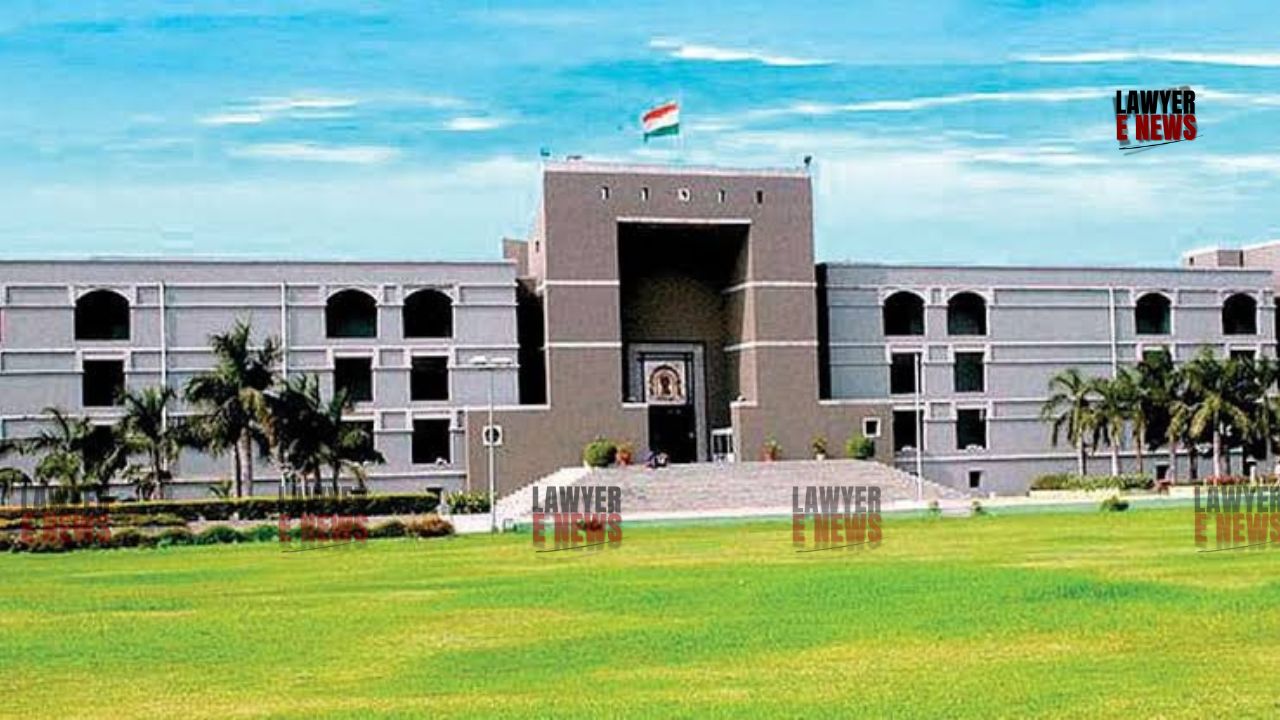
“Laws come to the aid of the vigilant, not those who sleep over their rights” — In a significant judgment Gujarat High Court dismissed a writ petition under Article 227 of the Constitution of India, refusing to interfere with an appellate court's decision that declined to condone an inordinate delay of over three years in filing an appeal against a decree of specific performance that had already been executed. The case, titled Sureshkumar Bhavanishankar Raval & Another v. Manish Dhebarbhai Patel, arose from a long-settled land dispute in which the petitioners attempted to reopen proceedings well after the decree had culminated in the registration of a sale deed.
The petitioners, who were original defendants, approached the Court arguing that the delay in appeal was unintentional and caused partly due to the Covid-19 pandemic. However, the Court rejected the justification, observing that the execution proceedings had taken place before the pandemic and the petitioners had remained silent and inactive, despite full knowledge of the decree and the ongoing proceedings.
Justice Maulik J. Shelat, while delivering the oral order in R/Special Civil Application No. 13512 of 2024, confirmed the order dated 08.02.2024 passed by the 5th Additional Sessions Judge, Ahmedabad (Rural) at Viramgam, which had refused to condone the delay under Section 5 of the Limitation Act, 1963.
“Once Sale Deed is Executed Through Court, Challenge to Decree Cannot Be Entertained After Years of Silence”
“The petitioners stood by silently even during execution — their conduct reflects gross negligence and indolence”: Court finds no merit in attempt to revive litigation after finality
The genesis of the case lay in a registered agreement to sell agricultural land between the plaintiff and the first defendant dated 01.03.2012. A suit for specific performance was filed in 2017 and culminated in a decree dated 10.06.2019, directing defendant No.1 to execute a sale deed in favour of the plaintiff and cancelling a conflicting sale deed executed in 2015 in favour of defendant No.2.
Subsequently, execution proceedings were initiated in 2019, and through the Court Commissioner, the sale deed was duly registered in favour of the plaintiff. The petitioners never challenged the decree during the execution process.
The appeal was finally filed after three years, with the petitioners simultaneously seeking condonation of delay. The appellate court rejected the delay application, leading to the present writ petition.
In rejecting the plea for condonation, the High Court referred to the conduct of the petitioners:
“All these acts of defendants would surely constitute gross negligence, indolent behaviour and laches on their part which is not condonable…”
The Court observed that the defendants’ advocate had endorsed the decree in 2019, establishing that they were aware of the judgment at the time it was passed:
“It would thus be presumed — and no reason to doubt — that when the Advocate engaged by the defendants had seen the judgment and decree, it would be in the knowledge of the defendants having been communicated.”
“Substantial Justice Cannot Override Statutory Time Limits”: Court Applies Settled Principles on Delay and Vigilance
“Liberality in delay condonation ends where indifference and inaction begin” — Court reiterates that condonation of delay is not a matter of right but of judicial discretion
The petitioners had argued that the Covid-19 pandemic, ongoing settlement talks, and lack of mala fide intent justified the delay. But the Court found no material to support such claims. It noted:
“The execution application was filed in 2019 itself (prior to COVID-19 era)… it is not the case of the petitioners that they were not served with any notice in execution proceedings.”
Relying heavily on the jurisprudence laid down by the Supreme Court, the Court quoted from Rajneesh Kumar & Anr. v. Ved Prakash, 2024 (14) SCALE 406:
“Even if we assume that the concerned lawyer was negligent, this, by itself, cannot be a ground to condone long and inordinate delay… the litigant owes a duty to be vigilant of his own rights.”
The Court also referred to the celebrated principle enshrined in the Latin maxim:
“Vigilantibus non dormientibus jura subveniunt – the laws give help to those who are watchful, and not to those who sleep.”
Quoting K.B. Lal v. Gyanendra Pratap, 2024 (4) SCALE 759, the Court reiterated:
“Discretion is not to be exercised in the absence of any reasonable, satisfactory or appropriate explanation for the delay.”
The Court highlighted that the explanation offered by the petitioners was vague and lacked any documentary or substantive support. It was neither plausible nor specific enough to warrant interference.
“Article 227 Is Not an Appellate Jurisdiction”: High Court Refuses to Reopen Settled Decree Under Supervisory Powers
“Merely because a second view is possible, it would not be a ground to interfere” — Court warns against misuse of Article 227 to re-litigate concluded disputes
Justice Shelat emphasized the limited scope of Article 227, stating that it cannot be used as an appellate mechanism to revisit factual or discretionary decisions of lower courts unless jurisdictional errors or perversity are demonstrated.
In that regard, the Court referred to Sameer Suresh Gupta v. Rahul Kumar Agarwal, (2013) 9 SCC 374 and Garment Craft v. Prakash Chand Goel, (2022) 4 SCC 181, noting:
“This Court, while exercising powers under Article 227, cannot interfere with every order passed by the trial Court at a drop of the hat.”
The High Court found no jurisdictional error, no perversity, and no miscarriage of justice in the appellate court's order — only a well-reasoned refusal to condone an unexplained delay.
“No Court Can Justify Reviving a Concluded Decree After Years of Inaction”: Final Verdict
“Law of limitation is based on public policy — it compels a person to act within a reasonable time”
The Court ultimately rejected the writ petition and confirmed the order passed by the appellate court. Justice Shelat concluded:
“In view of the foregoing discussions, observations, and reasons, the present writ application is bereft of merit and requires to be rejected, which is hereby rejected.”
The final word was unequivocal: “The impugned order dated 08.02.2024 is hereby confirmed. Rule is discharged. No order as to costs.”
Date of Decision: 19 September 2025





