-
by sayum
04 August 2026 1:39 PM







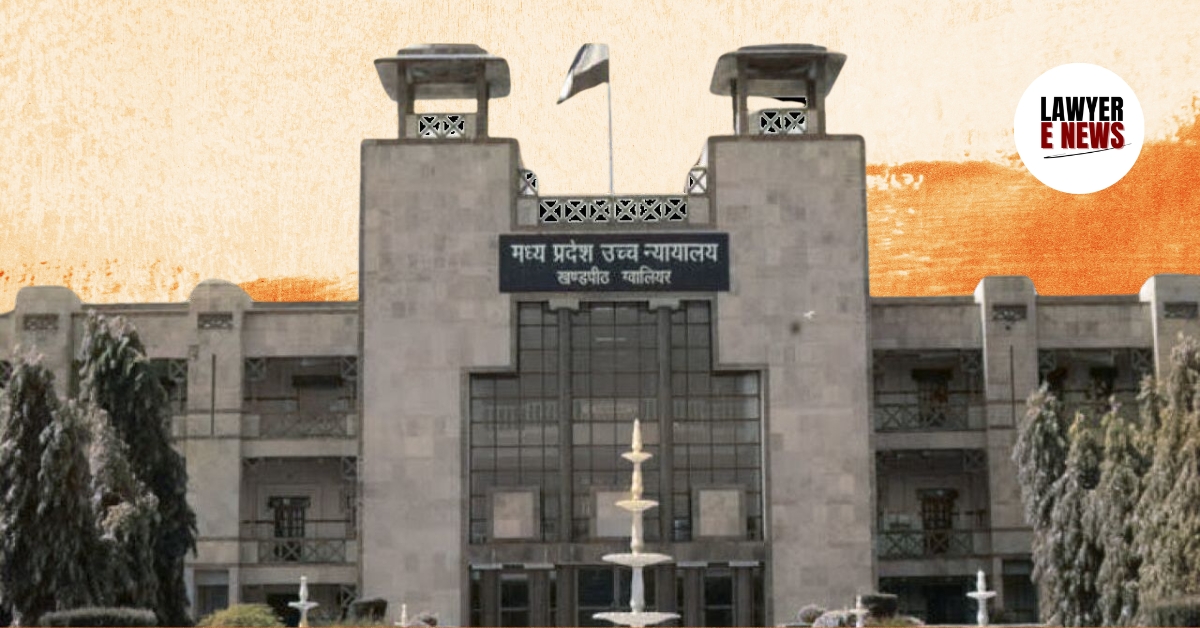
“Until and unless respondent No. 2 is cross-examined... this Court is unable to draw any adverse inference” – Madhya Pradesh High Court at Gwalior refused to quash an FIR alleging sexual harassment against a man accused of molesting his niece-in-law (bahu bhatiji) inside her matrimonial home. Court held that allegations of outraging the modesty of a woman must be judicially tested through trial, and not prematurely dismissed merely due to allegations of malafide or non-mention of facts in parallel proceedings.
The complainant, married in February 2024, lodged an FIR alleging that her husband’s uncle (the applicant) had sexually assaulted her in her marital home when she was alone. She accused him of inappropriate touching, verbal advances, and ultimately, of issuing threats to coerce her into an illicit relationship:
“He used to touch her body with evil intention... and said why she is afraid of him and that she should come nearer to him... on 9/5/2024, he extended a threat that she should develop an illicit relationship with him, otherwise he would spoil her life.”
Upon reporting these events to her husband and mother-in-law, the complainant was ousted from the home and since then, has been residing with her parents.
The accused moved the High Court under Section 528 of the Bharatiya Nagarik Suraksha Sanhita (BNSS), seeking quashing of the FIR (registered under Sections 354, 354A, 506 of IPC), citing alleged malafides, prior complaints filed by him, and the absence of such allegations in other pending proceedings like DV Act and maintenance claims.
The principal legal question before the Court was whether the FIR could be quashed at the initial stage due to alleged inconsistencies or parallel proceedings.
Rejecting the plea, Justice G.S. Ahluwalia held: “This Court cannot conduct a mini trial to adjudicate the reliability and credibility of a witness as well as correctness of allegations.”
The Court emphasized the distinction between different forms of matrimonial litigation: “There is a distinction between cruelty as defined under Section 498A of IPC and outraging of modesty as defined under Section 354 of IPC.”
On the applicant’s argument regarding malafide intent and omission of allegations in prior cases, the Court observed: “Until and unless respondent No. 2 is cross-examined... this Court is unable to draw any adverse inference against respondent No. 2.”
Citing Neeharika Infrastructure v. State of Maharashtra [(2021) 19 SCC 401], the Court reiterated the well-established principle: “The power of quashing should be exercised sparingly with circumspection, in the rarest of rare cases.”
The Court underscored that: “While examining an FIR/complaint, quashing of which is sought, the Court cannot embark upon an enquiry as to the reliability or genuineness or otherwise of the allegations made.”
Also referencing Renu Kumari v. Sanjay Kumar, (2008) 12 SCC 346, the Court noted: “Where the allegations make out a cognizable offence, then malafides of complainant become secondary.”
The Madhya Pradesh High Court's ruling reinforces that serious allegations, particularly those involving sexual misconduct, must be judicially examined through trial, and cannot be brushed aside at the preliminary stage based on technical grounds or alleged malafides. The case sets a clear precedent that courts must not act as investigative forums, and any inconsistencies or omissions are matters for cross-examination during trial—not for pre-emptive dismissal.
“Judicial process should not be an instrument of oppression, or needless harassment. But at the same time... the High Court should not stifle a legitimate prosecution.”
Date of Decision: 29 April 2025