-
by sayum
27 August 2026 5:16 AM







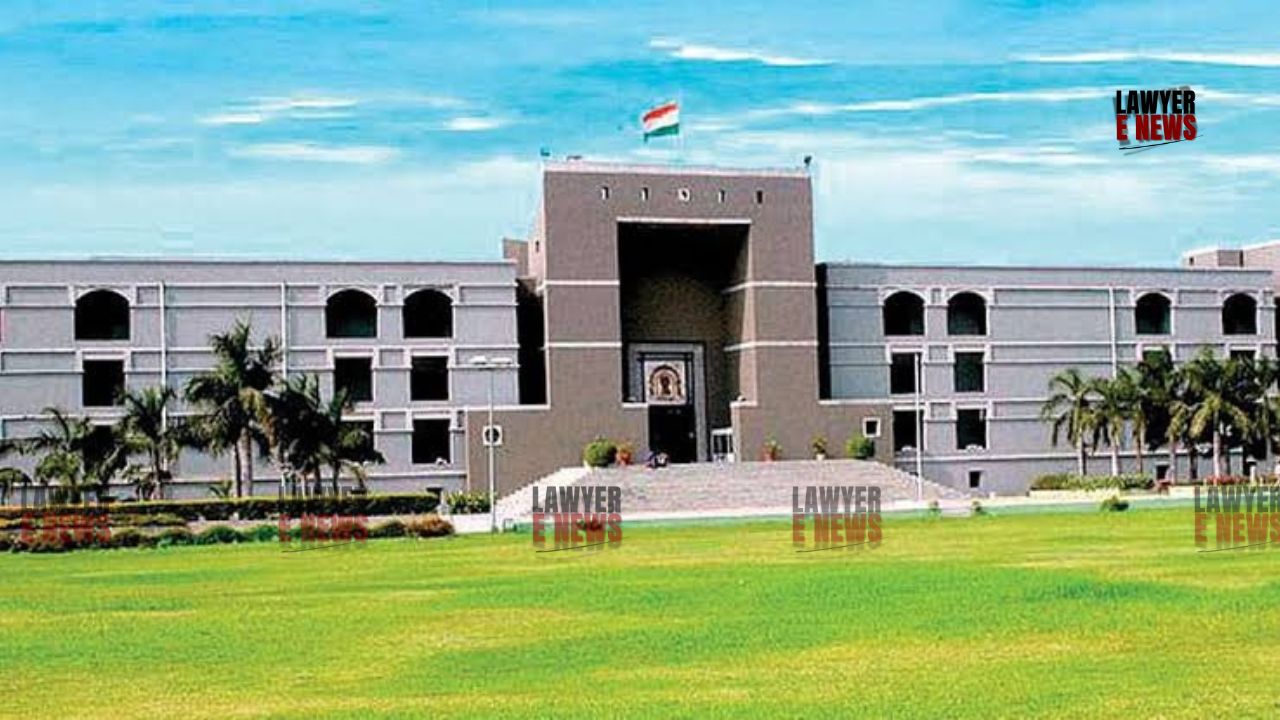
“Even if Conversion Occurred Years Ago, Law Takes Notice When It Continues to Affect Society”: In a significant decision delivered on 1st October 2025, the Gujarat High Court in Varyava Abdul Vahab Mahmood & Ors. v. State of Gujarat & Anr. rejected multiple petitions filed under Section 482 CrPC seeking quashing of FIR No. 11199003211359/2021. The FIR alleged a conspiracy to convert more than 100 persons from 37 Hindu families in Bharuch District through inducement, allurement, and foreign funding. Justice Nirzar S. Desai, while dismissing the petitions, held that the allegations disclose a clear prima facie case and that such conversion activities, even if carried out in the past, constitute a “continuing offence” under the law.
The Court observed, “When the alleged religious conversion is carried out through inducement and continues to affect the social fabric of a community, it becomes a continuing offence. The limitation under Section 468 CrPC cannot be invoked to shield such offences merely because the acts began several years ago.”
The petitioners had urged that the FIR, registered in 2021, was delayed and hence time-barred under the CrPC. However, the Court categorically ruled that Section 468 CrPC, which bars prosecution of offences after a certain time, applies only to offences punishable with imprisonment not exceeding three years. In this case, the offences alleged were punishable with terms extending up to ten years. Relying on the Supreme Court’s decision in Japani Sahoo v. Chandra Sekhar Mohanty, the Court reiterated that delay, especially in continuing offences, cannot be the sole basis for quashing.
“Merely Being Converted Once Does Not Make You a Victim Forever — You May Also Be an Agent of Further Conversions”: Court Rejects Victimhood Claim of Accused
Among the petitioners, several claimed they had themselves been converted in the past and therefore were victims, not perpetrators. The Court firmly rejected this, noting that the evidence collected during the investigation indicated that the petitioners, after their conversion, were actively involved in persuading or enticing other persons to convert using false religious narratives, financial incentives, and promises of support.
“Merely because a person was converted earlier cannot, by itself, immunize him from future criminal liability if he then becomes an active instrument in spreading conversions through inducement or deceit,” the Court stated. It noted that several witness statements recorded under Section 161 CrPC and digital evidence like WhatsApp chats, pamphlets, and voice recordings supported the allegations of active involvement in a larger conspiracy.
The Court also addressed a critical point of law relating to Section 6 of the Gujarat Freedom of Religion Act, which requires prior sanction of the District Magistrate before prosecution. Petitioners had challenged the FIR on grounds that such sanction was not obtained. Dismissing this argument, the Court held that sanction dated 25/07/2022 was very much on record. “If sanction exists, its validity or adequacy cannot be tested at the stage of quashing. These are matters of trial,” the Court held, relying on Dinesh Kumar v. AAI, which held that the presence of sanction is enough at this stage and any deficiency therein can be argued later.
The Court also confronted the issue of conflict with the Supreme Court’s interim order in Shaikh Irfan v. State of Gujarat (2021), wherein a Division Bench had stayed the operation of certain provisions of the 2021 amendment to the Gujarat Freedom of Religion Act. However, the High Court clarified that the stay in Shaikh Irfan was granted only with respect to provisions that dealt with religious conversion in the context of inter-faith marriage. “In the present FIR, there is no allegation of religious conversion for marriage purposes. The allegations pertain to independent acts of conversion through other means. Therefore, the stay in Shaikh Irfan has no application here.”
Turning to the question of whether the allegations in the FIR amounted to criminal offences, the Court applied the well-established principle from Neeharika Infrastructure v. State of Maharashtra and State of Haryana v. Bhajan Lal, that at the stage of quashing, the High Court must examine only whether a prima facie case exists, not weigh the evidence in detail. “The materials on record — statements of victims, panchanamas, and documents — are more than sufficient to infer the presence of a prima facie case. The proper forum for defence is the trial court, not this Court under Section 482 CrPC,” the Court emphasized.
The petition of Abdul Adam Patel @ Fefdawala, a UK-based individual accused of funding the alleged conversion network, was also dismissed. The Court noted that the petitioner had entered India 25 times prior to the registration of the FIR but had not returned since. He was declared absconding in a related case and had not cooperated with the investigation. “A person declared as absconder cannot seek extraordinary relief from the High Court unless he surrenders or cooperates with the investigation. Liberty can be granted only post filing of the charge-sheet, not before,” the Court said.
On the question of whether the role of each accused should be evaluated separately at the quashing stage, the Court reiterated, “A criminal conspiracy cannot be viewed in fragments. It is the collective intent and actions that matter. Whether a particular accused had a greater or lesser role is a matter of evidence, not something to be decided at this pre-trial stage.”
The petitions also attempted to minimize the seriousness of the allegations by suggesting that the conversion had already occurred years ago and did not cause ongoing harm. The Court rejected this argument by invoking the broader constitutional and societal implications. “Religious freedom under Article 25 is not absolute. It does not extend to converting others by fraud, allurement, or coercion. The Constitution protects individual choice, not organized deceit.”
Finally, in one of the connected petitions (SpCrA No. 66 of 2022), where the petitioner challenged summons issued under Section 160 CrPC, the State submitted that the petitioners would not be called for witness examination. Based on this assurance, the petition was dismissed as withdrawn with liberty to revive if needed.
The Court concluded the judgment by dismissing all the quashing petitions — some on merits and others with limited liberty to approach the Court again after filing of the charge-sheet. It directed the petitioners to exhaust remedies before the Magistrate or Sessions Court, as the High Court under Section 482 CrPC could not interfere in the face of a clear prima facie case.
Justice Nirzar S. Desai thus delivered a ruling that not only applies established precedent with clarity, but also underscores the judiciary’s unwillingness to tolerate abuse of constitutional protections in the garb of religious freedom. “Conversion by allurement, when supported by organised networks, foreign funding and misrepresentation, is not only illegal but also threatens the social harmony and secular fabric of the country. Such matters must go to trial,” the Court concluded.
Date of Decision: 1 October 2025