
-
by sayum
28 August 2026 2:11 PM







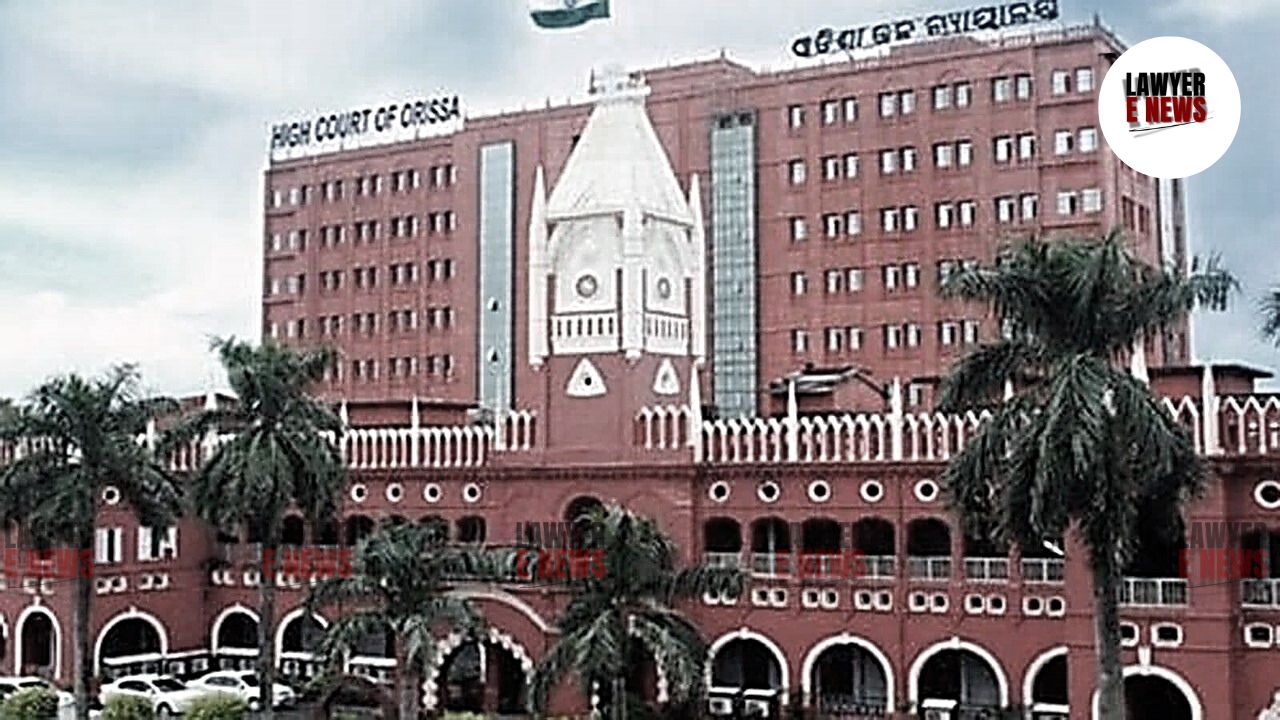
“Delay in FIR Not Fatal When Caused by Medical Emergency” – In a detailed judgment delivered on 1st October 2025, the Orissa High Court partially allowed the appeal filed by the insurance company, modifying the compensation awarded by the Motor Accidents Claims Tribunal (MACT) but firmly rejecting allegations of false implication of the vehicle and upholding the award for pain and suffering due to grievous injuries sustained by the claimant.
Justice V. Narasingh, sitting in motor accident appellate jurisdiction, held that ₹5,00,000 awarded by the Tribunal for pain and suffering to a 39-year-old claimant who suffered 55% disability from pelvic and urethral injuries was reasonable, while ₹2,00,000 awarded for loss of amenities was slightly excessive and should be reduced to ₹1,50,000. Consequently, the total compensation was revised from ₹7,60,000 to ₹7,10,000, with interest @7% p.a. from the date of the claim till realization.
The Court also dismissed the cross-objection filed by the claimant, which sought enhancement of compensation, on the ground that there was no proof of functional disability or income loss, despite the physical impairment.
"55% Permanent Physical Disability Established, But Functional Disability Not Proven – No Compensation for Loss of Income or Promotion"
The case arose from a road accident that occurred on 16.01.2014, where Susanta Kumar Pattnaik, a Head Constable in the Railway Protection Force (RPF), was injured after being hit by a Bullet motorcycle allegedly driven in a rash and negligent manner. He was hospitalised for nearly three months, suffered pelvic fractures and urethral injuries, and later claimed compensation of ₹43,00,000. The MACT awarded ₹7,60,000 with 7% interest, which the insurer challenged as excessive.
The Insurance Company contended that the FIR was lodged late and the vehicle was "planted" to fabricate a claim. However, the Court refused to interfere with the factual findings of the Tribunal, stating:
“The delay in lodging of FIR owing to medical emergency and hospitalisation cannot be fatal... The charge sheet and testimony of the injured, supported by an independent witness, negate the plea of false implication.”
The Court took note of the injuries and disability, but also acknowledged that the claimant had not proved any functional impairment that led to loss of income or professional disadvantage. The Tribunal had recorded that the claimant remained physically active and continued in service.
Justice Narasingh observed: “The learned Tribunal rightly discarded the claim regarding functional disability and also loss of income. The evidence did not support any reversion or demotion causing pecuniary disadvantage.
"Pain, Suffering and Physical Trauma Are Real – ₹5 Lakhs Justified for Human Agony and Medical Inconvenience"
Upholding the major component of the compensation, the Court highlighted the need for human sensitivity while evaluating pain and suffering, especially in cases involving long hospitalisation and permanent physical trauma.
It was noted that the claimant had remained admitted in KIIMS Hospital from 17.01.2014 to 06.04.2014, and had suffered long-term injuries. In this regard, the Court stated:
“Considering the nature of the injury suffered resulting in disability of 55%, on the touchstone of the doctrine of just compensation, this Court is not persuaded to hold that the award of ₹5,00,000 towards pain and suffering can be said to be unreasonable.”
However, on the component of loss of amenities of life, the Court found the award of ₹2,00,000 slightly high and reduced it to ₹1,50,000.
"Doctrine of Just Compensation Must Balance Reason with Humanity – Excess Must Be Curtailed, But Suffering Must Not Be Undervalued"
In modifying the award, the High Court reiterated the principle of “just compensation” under the Motor Vehicles Act, reminding that quantification should not result in a windfall, but at the same time, genuine injuries must be fairly valued.
The Court noted: “The quantification of compensation must strike a balance between the human suffering and the evidence on record. It must neither be a bonanza nor a pittance.”
Appeal Partly Allowed – Modified Compensation Payable Within 8 Weeks or Penal Interest Will Apply
Concluding the matter, the Court directed: “The compensation amount is modified by reducing it to ₹7,10,000 with interest at the rate of 7% per annum from the date of filing of the claim petition i.e., 25.03.2015 till realisation. If the same is not paid within eight weeks, it shall carry penal interest @9% p.a. from the date of application till payment.”
It also directed refund of the statutory deposit to the insurance company upon compliance.
The cross-objection filed by the claimant seeking enhancement was dismissed on grounds of lack of documentary evidence to prove salary loss or career stagnation due to injuries.
Reasonable Pain and Suffering Compensation Upheld, But Cross-Objection and Inflated Claims Curtailed
The decision reflects a balanced approach by the Court in dealing with compensation in motor accident cases, particularly where partial disability is not accompanied by financial loss. While allegations of planted vehicles and delay in FIR were dismissed as unfounded, the Court also carefully scrutinised the compensation amount to ensure it was grounded in evidence and not exaggerated.
Date of Decision: 01.10.2025





