-
by sayum
28 August 2026 10:07 AM







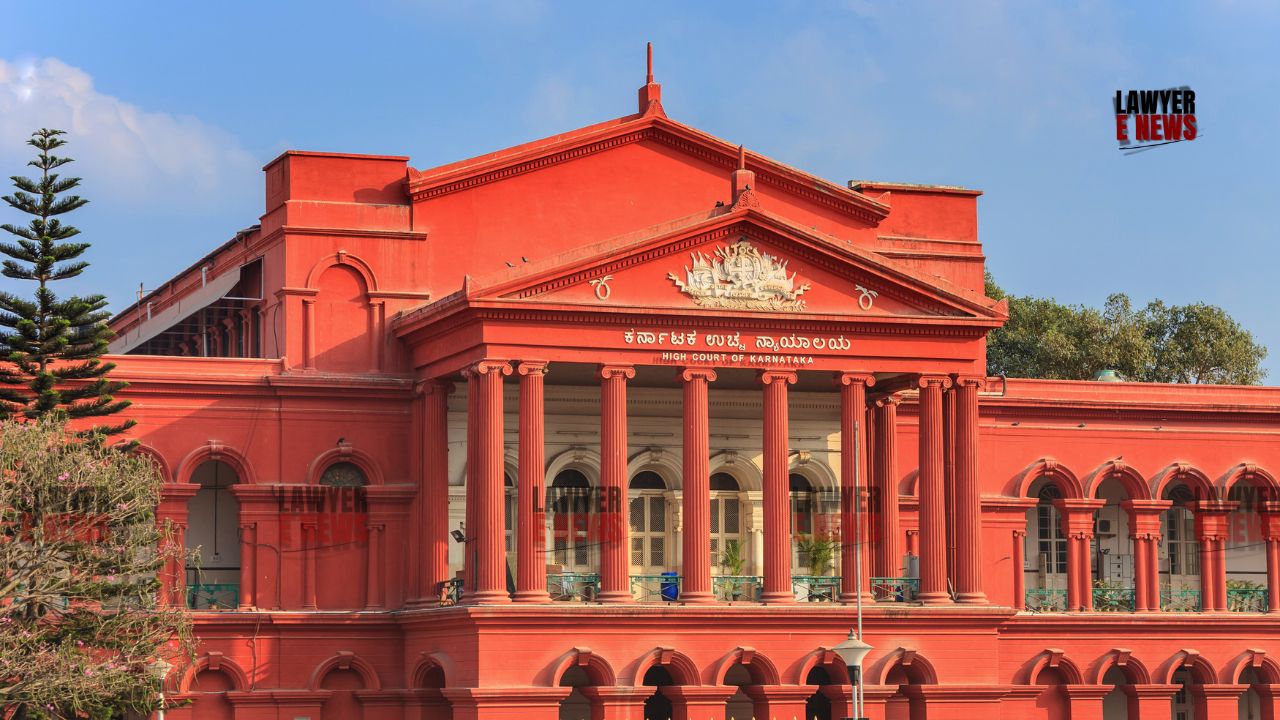
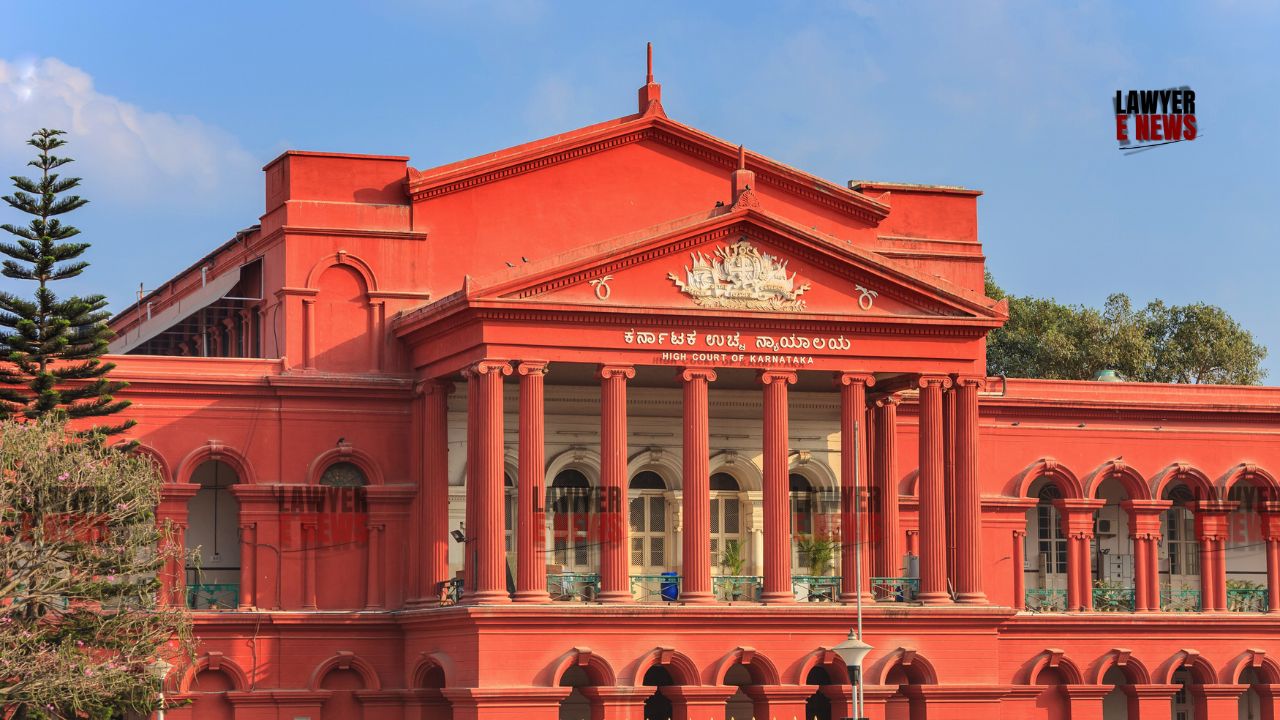
“There is no entrustment, no dishonest inducement, and no criminal intent — this is a civil dispute dressed up as criminal prosecution, which must be nipped in the bud.” — Karnataka High Court delivered a decisive ruling on the misuse of criminal law in commercial disputes. The Court quashed the criminal proceedings against OYO Hotels & Homes Pvt. Ltd. and its senior management, holding that contractual disputes governed by arbitration and civil law cannot be prosecuted under Sections 406 or 420 IPC, unless there is clear entrustment or fraudulent inducement from the outset.
“Criminal Law Is Not a Tool for Commercial Arm-Twisting”
The Court strongly condemned the invocation of criminal charges in what was, at its core, a business fallout arising out of a Master Service Agreement. The High Court warned against “weaponising” criminal law in commercial settings, stating:
“The substratum of the dispute is purely civil in nature — invocation of criminal law in such matters is an abuse of process and must be nipped in the bud.”
Origin of the Dispute: Contractual Fallout Turned Criminal Allegations
The dispute arose from a business arrangement between Rakesh Padachori (complainant) and OYO, originally through Alcott Town Planners Pvt. Ltd., later succeeded by Mypreferred Transformation and Hospitality Pvt. Ltd.. A Master Service Agreement was signed on 12.07.2019 for running a hotel on Brigade Road, Bengaluru. The agreement governed operational and revenue-sharing responsibilities.
Following a fire incident in December 2018, and alleged non-compliance with safety norms, tension escalated. OYO claimed that the complainant illegally locked the hotel, obstructed operations, and disrupted business. This led OYO to initiate civil and criminal actions, including:
A complaint to the police for obstruction
A petition under Section 9 of the Arbitration and Conciliation Act, 1996
Arbitration proceedings for breach of contract
Initiation of Insolvency Proceedings under IBC
While these civil proceedings were pending, the complainant filed a criminal complaint in January 2023, alleging offences under Sections 120B, 406, 409, 417, 420, 427, 506 and 34 IPC, alleging cheating, criminal breach of trust and criminal conspiracy. The police filed a charge sheet, and the magistrate took cognizance, prompting the petitioners to move the High Court under Section 482 CrPC.
The High Court examined whether the charge sheet disclosed the essential ingredients of Sections 406 and 420 IPC, and whether criminal proceedings were sustainable when civil remedies were already being pursued, including arbitration.
The Court held that the allegations failed on both counts.
Justice M. Nagaprasanna observed:
“There is no property entrusted in the case at hand. All the disputes sprung from agreements between the parties. Section 415 mandates that the accused must have lured the victim into the transaction with a dishonest intention right from the inception. There is no luring in the case at hand, as it was a Master Service Agreement between the parties.”
The Court noted that entrustment of property, essential to Section 406 IPC, was completely absent, and there was no indication of fraudulent intent at the inception, which is necessary to attract Section 420 IPC. Rather, the business arrangement had gone sour, and both parties had invoked civil and arbitral remedies.
Referring to key precedents, the Court reiterated that “mere breach of contract does not amount to criminal breach of trust or cheating”, unless the complainant can show that the accused never intended to perform the contract.
The Court particularly emphasized the warning from Manish v. State of Maharashtra, where the Supreme Court cautioned:
“If a civil dispute is given a criminal colour for the purpose of pressurising the opposite party, such prosecution must be quashed at the earliest opportunity.”
The Court also distinguished the complainant’s reliance on Punit Beriwala v. State of NCT of Delhi, pointing out that in that case, fraudulent misrepresentations and concealment were evident from inception, which was not the case here.
“The case at hand reveals no such mala fides at the threshold; it is, in its essence, a pure contractual dispute.”
No Entrustment, No Mens Rea, No Case
Justice Nagaprasanna reiterated that the very architecture of cheating under Section 420 IPC requires an intent to deceive at the inception. The Court found no such element in the business arrangements between the parties.
“The Court must look beyond the phrasing of the complaint and see its substance. If clever drafting cloaks a civil dispute in criminal garb, the Court must intervene to prevent abuse of process.”
The Court stated that allowing such criminal proceedings to continue would amount to allowing the criminal process to be used as a “pressure tactic” or “litigation strategy”, which must be condemned.
Accordingly, the Court allowed the petition and quashed the criminal proceedings in C.C. No. 10486/2023 pending before the IV Additional Chief Metropolitan Magistrate, Bengaluru, making it clear that:
“Observations made in this order are confined to the petitioners and for the purposes of Section 482 Cr.P.C., and shall not influence other legal proceedings pending before any other forum.”
In this landmark judgment, the Karnataka High Court has once again drawn a clear line between civil disputes and criminal offences, warning litigants against using police machinery as a tool of commercial enforcement. The Court’s intervention under Section 482 CrPC reinforces that cheating and breach of trust must not be casually alleged without fulfilling the statutory requirements of intent, inducement and entrustment.
“A failed business relationship does not make out a criminal case. If it did, every contractual breach would result in FIRs. The law does not and cannot countenance such misuse.”
This ruling is a significant development in safeguarding commercial litigants from vexatious prosecutions and ensures that the criminal justice system is not hijacked by commercial rivalries.
Date of Decision: 09.09.2025