-
by sayum
28 August 2026 2:11 PM







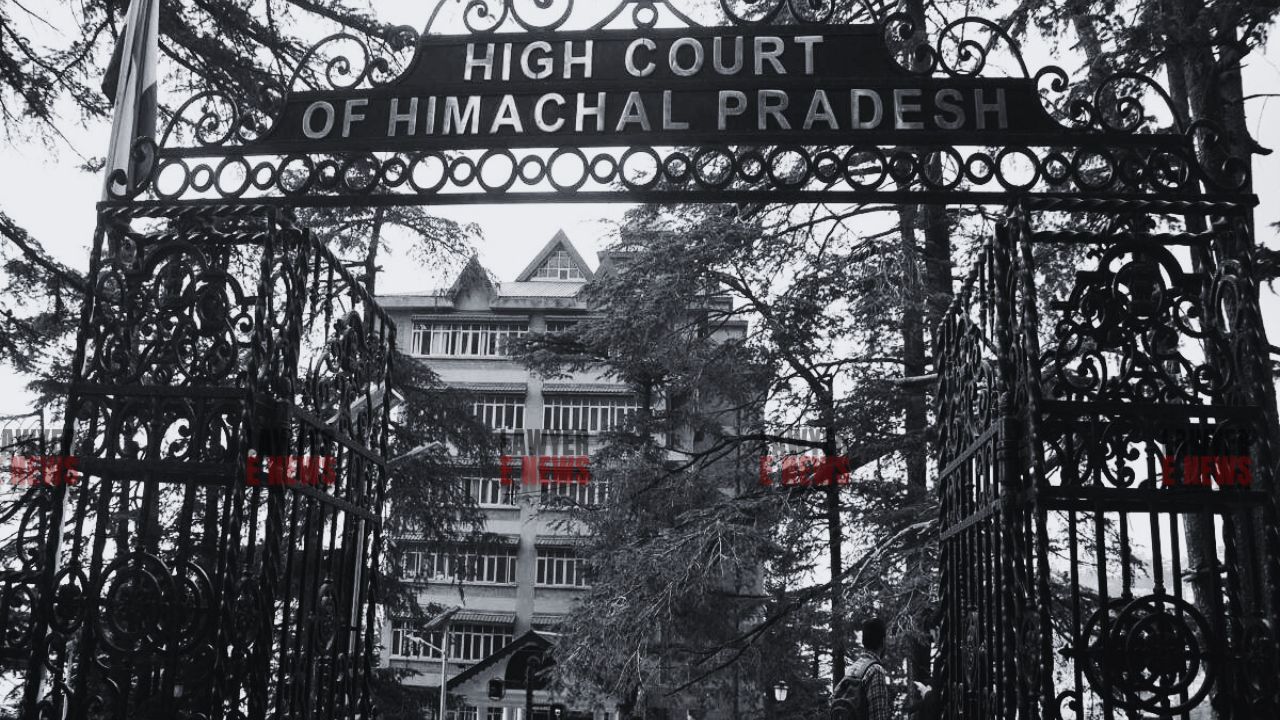
“Once Issuance of Cheque and Borrowing Are Admitted, Burden Shifts — Mere Label of ‘Security’ Will Not Erase Legal Liability”: Justice Rakesh Kainthla Reiterates Settled Law on Presumptions under NI Act.
Himachal Pradesh High Court, through Justice Rakesh Kainthla, upheld the conviction of Sunil Kumar, who had challenged concurrent findings of guilt under Section 138 of the Negotiable Instruments Act, 1881, for dishonour of a cheque due to “account closed.” The petitioner’s core defence — that the cheque was issued as “security” and not for discharge of legal debt — was firmly rejected.
The Court held: “Even if a cheque is issued as ‘security’, once the loan is admitted and there is no proof of repayment, the legal liability subsists… Mere denial in the statement under Section 313 CrPC cannot rebut the presumption under Sections 118(a) and 139 of the NI Act.”
The Court dismissed the Criminal Revision No. 20 of 2025, affirming both the three-month sentence and the compensation of ₹68,000 awarded to the complainant on a dishonoured cheque of ₹50,000.
“Issuance of Cheque and Loan Admitted — Presumption Under Sections 118 & 139 NI Act Rightly Invoked”: Revisional Court Refuses to Re-Appreciate Evidence
The petitioner Sunil Kumar had admitted in his statement under Section 313 CrPC that he borrowed ₹1,50,000 from the complainant and had issued the cheque in question, but claimed it was a blank ‘security cheque’ and that the loan was repaid in cash — a claim unsupported by any evidence.
Justice Kainthla held that: “Once the accused admitted borrowing of ₹1,50,000 and issuance of the cheque, the presumption under Sections 118(a) and 139 NI Act arises… The burden shifts upon the accused to prove repayment.”
The Court cited APS Forex Services v. Shakti International (2020) 12 SCC 724, reiterating that “once signature and issuance are admitted, a presumption of legal liability follows, unless rebutted.” No such rebuttal was offered in this case.
“Section 138 Applies Even When Cheque Is Dishonoured Due to Closed Account”: Court Cites Supreme Court in NEPC Micon Ltd. v. Magma Leasing
Significantly, the cheque issued by the accused was dishonoured for the reason “account closed.” The petitioner argued that Section 138 NI Act does not apply in such cases.
The Court firmly rejected this, citing the Supreme Court’s judgment in NEPC Micon Ltd. v. Magma Leasing Ltd., (1999) 4 SCC 253, which held:
“Closure of the account implies absence of funds, and thus falls squarely within the ambit of ‘insufficiency of funds’ under Section 138 of the NI Act.”
Justice Kainthla reiterated that: “If such an interpretation is accepted, a dishonest drawer can escape liability by simply closing the account after issuing the cheque — this cannot be the legislative intent.”
“Security Cheque Defence Is No Defence If Loan and Liability Remain Unrebutted”: Cheque Dishonour Still Attracts Criminal Sanction
The core argument of the defence was that the cheque was issued only as “security”, and was not meant for encashment. However, the Court noted that even a cheque labelled as “security” becomes enforceable if there is an outstanding liability on the date of dishonour.
Citing the landmark case Sampelly Satyanarayana Rao v. IREDA, (2016) 10 SCC 458, the Court observed: “The term ‘security’ does not render the cheque a worthless piece of paper. If liability exists on the date of presentment, dishonour of such a cheque is covered under Section 138.”
It also referred to Sripati Singh v. State of Jharkhand, AIR 2021 SC 5732, reiterating that: “A cheque issued even as security is actionable under Section 138 if the underlying obligation has not been discharged.”
“No Proof of Repayment, No Evidence Led — Bare Denial Insufficient”: Court Applies Reverse Onus Rule and Cites Multiple SC Precedents
Justice Kainthla further emphasized that the accused led no evidence to rebut the statutory presumption, and mere denial during the Section 313 CrPC statement is not sufficient.
Quoting Sumeti Vij v. Paramount Tech Fab Industries, (2022) 15 SCC 689, the Court reiterated:“Statement under Section 313 CrPC is not substantive evidence of defence. The accused must rebut the presumption by leading direct or circumstantial evidence — which he failed to do.”
Additionally, the Court observed: “The complainant cannot be expected to prove his financial capacity unless such a defence is raised and supported. In this case, it was never substantiated that the complainant lacked capacity or that the loan was repaid.”
“Notice Returned ‘Unserved’ Still Deemed Served”: Court Applies Section 27 of the General Clauses Act
The petitioner also argued that the legal notice was not served. However, the notice was returned with the postal remark “addressee not found”.
The Court held that this triggers “deemed service” under Section 27 of the General Clauses Act, 1897, referring to the judgments in:
C.C. Alavi Haji v. Palapetty Mohd., (2007) 6 SCC 555
Krishna Swaroop Agarwal v. Arvind Kumar, 2025 SCC OnLine SC 1458
“Where notice is properly addressed and sent by registered post, service is deemed unless the contrary is proved — which the accused failed to do.”
“Compensation of ₹68,000 on Cheque of ₹50,000 Is Reasonable Given Five-Year Delay”: Court Relies on Kalamani Tex Principle
Upholding the compensation amount, the Court noted that the cheque was issued in December 2018, but sentence was passed only in June 2024. The delay, coupled with the complainant’s litigation expenses and loss of interest, warranted enhancement over face value.
Citing Kalamani Tex v. P. Balasubramanian, (2021) 5 SCC 283, the Court held: “Courts should uniformly levy fines up to twice the cheque amount along with 9% interest per annum… ₹68,000 compensation on a ₹50,000 cheque is fully justified.”
Justice Kainthla held: “There is no perversity, no jurisdictional error, and no violation of law in the judgments below. The findings are based on due appreciation of evidence.”
The Court thus dismissed the criminal revision, confirming the conviction, sentence of three months’ simple imprisonment, and compensation of ₹68,000 awarded by the Trial Court and upheld by the Appellate Court.
“The judgments and order passed by the learned Courts below are fully sustainable… Present revision fails and is dismissed.”
Date of Decision: 23 September 2025