
-
by sayum
26 August 2026 1:49 PM







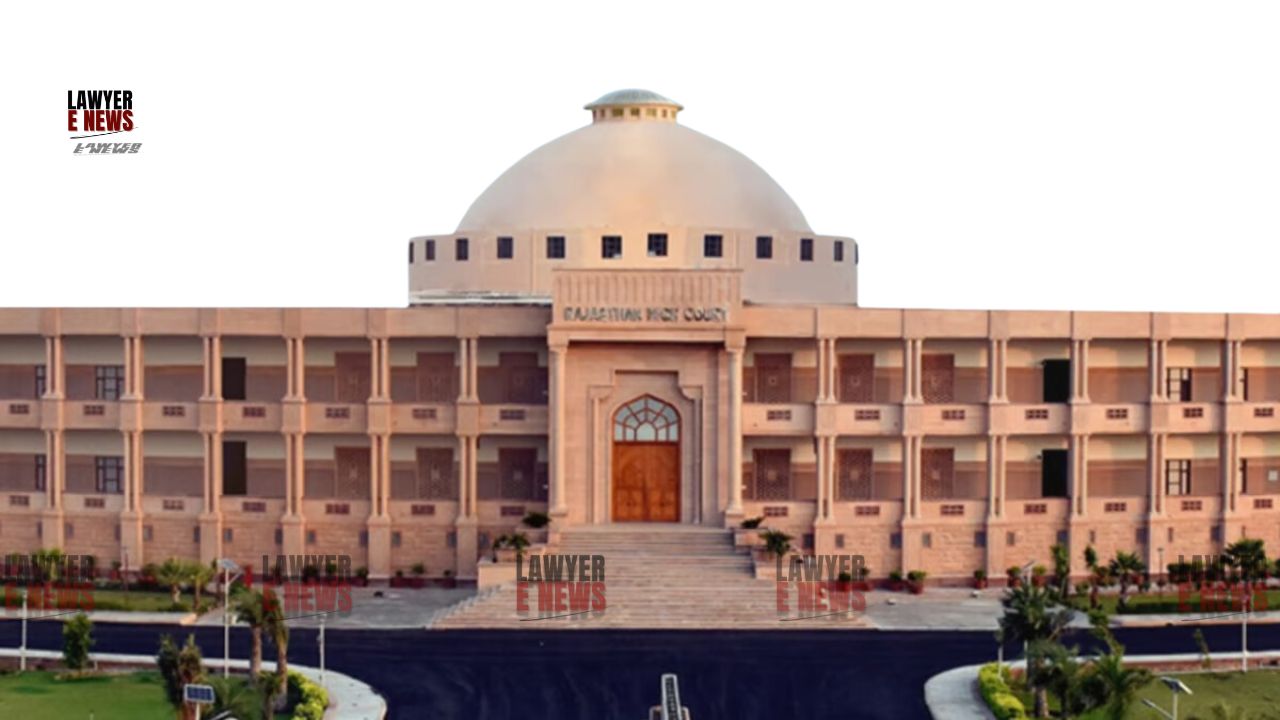
“The very issuance of a cheque constitutes a promise within the meaning of Section 25(3) of the Indian Contract Act, reviving the enforceability of the debt.” - In a landmark judgment reaffirming the intersection of the Negotiable Instruments Act and Contract Act, the Rajasthan High Court decided on October 8, 2025, held that a cheque issued towards a time-barred debt constitutes a valid and legally enforceable promise under Section 25(3) of the Indian Contract Act, 1872, and its dishonour attracts penal consequences under Section 138 of the Negotiable Instruments Act, 1881.
Justice Pramil Kumar Mathur observed that “the appellate court erred in treating the cheques as unenforceable merely because the underlying debt was time-barred”, and restored the trial court’s conviction of the accused, while dismissing his own revision petition challenging the sentence.
“A Time-Barred Loan Does Not Mean a Dead Liability — A Cheque Is Itself a Fresh Promise”
The controversy stemmed from four cheques of ₹1,25,000 each, issued by Gopal Sharma, proprietor of Pooja Sanitary, to Ratiram Yadav in repayment of a loan advanced in 2009. When the cheques were presented in 2013, all were dishonoured for “insufficient funds.” Legal notices were duly served but went unanswered. The trial court convicted the accused in all cases, but the appellate court acquitted him in three and reduced the sentence in one, reasoning that the loan was time-barred and thus not a “legally enforceable debt.”
Challenging the acquittals, the complainant invoked Section 25(3) of the Contract Act, which makes a written promise to pay a time-barred debt enforceable, even without fresh consideration. Justice Mathur agreed, holding that “a cheque itself is such a written promise, duly signed by the debtor, satisfying the statutory requirement.”
He declared: “Under Section 25(3) of the Indian Contract Act, even a time-barred debt can form valid consideration if there is a written promise signed by the debtor. A cheque constitutes such a promise. Therefore, when a cheque is issued towards a time-barred debt and is dishonoured, the liability under Section 138 of the Negotiable Instruments Act squarely arises.”
“Once Signature Is Admitted, Presumption of Debt Arises — Burden Lies on Accused to Rebut”
The Court reaffirmed the strong statutory presumption under Sections 118 and 139 of the Negotiable Instruments Act, stating that once the accused admits to signing and executing the cheque, a presumption automatically arises that it was issued for discharge of a legally enforceable liability.
“The presumption is rebuttable, but the burden lies on the accused to adduce cogent evidence,” the Court noted, finding that the accused had failed to prove repayment or misuse of the cheques.
Citing Bir Singh v. Mukesh Kumar, (2019) 4 SCC 197, Justice Mathur reiterated that even a blank or undated cheque voluntarily signed and delivered attracts the presumption of liability under Section 139 NI Act.
“Security Cheques Are Not Worthless — They Mature for Presentation Upon Default”
Rejecting the argument that the cheques were issued only as security, the Court cited Sripati Singh v. State of Jharkhand, (2022) 18 SCC 614, observing:
“A cheque issued as security pursuant to a financial transaction cannot be considered a worthless piece of paper. If the borrower fails to repay the loan within the agreed time, the cheque matures for presentation, and upon dishonour, consequences under Section 138 follow.”
The Court emphasized that the accused had not produced any material to prove repayment or that the cheques were misused, and hence, the presumption under Sections 118 and 139 remained unrebutted.
“Acquittal Ignored Binding Law — Section 25(3) Revives Time-Barred Debts Through Cheques”
Justice Mathur meticulously examined a series of Supreme Court decisions upholding this doctrine, including:
A.V. Murthy v. B.S. Nagabasavanna, (2002) 2 SCC 642
S. Natarajan v. Sama Dharman, (2021) 6 SCC 413
K. Hymavathi v. State of A.P., 2023 SCC OnLine SC 1128
He noted that these cases settle the law beyond doubt that a cheque for a time-barred debt creates a new enforceable promise, and therefore, a dishonour complaint under Section 138 NI Act is maintainable.
The Court further clarified that the earlier view in Sasseriyil Joseph v. Devassia, 2001 Cri LJ 24 (Ker), relied upon by the defence, “no longer holds good in view of subsequent Supreme Court pronouncements.”
“Revisional Court Can Interfere to Correct Perverse Acquittal”
Dismissing the argument that a revisional court cannot reappreciate evidence, Justice Mathur held that interference is justified where the lower appellate court’s acquittal is “perverse or contrary to law, ignoring statutory presumptions and binding precedent.”
He thus concluded:
“The appellate court erred in setting aside the conviction by ignoring the legal effect of Section 25(3) of the Contract Act and the presumptions under the Negotiable Instruments Act.”
Judgment Restores Conviction and Sentence
The Court allowed the complainant’s revisions, set aside the acquittals dated 06.04.2018, and restored the conviction and sentence imposed by the trial court on 13.11.2017. The accused’s revision petition was dismissed.
“The contention that the debt was time-barred by 2012 does not ipso facto exonerate the accused; the issuance of cheques itself constitutes a promise in writing reviving enforceability under Section 25(3) of the Contract Act,” the Court held.
This judgment by the Rajasthan High Court reinforces that a time-barred debt is not a dead debt when acknowledged by a signed cheque, and that such cheques carry the same penal consequences upon dishonour. It also firmly reaffirms the statutory presumptions under Sections 118 and 139 NI Act, and clarifies that security cheques are actionable upon default, preserving the credibility of negotiable instruments in commercial transactions.
Date of Decision: October 8, 2025





