-
by sayum
27 August 2026 5:16 AM







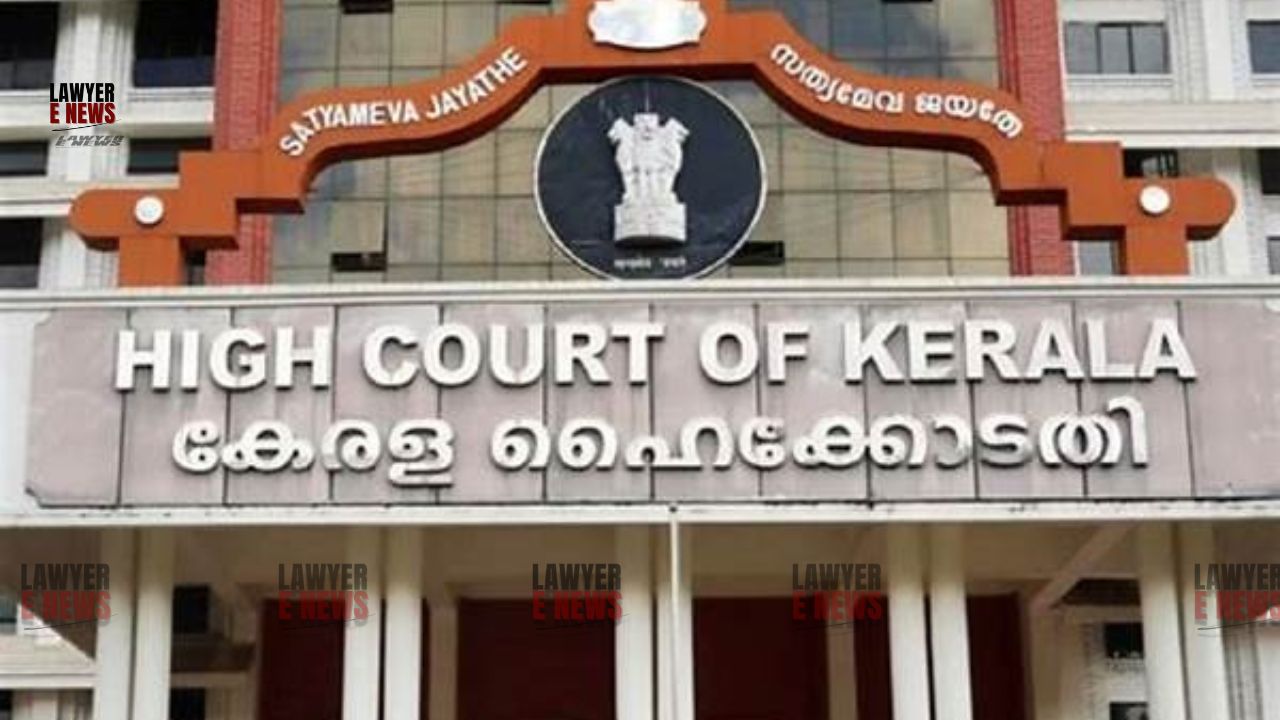
“Tribunal's Finding of Contributory Negligence Cannot Be Based on Conjecture or Absence of Indicator Light—Evidence Must Lead, Not Speculation” - Kerala High Court, through Justice Shoba Annama Eapen, allowed an appeal filed by National Insurance Co. Ltd., holding that the Motor Accidents Claims Tribunal (MACT), Mavelikkara had erred in fixing 50% contributory negligence on the part of a vehicle insured by the appellant without any supporting evidence. The Court held that the entire negligence lay with the claimant, who was charge-sheeted for rash and negligent driving, and that the insurer was not liable to pay any compensation.
The judgment reinforces the principle that findings of contributory negligence must be based on credible evidence, and where the claimant is the sole accused in a police charge sheet, in the absence of rebuttal, the insurer cannot be fastened with liability under Section 166 of the Motor Vehicles Act, 1988.
Charge Sheet Filed Against Claimant—But Tribunal Split Liability Without Valid Basis
The case arose out of a motor accident that occurred on March 5, 2014, when Vipin Das, the claimant, was riding his motorcycle (KL-31E-1713) and collided with another motorcycle (KL-04V-4339) insured by the appellant. The claimant alleged negligence on the part of the other rider and filed for compensation of ₹2,27,860, restricted to ₹2,00,000.
However, during the proceedings before the MACT, it was revealed that the police had charge-sheeted the claimant himself (as per Ext.B1), accusing him of rash and negligent driving. The Accident Motor Vehicle Inspector (AMVI) report further showed that the damage to the insured motorcycle was on the rear-right side, indicating that the claimant's vehicle hit it from behind.
Despite this, the Tribunal fixed contributory negligence at 50:50, reasoning that there was "nothing in evidence to show that the first respondent was riding motorcycle giving sufficient indication to the vehicles coming from the back side".
High Court: “Such a Finding Without Evidence Is Unsustainable in Law”
Justice Shoba Annama Eapen strongly disagreed with the tribunal’s reasoning and held:
"The afore reasons are not sufficient enough to find contributory negligence on the part of the rider of the vehicle insured with the appellant, since the charge sheet is also drawn against the claimant himself."
The Court pointed out that no oral or documentary evidence was produced by the claimant to show any negligence on the part of the insured vehicle’s rider, nor did the claimant even enter the witness box to rebut the insurer’s case. In contrast, the insurer produced Ext.B1 charge sheet, which, relying on New India Insurance Co. Ltd. v. Pazhaniammal [2011 (3) KHC 595], was held to be prima facie evidence of negligence under Section 166 of the MV Act.
"Since the claimant has failed to adduce any evidence to prove negligence on the part of the rider of the offending vehicle, the tribunal went wrong in finding 50% contributory negligence."
“Speculation About Lack of Indicator Light Cannot Substitute Proof”
Criticizing the tribunal’s reliance on the assumption that the vehicle ahead did not have a working indicator, the Court noted: “Tribunal’s finding of contributory negligence based on speculation regarding lack of indicator light at 9.15 p.m. is insufficient to override the charge sheet and AMVI report.”
The Court clarified that speculation and assumptions, however reasonable they may seem, cannot override documentary evidence, particularly when the claimant has failed to discharge the initial burden under Section 166 MV Act to prove negligence of the other vehicle.
Burden Lies on Claimant to Prove Negligence of Insured Vehicle
The High Court emphasized that in claims under Section 166 of the MV Act, the burden lies squarely on the claimant to prove that negligence of the opposing party caused the accident. A charge sheet against the claimant and absence of rebuttal extinguishes that claim.
Relying on Pazhaniammal, the Court reiterated: "The production of police charge sheet is prima facie sufficient evidence of negligence for the purpose of a claim under Section 166 of the MV Act."
In the present case, the AMVI report confirming rear-side damage, the charge sheet naming the claimant as the accused, and the complete absence of rebuttal evidence meant the insurer was entitled to be exonerated from any liability.
Appeal Allowed, Insurer Absolved of Liability
Court held: "The appeal is allowed and the finding of the tribunal fixing 50% contributory negligence on the part of the rider of the vehicle which is insured with the appellant is hereby set aside."
The insurer, National Insurance Co. Ltd., thus stood fully absolved of liability, and the entire claim of the petitioner failed on the ground that he was the sole negligent party.
Tribunal Cannot Ignore Documentary Evidence or Rely on Imagination—Negligence Must Be Proven
This ruling underscores that motor accident claims under Section 166 of the MV Act must be based on concrete evidence, not assumptions or speculative reasoning. When the claimant is charge-sheeted and fails to disprove negligence, the insurer cannot be burdened with compensation.
By setting aside an evidentially unsustainable finding of contributory negligence, the Kerala High Court has reaffirmed the primacy of judicial discipline in fact-finding, especially when dealing with civil liability rooted in tortious conduct.
Date of Decision: 07.10.2025