-
by sayum
28 August 2026 12:24 PM







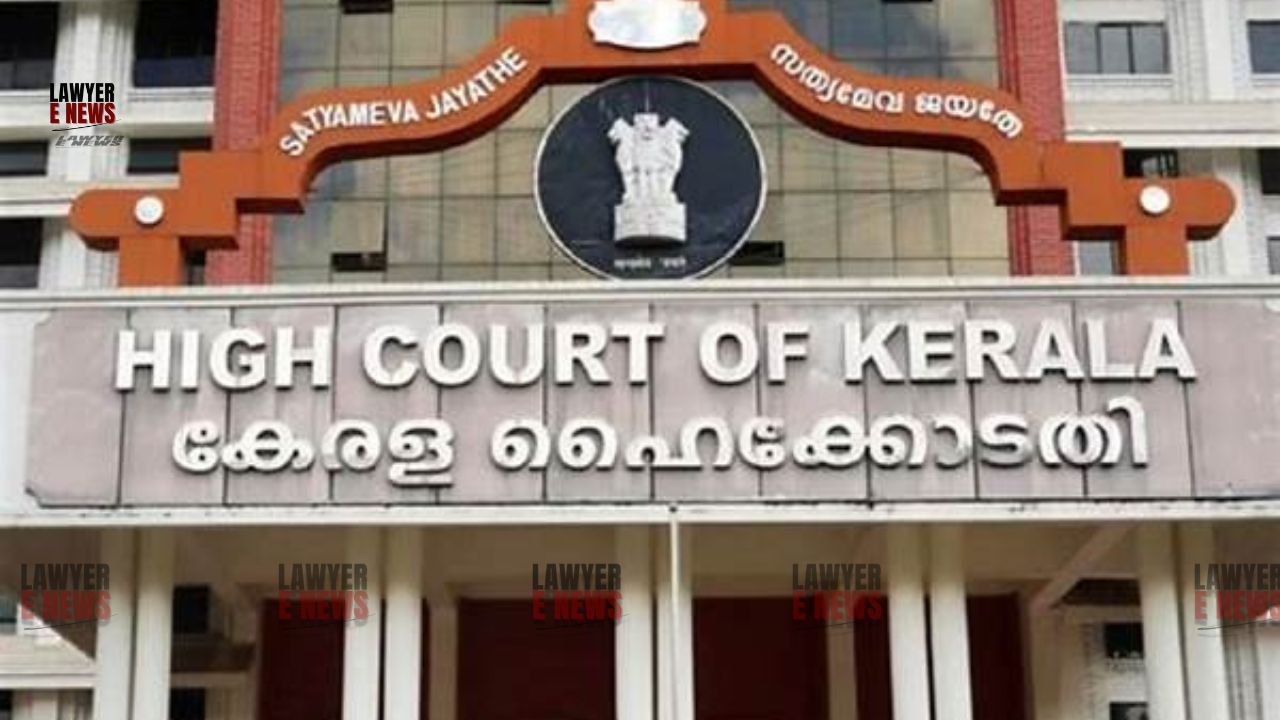
“Court Must Apply Mind Before Allowing Third-Party Access to Criminal Records – Mere Mention of Purpose Is Not Enough” - High Court of Kerala addressing a critical legal issue at the intersection of privacy rights, criminal procedural safeguards, and the Companies Act. Justice V.G. Arun quashed orders of the Special Court under the Companies Act that had allowed a third-party applicant, self-proclaimed whistleblower Shone George, to obtain certified copies of a serious fraud investigation complaint and associated documents without a reasoned judicial determination.
The High Court warned against a mechanical grant of documents to strangers and laid down that issuance of certified copies to non-parties in criminal proceedings must be backed by proper judicial reasoning, especially when privacy and misuse are at stake.
The Court declared, “It is clear from the Rules… that, insofar as strangers are concerned, their entitlement for copies of records, except judgments, is subject to an enabling order by the Court… The Court which makes an order directing issuance of copy should be satisfied of the purpose… which implies application of mind.”
“Certified Copies Are Not Public Rights for Strangers – Issuance Must Be Judicious, Not Automatic”
The dispute arose from three consolidated criminal miscellaneous cases (Crl.M.C. Nos. 5765, 6537, and 6409 of 2025). The petitioner, Shone George, had approached the Special Court under the Companies Act seeking certified copies of the Serious Fraud Investigation Office (SFIO)’s complaint and voluminous annexures relating to investigations against Cochin Minerals and Rutile Ltd. (CMRL) and other entities.
The Special Court had passed cryptic orders, stating only, “Issue certified copies on usual terms”—without recording any judicial reasoning or considering the purpose stated by the applicant. These orders were challenged by CMRL, which contended that the petitioner was a stranger with no locus, acting with political motives and in violation of a civil court injunction restraining him from distributing defamatory materials.
The Kerala High Court observed that Rule 226 of the Criminal Rules of Practice, Kerala, which governs issuance of certified copies to third parties (strangers), demands a duly verified petition stating the purpose, and that judicial satisfaction of that purpose must be reflected in the order.
“Companies Act Does Not Override Procedural Safeguards for Privacy in Criminal Law”
The petitioner argued that he was an “interested person” under Section 212(13) of the Companies Act, 2013, which permits anyone “concerned” to obtain a copy of the investigation report. However, the High Court clarified that this provision only covers the investigation report, not the entirety of complaint materials or annexures.
The Court held, “Going by Section 212(13)… a copy of the investigation report may be obtained… As the petitioner is already issued with a copy of the investigation report, the requirement under that section stands satisfied.”
Rejecting the argument that Companies Act provisions override the Criminal Rules of Practice, the Court reaffirmed that for other documents beyond the investigation report, the process under Rule 226 must be strictly followed.
The High Court warned that certified copies of criminal proceedings are not public documents under Section 74 of the Evidence Act, citing the Supreme Court’s decision in Saurav Das v. Union of India [(2023) 11 SCC 154]. Therefore, privacy rights of accused and others involved must be considered before granting access.
“Court Cannot Ignore Risk of Privacy Infringement or Abuse of Process – Parties Must Be Heard”
The Court cautioned that issuance of documents to strangers carries the risk of tarnishing reputations, especially when injunctions are already in place. The civil court had earlier issued an interim injunction restraining the petitioner from republishing defamatory content, which was later made absolute. This injunction was allegedly circumvented by using certified copies obtained from the Special Court.
Justice V.G. Arun noted, “The question whether issuance of copies will infringe the privacy of the respondent/accused cannot also be overlooked… Courts must be empowered to call for objections from the affected persons in appropriate cases.”
He urged the Rules Committee of the High Court to consider amending Rule 226 to allow courts to issue notice to affected parties when third-party applications for certified copies are filed.
Orders Quashed; Special Court Directed to Reconsider Applications with Reasons
The High Court concluded that the Special Court’s orders were unsustainable due to absence of judicial reasoning. The Court quashed the orders dated 24.04.2025 and 29.04.2025 by which copies of the complaint and investigation annexures were issued.
The petitions filed by CMRL (Crl.M.C. Nos. 6537 and 6409/2025) were allowed, and the petition filed by Shone George (Crl.M.C. No. 5765/2025) seeking further access was dismissed. The matter was remanded to the Special Court to pass fresh, reasoned orders after considering all legal provisions and privacy concerns.
Conclusion: A Powerful Reinforcement of Judicial Discipline, Privacy Rights and Procedural Integrity
This judgment serves as a critical reminder that access to sensitive court records cannot be allowed as a matter of routine, especially in criminal cases involving serious allegations. The decision fortifies the doctrine that strangers have no automatic right to court records, and that privacy, fairness, and abuse prevention must guide judicial discretion.
The Kerala High Court’s ruling echoes a core principle: “In the pursuit of transparency, courts must not become instruments of reputational warfare.”
Date of Decision: 13 August 2025