-
by sayum
28 August 2026 12:24 PM







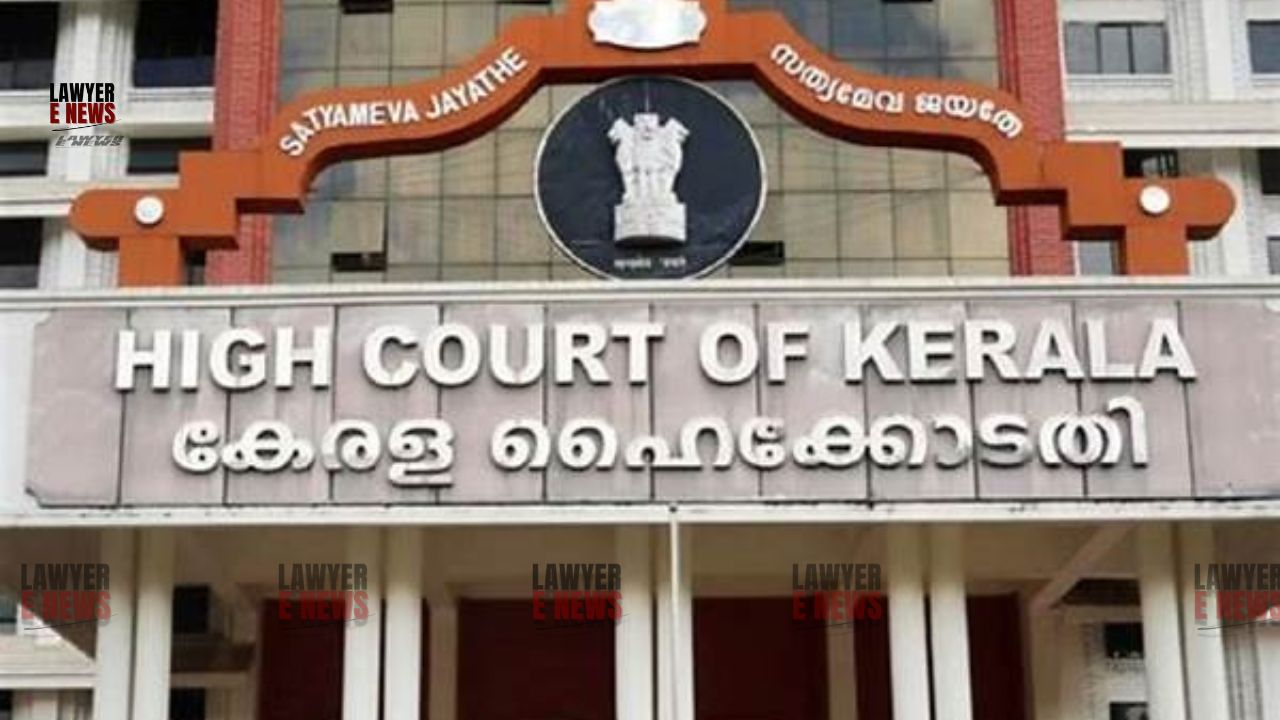
"Refusal of Statutory Notice Does Not Curtail Drawer’s Right to 15-Day Payment Period Under Section 138 N.I. Act" – Kerala High Court, in a significant ruling by Justice Gopinath P., overturned acquittals in three cheque dishonour cases and clarified a critical procedural point under the Negotiable Instruments Act, 1881. In the combined judgment, the Court held that “even when a statutory notice under Section 138 is returned with the endorsement ‘refused’, the drawer of the cheque is entitled to the full 15 days for payment, and the cause of action for filing the complaint arises only after expiry of that period.”
This ruling strikes down the earlier Kerala High Court decision in Jayakrishnan v. Unnikrishnan, 2015 (5) KHC 683, declaring it per incuriam for failing to consider binding Supreme Court precedents such as C.C. Alavi Haji v. Palapetty Muhammed and K. Bhaskaran v. Sankaran Vaidhyan Balan.
The appeals arose from judgments delivered by the Judicial First Class Magistrate, Temporary Court, Neyyattinkara, on 30.12.2022, in S.T. Nos. 351/2016, 352/2016, and 353/2016, which acquitted the accused under Section 255(1) Cr.P.C. on the ground that the complaints were time-barred under Section 142 of the Negotiable Instruments Act, 1881.
The appellants, P.S. Madhusoodanan and Suresh Kumar, alleged that the respondents/accused – who were a married couple – had borrowed amounts of ₹4,00,000 and ₹9,00,000 respectively, and issued cheques towards repayment. Upon dishonour of these cheques, the complainants issued legal notices. These notices were returned “refused”, triggering the complaints.
However, relying on Jayakrishnan (2015), the Magistrate concluded that the 15-day statutory period under Section 138(c) was not applicable when the notice was refused, and that the cause of action began immediately upon the return of the notice. On this basis, the Magistrate found the complaints filed beyond limitation and acquitted the accused.
Does Cause of Action Arise Immediately on Notice Refusal?
The crux of the appeal was whether a refusal of the statutory notice by the drawer under Section 138 of the N.I. Act extinguishes their right to the 15-day grace period for payment, and thereby triggers the cause of action immediately upon the return of the refused notice.
The appellants contended that refusal of notice does not accelerate the accrual of cause of action and cited the Supreme Court's binding rulings in:
C.C. Alavi Haji v. Palapetty Muhammed
K. Bhaskaran v. Sankaran Vaidhyan Balan
They submitted that the cause of action must arise only after the lapse of 15 days from the date of deemed service, regardless of whether the notice was received or refused.
In response, the respondents/accused argued that refusal indicates an intentional disregard and hence, the 15-day period does not apply in such cases. They attempted to defend the Jayakrishnan ruling, which had held that the cause of action starts from the date of return of refused notice.
Binding Law from Supreme Court Reigns Supreme
The High Court, after examining the legal framework and precedents, unequivocally held that the law laid down in Jayakrishnan v. Unnikrishnan was per incuriam, as it ignored the binding authority of the Supreme Court in Alavi Haji and Bhaskaran.
Justice Gopinath P. stated: "It is thus clear that even where the notice was refused or unclaimed, the same would be deemed to be served by virtue of the provisions contained in Section 27 of the General Clauses Act… and the cause of action for filing the complaint would commence only on completion of the 15 days contemplated by clause (c) of the proviso to Section 138 of the N.I. Act."
Relying on Alavi Haji, the Court reiterated that “giving of notice” is complete upon dispatch to the correct address, and refusal or non-receipt cannot deprive the drawer of the 15-day period to comply. It further explained that this construction is essential to prevent unscrupulous drawers from evading liability through manipulation.
Notably, the Court reproduced the following crucial observation from the Supreme Court in Bhaskaran:
"Giving is a process of which receipt is the accomplishment. It is for the payee to perform the former process by sending the notice to the drawer at the correct address and for the drawer to comply with Clause (c) of the proviso."
Consequent Finding: Jayakrishnan Ruling Is Per Incuriam
The Court critically analysed the reasoning in Jayakrishnan, which held that the cause of action arises on the date the payee receives the returned notice marked ‘refused’, and rejected it outright:
“On a reading of the judgment of the Supreme Court in Alavi Haji… I am constrained to hold that the view taken by this Court in Jayakrishnan (supra) is per incuriam and without noticing the decision of the Supreme Court in Alavi Haji.”
Acquittals Set Aside and Cases Remanded
Having found that the complaints were not time-barred, the High Court proceeded to set aside the acquittal orders in all three cases. However, since the trial court had dismissed the complaints solely on limitation, the High Court remanded the matters for fresh adjudication on merits.
“Accordingly, these appeals are allowed by way of remand... S.T.Nos.351/2016, 353/2016 and 352/2016 will stand restored to the file of the Judicial First Class Magistrate Temporary Court, Neyyattinkara… and shall be disposed of in accordance with law.”
The parties were directed to appear before the trial court on 13.10.2025 at 11:00 A.M., and the High Court clarified that no finding has been rendered on other factual or legal issues, leaving them open for determination by the trial court.
The Kerala High Court's ruling reinforces the principle that the drawer of a dishonoured cheque must always be given the statutorily mandated 15 days to make payment, even if they refuse to accept the statutory notice. This judgment restores the legal position laid down by the Supreme Court and disapproves of short-cuts that could lead to wrongful prosecution.
By declaring Jayakrishnan v. Unnikrishnan per incuriam, the Court has not only clarified a critical point of procedural law under Section 138 N.I. Act but also upheld the doctrinal discipline of precedent by ensuring that binding Supreme Court rulings remain the final word on legal interpretation.
Date of Decision: 06.10.2025