
-
by sayum
28 August 2026 2:11 PM







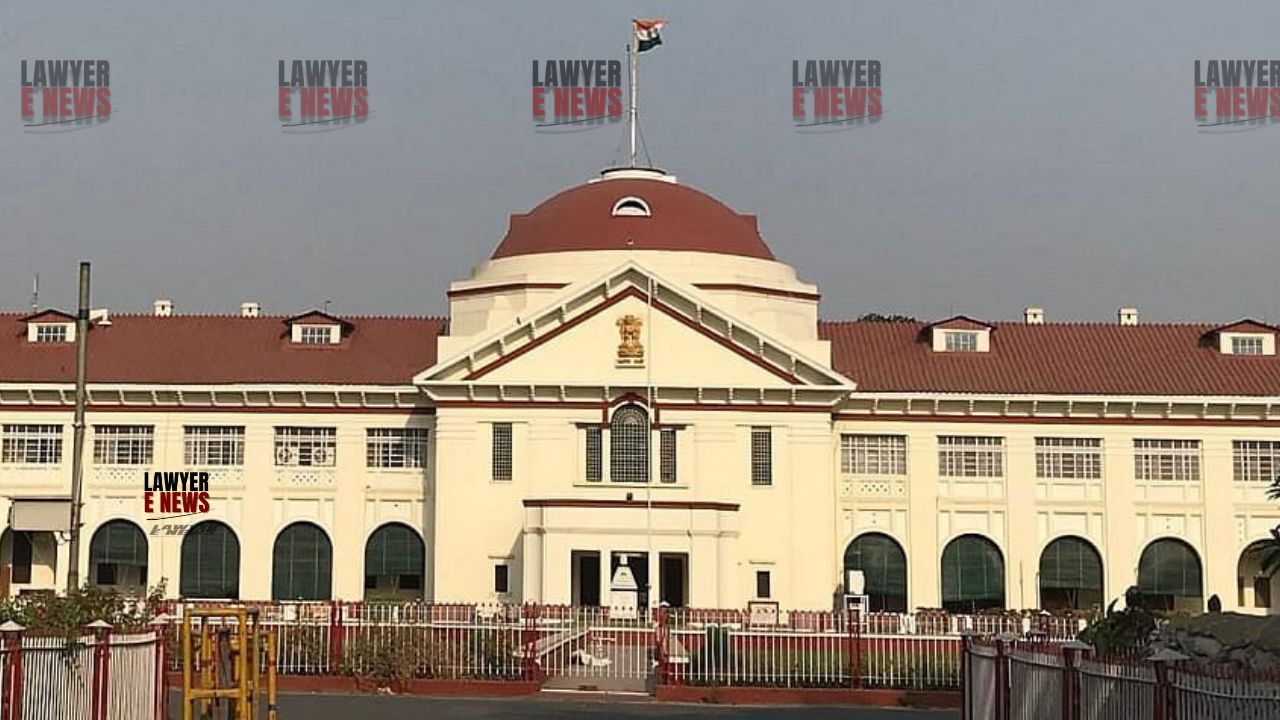
“When a Woman Is Humiliated for Her Caste Before Others, the Law Cannot Turn Away – Allegation of Atrocity Must Proceed to Trial” - In a judgment that reinforces the protective contours of the Scheduled Castes and Scheduled Tribes (Prevention of Atrocities) Act, 1989, the Patna High Court dismissed a criminal appeal filed by members of an upper-caste family seeking to quash cognizance taken against them under the SC/ST Act and IPC, for allegedly abusing and assaulting a Scheduled Caste woman, their own daughter-in-law, with caste-laced slurs and violence.
Justice Alok Kumar Pandey held that "when the informant has clearly stated that her screams attracted villagers to the scene, the abusive remarks made in their presence satisfy the requirement of 'public view' under Sections 3(1)(r) and 3(1)(s) of the SC/ST Act."
Rejecting the plea that the remarks were made inside a private home and therefore not prosecutable under the Act, the Court observed:
“From the initial version of the FIR, it is crystal clear that the informant was subjected to humiliation by addressing her with caste-indicative abuses and taunts, and the alarm raised by her drew the people of the village to the spot. What else is required to constitute a prima facie case under the SC/ST Act?”
“The Honour of Our Family Was Ruined by a Dalit Marriage” – Patna High Court Finds Prima Facie Offence of Caste-Based Humiliation by In-Laws
The case arises from Darauli P.S. Case No. 292 of 2022, where the informant, a Scheduled Caste woman, married into an upper-caste household. According to the prosecution, the woman and her family were continuously harassed by the appellants, who made frequent caste-based taunts, including telling her that marrying into their family had "cut the nose of our clan by mixing it with a Dalit" — an exact phrase recorded in the case diary.
The events culminated in a violent altercation on the morning of the occurrence, when a dispute over drainage water triggered a physical assault by multiple in-laws, as well as caste-based verbal abuse. The informant alleged that her daughter and sister-in-law were also attacked, and jewellery worth Rs. 1 lakh was looted during the incident. The family was allegedly threatened with death if they did not vacate the house.
Significantly, the FIR stated that “on hearing the commotion, villagers gathered”, and statements recorded during investigation confirmed that the abuses were hurled in their presence.
The High Court found that this detail was pivotal to the case: “The occurrence took place in public gaze. The legal mandate of the SC/ST Act is fully attracted in light of the present facts and circumstances. The version of the FIR is supported by re-statements of the informant and witnesses and reflects a clear intent to humiliate a Scheduled Caste woman for her caste identity.”
“At Cognizance Stage, Court Must Not Weigh Defence but Only Examine Prima Facie Guilt” – Plea to Quash Proceedings Rejected
The appellants argued that the trial court took cognizance mechanically, without proper application of judicial mind, and sought to rely heavily on Supreme Court judgments such as Hitesh Verma v. State of Uttarakhand, Karuppudayar v. State, and Swaran Singh v. State, which held that remarks made in private without public view do not attract the SC/ST Act.
The High Court, however, distinguished all these precedents, holding: “The cited decisions are not applicable in the present case. Unlike those cases, the FIR here clearly states that villagers arrived during the incident and heard the remarks. There is therefore sufficient basis to say the incident occurred ‘in public view’.”
On the question of whether the Magistrate had rightly taken cognizance, the Court found that paras 5, 6, 7 and 31 of the case diary, along with the FIR and injury reports, were duly examined before cognizance was taken. The trial court had therefore applied its mind.
Quoting Sonu Gupta v. Deepak Gupta, (2015) 3 SCC 424, the Court reiterated: “At the stage of cognizance, the Magistrate is not required to evaluate the defence or weigh the evidence, but merely to see whether a prima facie case exists.”
Caste-Based Atrocities Within Families Must Not Be Camouflaged as Private Disputes: High Court’s Ruling Reaffirms Dalit Woman’s Right to Legal Protection
The Court was clear in its conclusion that the facts demonstrated caste-based targeting within a family due to a cross-caste marriage, and that such behaviour is not protected from prosecution merely because it occurs among relatives or within a home.
The judgment stressed:
“When a woman is taunted with her caste identity, assaulted, and threatened in the presence of others solely for belonging to a Scheduled Caste, the offence is not private. It is an atrocity that falls squarely within the protective framework of the SC/ST Act.”
Holding that the offences under the SC/ST Act and IPC were prima facie made out, the Court dismissed the appeal at the admission stage, affirming the trial court's order dated 27.03.2023 that took cognizance of the offences against the in-laws.
Date of Decision: 26 September 2025





