-
by sayum
28 August 2026 2:11 PM







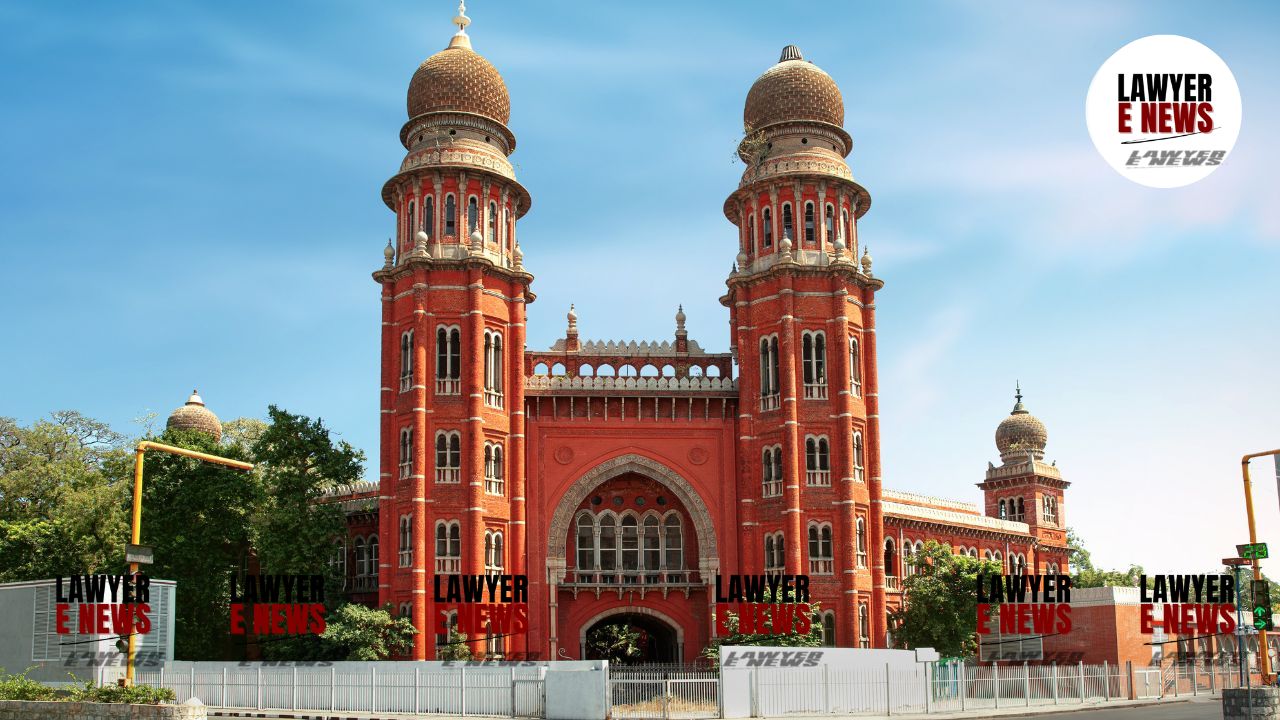
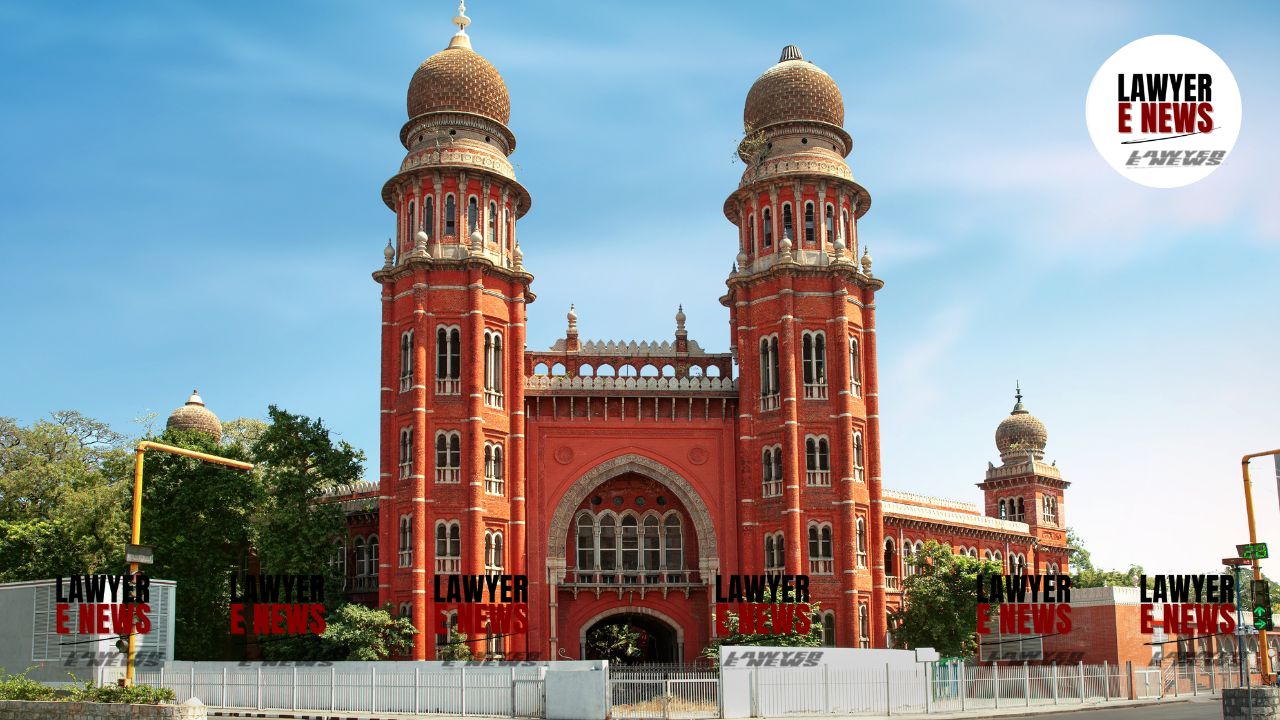
“Once a Person Borrows and Drives a Vehicle, He Steps into the Shoes of the Owner and Ceases to Be a Third Party” - In a decisive judgment Madras High Court held that the legal heir of a deceased person who had borrowed a vehicle from his brother and later died in a self-caused accident was not entitled to compensation under Section 163-A of the Motor Vehicles Act, 1988.
Justice R. Poornima setting aside the award of ₹3,93,500 granted by the Motor Accident Claims Tribunal, Tirunelveli, in favour of the widow of the deceased. The Court held:
“When a person borrows a vehicle from its owner and drives it, he steps into the shoes of the owner. In such cases, he is not a third party and cannot maintain a claim under Section 163-A against the insurer.”
This judgment marks a strict adherence to settled principles of insurance law and tort liability, particularly emphasizing that a tortfeasor cannot claim compensation from his own insurer.
“Insurer Not Liable for Borrower's Self-Caused Accident—Deceased Was Tortfeasor, Not a Victim”
The appeal arose from a motor accident that occurred on 23 February 2009, in which the deceased, Rajasekar @ Chandrasekar, was driving a Toyota Qualis car owned by his brother, when he lost control, leading to the vehicle capsizing on the Sankarankoil-Kovilpatti Main Road. The deceased, who had borrowed the vehicle to visit a family temple, sustained fatal injuries.
His widow, Annalakshmi, filed a claim under Section 163-A of the Motor Vehicles Act, asserting that the deceased was earning ₹3,000 per month and was the sole breadwinner of the family. The Motor Accident Claims Tribunal awarded ₹3,93,500 in compensation, which was now challenged by the insurer.
“Deceased Stepped into the Shoes of Owner—Claim Fails for Want of Third-Party Status”
The key legal question was whether a borrower of a vehicle, who drives it and causes a self-accident, can be deemed a third party and whether a claim under Section 163-A is maintainable against the insurer.
Justice R. Poornima categorically held that: “The deceased was driving the vehicle with the permission of the owner—his own brother. Therefore, he cannot be treated as a third party. He became a permissive user and thus, effectively the owner in legal contemplation.”
The Court relied on the Supreme Court’s binding precedent in Ramkhiladi & Anr. v. United India Insurance Co. & Anr., (2020) 2 SCC 550, which held:
“A borrower or permissive user of a vehicle cannot maintain a claim under Section 163-A against the owner or insurer, as such a person steps into the shoes of the owner and loses third-party status.”
The Court affirmed that the deceased, as a gratuitous user, was not covered under the terms of the insurance policy, and was not a paid driver, thus disqualifying any claim under Section 147 or any extended coverage.
“FIR Clearly Attributes Negligence to Deceased—Tribunal Erred in Ignoring Admitted Tortious Conduct”
A crucial part of the Court’s reasoning lay in the unambiguous findings from the FIR, marked as Exhibit P1, which attributed the accident solely to the deceased’s rash and negligent driving. The FIR, registered under Sections 279, 337, 338 and 304-A IPC, recorded the statement of a co-traveller, Kaliraj, who stated that the deceased was driving “in a rash and negligent manner,” leading to the accident.
Additionally, the claimant herself admitted in cross-examination that the deceased had borrowed the vehicle from his brother and was driving it at the time of accident, establishing that no other vehicle was involved.
The Court observed:
“The Tribunal failed to give any specific finding on negligence and merely stated that it was not proved who caused the accident. However, the FIR and the claimant’s own evidence clearly fix culpability on the deceased.”
Such oversight, the Court held, amounted to perversity in the award, warranting its total annulment.
“No Cause of Action Against Insurer—Deceased Was Not Covered Under Policy, Not a Paid Driver or Third Party”
The insurer argued that the policy covered only third-party liability and that the insured vehicle was a private car, not covered for gratuitous users or relatives of the owner. The Court agreed, noting:
“The deceased was neither a paid driver, nor an employee or third party. The policy did not envisage coverage for gratuitous users or relatives of the owner.”
The Court, following Section 147 of the MV Act, reinforced that insurance coverage does not extend to the owner himself or any permissive user unless expressly provided. In this case, there was no statutory or contractual obligation on the insurer to indemnify the claim.
“Multiplier Dispute Moot—No Liability Once Claim Itself Is Non-Maintainable”
The appellant had also argued that the Tribunal erred in applying a multiplier of 16 for a deceased aged 36, instead of 15 as per Sarla Verma principles. However, the Court held that the issue was rendered academic, stating:
“Once it is established that the claim itself is not maintainable under Section 163-A, the correctness of the multiplier applied becomes irrelevant.”
Justice R. Poornima allowed the appeal, setting aside the Tribunal's award in MCOP No.696 of 2012, and dismissed the claim petition entirely. The Court further clarified:
“The Insurance Company is entitled to recover any amount deposited before the Tribunal by filing appropriate application.”
No costs were awarded, and the connected miscellaneous petition was closed.
The Court re-affirmed the settled position that self-inflicted accidents by borrowers of insured vehicles do not create a compensable claim under the Motor Vehicles Act, and that insurers are not liable when the deceased is the tortfeasor himself.
Date of Decision: 24 September 2025