-
by sayum
15 August 2026 10:03 AM







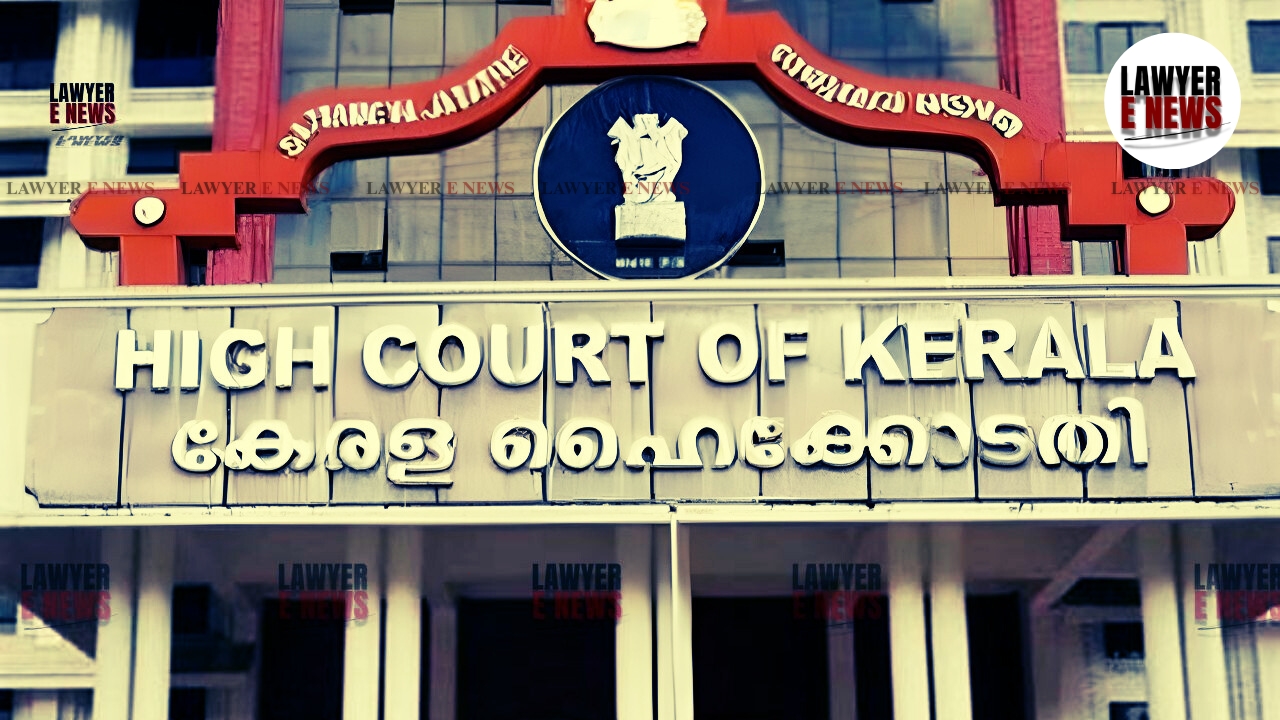
"It is always better to call for an expert's opinion rather than the court by itself comparing signatures with the naked eye." Kerala High Court, in a significant ruling, held that it is legally sounder for a trial court to seek an expert opinion on disputed signatures rather than attempting a comparison with the naked eye.
Justice T.R. Ravi observed that while Section 73 of the Evidence Act enables judicial comparison, relying on expert testimony under Section 45 is a safer course of action to avoid potential infirmities in judgment.
The case arose from a partition suit filed in 2017 where the defendants claimed the property was subject to an oral gift. The petitioner-plaintiff challenged the authenticity of a 2012 document, styled as a 'Will' but claimed by the petitioner to be a gift, asserting that it did not bear her mother’s genuine signature. The Principal Munsiff Court-I, Kozhikode, had rejected the application to send the document for expert opinion, prompting the original petition.
The primary question before the court was whether a document challenging the validity of a signature is relevant when the primary defense is based on an oral gift. The court was also called upon to determine whether the trial court’s refusal to seek an expert opinion on the grounds of trial commencement and potential hardship was legally sustainable.
Relevance Of Documents In The Context Of Oral Gift Claims
The High Court disagreed with the trial court's finding that the disputed document was irrelevant because the main issue pertained to an oral gift. The bench noted that any document allegedly executed by the same donor would naturally have a bearing on the credibility of the oral gift claim.
The court observed that the approach of the lower court in brushing aside the document was not legally justified. Justice T.R. Ravi noted that the contention based on the document would have a significant bearing on the adjudication of the oral gift, regardless of whether the expert finding eventually favoured the plaintiff or the defendants.
"The contention based on the document will have a bearing, whether it is found in favour or not, on the contention regarding the oral gift. As such, the document cannot be said to be totally irrelevant."
Expert Opinion Versus Judicial Comparison Under Section 73
Examining the scope of the Evidence Act, 1872, the court referred to several precedents regarding the comparison of handwriting and signatures. While Section 73 empowers the court to compare signatures, the High Court emphasized that this power should be exercised with extreme caution and is not a substitute for professional expertise.
The bench cited the decision in Kunhalima v. Mahammed [2024 KHC 267], which held that comparing signatures in two documents—one admitted and one disputed—by the naked eye is a "dangerous and unsafe" practice. The court reiterated that such technical evaluations strictly fall within the province of an expert.
"Comparison of signatures... by the naked eye, though enabled by Section 73 of the Evidence Act, is dangerous and unsafe and is a matter which comes within the province of an expert."
Section 73 Is A Rule Of Caution, Not A Substitute For Section 45
The Court further relied on Vishnu Nampoothiri E. v. V. Balachandran [2020 (3) KHC 211], which clarified that Section 73 of the Evidence Act is a rule of caution and prudence. It was noted that a conclusion arrived at solely by the court’s own comparison might carry inherent infirmities that could prejudice the trial's outcome.
The bench highlighted that the exercise of power under Section 73 should ideally be supplemented by an expert opinion under Section 45 of the Evidence Act. In the present case, the High Court found that the trial court's refusal to send the document for expert analysis merely because the trial had commenced was an insufficient ground to deny the application.
"There can be no doubt about the proposition that it is always better to call for an expert's opinion rather than the court by itself comparing signatures with the naked eye."
The High Court allowed the original petition and set aside the order dated September 25, 2021, passed by the Principal Munsiff Court-I, Kozhikode. The trial court was directed to take the necessary steps to send the disputed document for expert opinion and proceed with the case only after obtaining such an opinion.
Date of Decision: 10 July 2026