-
by sayum
19 August 2026 12:01 PM







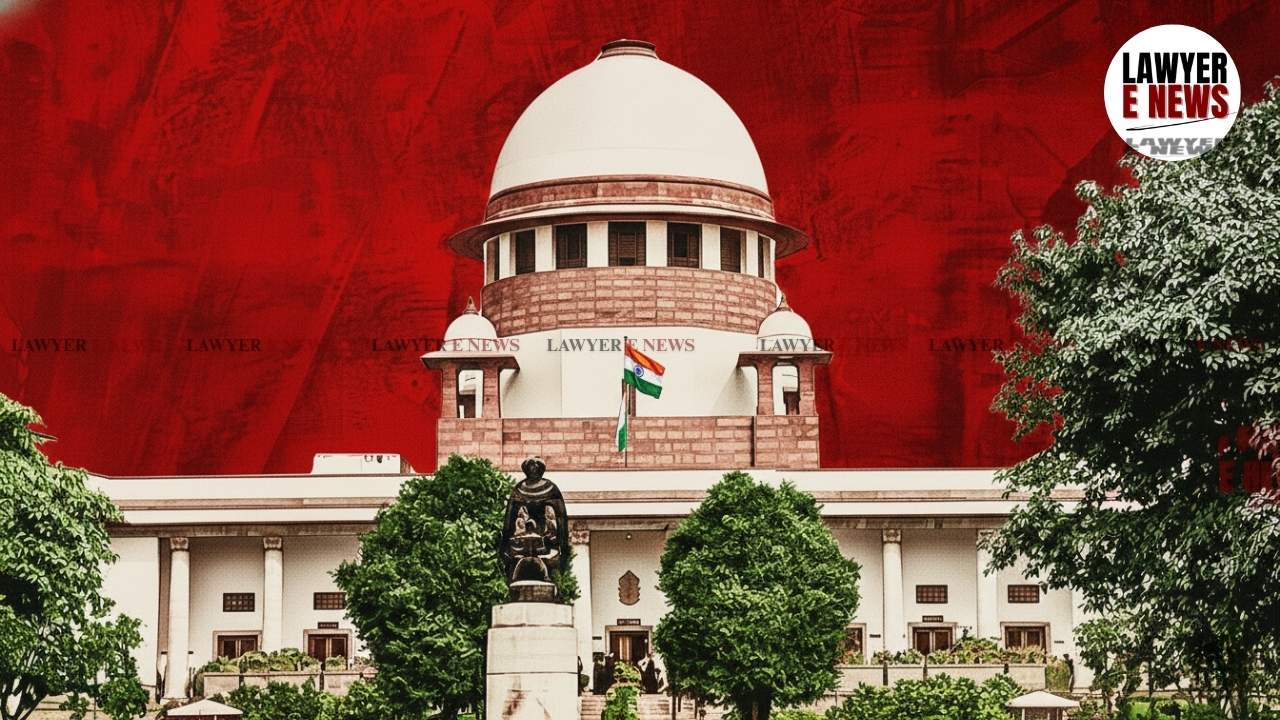
Supreme Court of India, in a significant ruling dated April 17, 2026, held that a statutory authority cannot unjustly withdraw a previously granted subsidy by accusing the beneficiary of non-compliance, particularly when the authority itself ignored repeated requests to conduct a mandatory re-inspection. A bench comprising Justice Sanjay Karol and Justice Augustine George Masih observed that the appellant had clearly discharged its obligation under the scheme, and the authorities could not penalize the beneficiary for their own administrative lethargy after the facility was accidentally destroyed by fire.
The Agriculture Produce Market Committee, Deesa (APMCD), constituted under the Agricultural Produce Market Committee Act, 1963, received a 50 percent advance subsidy of Rs. 25 lakhs under an NHB/NABARD scheme for constructing a cold storage facility. During an initial joint visit in November 2008, authorities found the unit operating at minimal capacity and kept the remaining subsidy pending. Before a re-inspection could be conducted, the unit caught fire in 2011 due to a short circuit, prompting NABARD to withdraw the entire subsidy and demand a refund of the advance amount—a decision that was ultimately upheld by the Division Bench of the Gujarat High Court.
The primary question before the court was whether the appellant was legally entitled to the final installment of the capital investment subsidy despite the facility being destroyed by fire. The court was also called upon to determine whether the respondent authorities were justified in withdrawing the advance subsidy and seeking recovery on the ground that the appellant had allegedly failed to make efforts to fulfill the scheme's conditions.
Compliance With Subsidy Scheme Guidelines
The court closely examined the framework of the "Capital Investment Subsidy Scheme For Construction/Expansion/Modernization of Cold Storages" operated by the National Horticulture Board (NHB) and the National Bank for Agriculture and Rural Development (NABARD). Under the scheme, the release of the final 50 percent subsidy is strictly contingent upon a joint inspection by a monitoring committee. The bench noted that the initial Joint Monitoring Visit Report had explicitly recorded that "the unit is completed and commissioned" and had actually recommended consideration for the final subsidy.
Appellant Made Continuous Efforts For Re-inspection
Rejecting the Gujarat High Court Division Bench's conclusion that the appellant sat idle for three years, the Supreme Court meticulously analyzed the evidentiary record. The court found that between June 2009 and April 2011, the appellant, operating through the Gujarat State Co-operative Agriculture and Rural Development Bank Ltd (GSCARDB), sent over a dozen written communications to NABARD and NHB. The bench observed that the appellant consistently pleaded for the release of the final subsidy and repeatedly requested dates for a joint monitoring visit to demonstrate that all cold storage chambers were fully functional.
Delay Solely Attributable To Authorities
The court came down heavily on the respondent authorities for turning a blind eye to these continuous representations. The bench noted that the devastating fire in May 2011 occurred precisely while the matter was inexplicably stuck at the stage of exchanging letters. The court categorically held that it was evident from the record that sincere efforts were made by the appellant through its bank to have the money released in accordance with the scheme's procedural requirements.
"We are at a loss to understand the stand of the NHB since the Report referred to by them itself states 'the unit is completed and commissioned'."
Contradictory Stand Of The Board
The Supreme Court expressed sheer astonishment at the written submissions filed by the NHB, which brazenly claimed that the appellant had "miserably failed" to establish any efforts made after the first inspection in 2008. The bench pointed out the glaring contradiction in the government's stance, highlighting that the monitoring committee's own baseline report favored the appellant. The court noted that no valid reasons were assigned by the authorities for withdrawing the subsidy, particularly when the appellant's basic eligibility had never been questioned under Article 226 of the Constitution of India during the initial writ proceedings.
Unjustified Demand For Recovery
The bench concluded that the subsequent decision by NABARD to issue instructions to withdraw the subsidy amount from the appellant was entirely arbitrary. The court observed that the authorities not only failed to release the final amount but improperly demanded a refund of the amount already paid. The bench emphasized that the failure to conduct the requested inspections rested squarely on the shoulders of the authorities, rendering their punitive recovery actions legally unjustified.
The Supreme Court allowed the appeal, setting aside the judgment of the Division Bench and restoring the order of the Single Judge. The court directed that if the advance subsidy amount had already been refunded by the appellant, the entire subsidy amount must now be released in their favor; conversely, if the original amount had not been paid back, the final installment of the subsidy must be disbursed immediately.
Date of Decision: 17 April 2026