-
by sayum
28 August 2026 10:07 AM







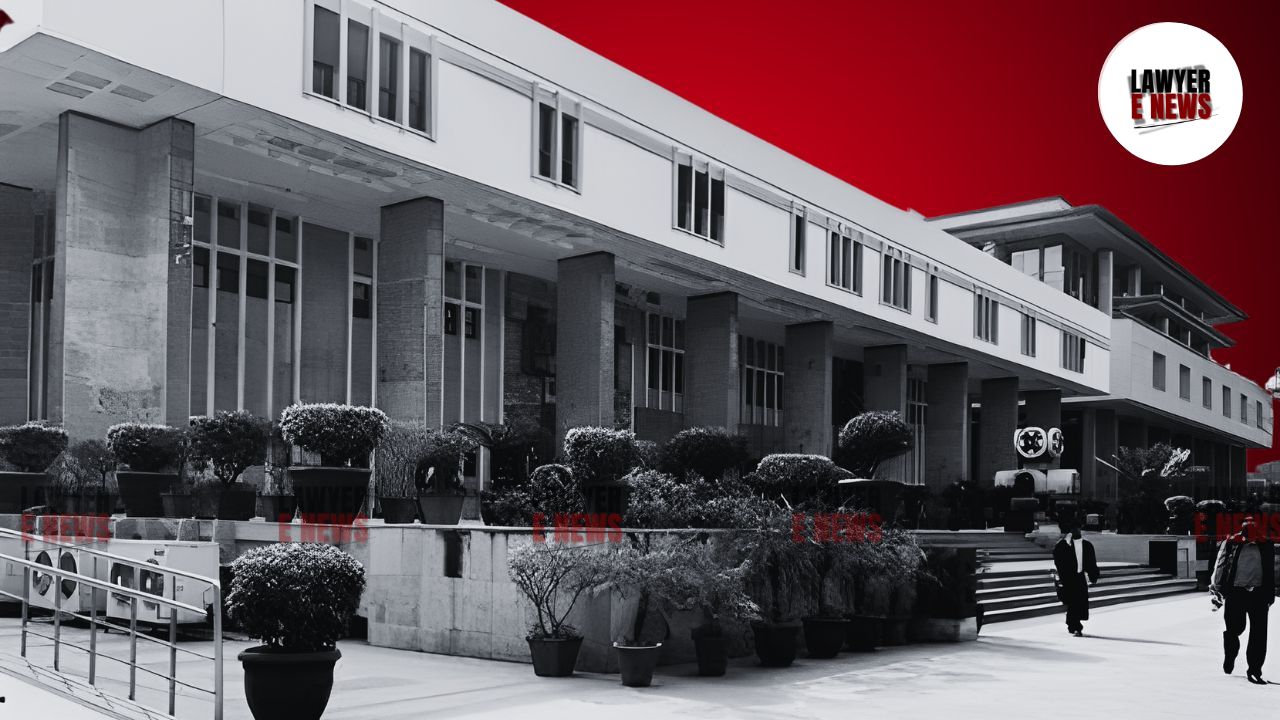
“Premeditated Assaults in Public and Medical Spaces Show Brazen Criminality—Right to Liberty Cannot Override Threat to Public Peace and Trial Integrity” - In a compelling and strongly-worded decision Delhi High Court, through Justice Ravinder Dudeja, dismissed the bail application of Rehan @ Gaonwala, the principal accused in a gruesome double assault case, including a second attack within LNJP Hospital on an already grievously injured victim. The Court cited not only the seriousness and brazenness of the assaults but also the petitioner’s history of over 25 criminal involvements and his continued capacity to subvert the justice process, as grounds for rejecting his plea.
The case, involving offences under Sections 307, 385, 506, 120-B, and 34 of the Indian Penal Code, arose from a violent chain of events initiated on 05.11.2023 at Chandni Mahal, where the complainant Mohd. Tahir and his nephew Anas were first assaulted in their home and then again in the hospital by the accused and his associates, allegedly to settle old scores and extort ₹5 lakhs.
“A Man Who Strikes in a Hospital After Attacking at Home Cannot Seek Parity in Bail—His Role Is Distinct, Premeditated and Grave”
The Court rejected the petitioner’s argument that he deserved parity with co-accused who were granted bail, holding that his role was distinct and more aggravated:
“Applicant Rehan @ Gaonwala is stated to be the main accused who not only participated in the first assault but also attacked the injured Anas with surgical blade at the hospital. The weapon of offence has been recovered from his possession. Thus, his role is different from other co-accused persons who have been enlarged on bail, and therefore, he is not entitled for the grant of parity.” [Para 11]
The Court noted that CCTV footage and eyewitness accounts established Rehan's presence and direct participation, both at the residence and the hospital. He was also reportedly seen on camera moving toward the scene of crime with co-accused.
“Speedy Trial Is a Right—But Not a Shield for Men Who Endanger Lives and Undermine Justice”
While the petitioner argued that he had been in custody for almost a year and that only 4–5 out of 36 witnesses had been examined, the Court held that delay alone cannot tilt the balance in favour of bail when the nature of offence is grave and the accused is a known threat:
“While the object of bail is not to punish prior to conviction, courts must balance individual liberty with the interest of society... the likelihood of the petitioner repeating similar offences, intimidating witnesses, and disturbing public peace is sufficiently established to disentitle him to the concession of bail.” [Para 12]
Relying on Sanjay Chandra v. CBI (2012) 1 SCC 40, the Court reiterated that bail is not automatic, and must consider:
“The nature of accusations, the severity of the punishment, the behaviour and antecedents of the accused, and the reasonable apprehension of tampering with evidence or witnesses.” [Paras 13–14]
“Hospital Assaults Show Boldness and Disregard for Law—Repeated Violent Conduct Points to Criminal Propensity”
The Court emphasized that Rehan's second attack inside a hospital showed a shocking level of impunity, and confirmed the prosecution’s version of a pre-planned, calculated conspiracy to kill:
“The incident at the hospital where the injured was attacked establishes a high degree of premeditation, boldness, and disregard for law. Such conduct, if established at trial, strikes at the core of public order and safety.” [Para 15]
The medical evidence, recovery of the surgical blade, blood-stained clothes, and statements of eyewitnesses including public witnesses yet to testify, all pointed toward a well-orchestrated criminal assault.
“Rehan Is a Declared Bad Character—25 Criminal Cases and a Pattern of Witness Intimidation”
The State strongly opposed the bail citing Rehan's criminal antecedents and his status as a “Bad Character” (BC) of PS Chandni Mahal. The Court also noted that:
One public witness was previously pressured to withdraw his complaint
Others expressed apprehension about testifying
The complainant’s family still resides in the same locality as the accused
The complainant’s counsel submitted videos of co-accused celebrating bail with impunity, openly flaunting power, and creating a sense of fear in the community. The Court agreed that granting bail at this stage would:
“Jeopardize the fairness of trial and pose a serious threat to the complainant and witnesses.” [Para 10]
“Grant of Bail Is Not a Matter of Course—Serious Offences Demand Judicial Restraint”
Justice Dudeja referred to the recent ruling of the Supreme Court in Bhagwan Singh v. Dilip Kumar @ Deepu @ Deepak (2023 INSC 761), reiterating that:
“Grant of bail is a discretionary relief to be exercised judiciously and not as a matter of course... the Court must record prima facie satisfaction regarding the charges, and the genuineness of the prosecution case must guide the exercise of discretion.” [Para 14]
Bail Refused—Court Finds Continued Threat to Witnesses and Public Safety
In conclusion, the Court held:
“The allegations against him are grave and serious in nature. The antecedents of the applicant demonstrate criminal propensity and the threat to witnesses persists. Accordingly, the bail application of the applicant Rehan @ Gaonwala is hereby dismissed.” [Para 16]
The Court directed that a copy of the order be sent to the Superintendent Jail, and clarified that nothing in the order should be construed as an expression on the merits of the case.
Date of Decision: 08 October 2025