-
by sayum
28 August 2026 2:11 PM







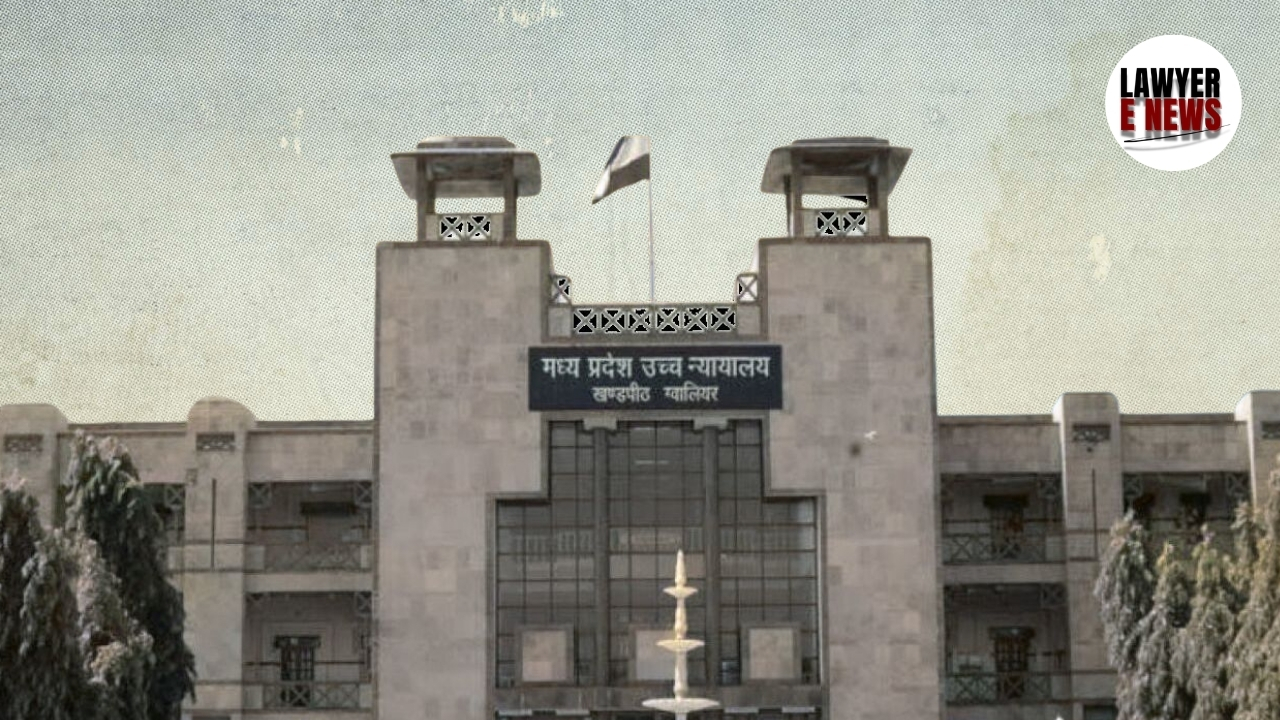
“Mere Civil Dispute Cannot Be a Shield Against Criminal Prosecution Where Ingredients of Offences Are Clearly Made Out” - Madhya Pradesh High Court delivered a significant judgment, addressing the scope of a Magistrate’s power under Section 204 of the CrPC and the circumstances under which criminal proceedings can be quashed under Section 482 CrPC in disputes that have overlapping civil and criminal elements.
The Court, speaking through Justice Achal Kumar Paliwal, upheld the cognizance taken by the trial court under Sections 427 and 506-B of the IPC, while setting aside the process under Sections 448 and 294 IPC, holding that the prima facie elements of trespass and obscene abuse were not made out from the complaint or the accompanying evidence. The Court observed:
“At the stage of issuance of process under Section 204 CrPC, the trial court is required to see only whether there is sufficient ground to proceed. It is not the stage where sufficiency of evidence for conviction is tested, nor where defence pleas can be examined.”
The petitioner had challenged the order of the JMFC, Panna, dated 5 October 2017, which had taken cognizance of offences under Sections 427, 448, 294, and 506-B IPC, alleging wrongful demolition of a boundary wall and threats with a firearm. The Sessions Court, in revision, affirmed the trial court’s order, prompting the petitioner to invoke the inherent jurisdiction of the High Court under Section 482 CrPC.
“Complaint Alleges Wall Demolished, Threat to Life Given With Firearm — Prima Facie Case of Mischief and Criminal Intimidation Made Out”
The core allegations in the complaint filed by Santosh Kumar Pohani were that on 9 September 2013, the petitioner, Smt. Ujjwala Singh, accompanied by laborers, forcibly broke down a boundary wall situated on the complainant’s property and, when confronted, threatened to kill him with a firearm while hurling abuses.
The complaint, along with statements recorded under Sections 200 and 202 CrPC, stated:
“The accused, without any lawful authority, dismantled the boundary wall of the complainant’s house using 5–6 laborers, and upon being questioned, threatened the complainant with a gun and used filthy language.”
On this basis, the High Court found that the essential ingredients of Section 427 IPC (mischief causing damage) and Section 506-B IPC (criminal intimidation with threat to life) were present:
“Prima facie allegations that the wall was broken causing a financial loss of Rs. 50,000 and that the complainant was threatened with a firearm are sufficient to justify cognizance under Sections 427 and 506-B IPC.”
“Lack of Specificity in Allegations of Abuse and Trespass — No Cognizance Can Be Taken Where Ingredients Are Not Disclosed”
While partially upholding the trial court’s decision, the High Court made a crucial distinction regarding the other two offences. The Court held that the allegations under Section 294 IPC (obscene language) and Section 448 IPC (house-trespass) were vague and lacked material particulars.
“In the complaint, there is no mention of specific abusive words. Mere reference to mother-sister abuses, without particulars or context, is insufficient to constitute an offence under Section 294 IPC.”
On the issue of house-trespass, the Court noted that the demolition allegedly took place from the side of a public way, and no facts were shown to establish illegal entry into a building with criminal intent.
“Where entry, if any, is not shown to be unlawful or made with the intention required under Section 441 IPC, the offence of house trespass under Section 448 IPC is not made out.”
Accordingly, the Court held: “The trial Court has materially erred in taking cognizance for offences under Sections 448 and 294 IPC. The allegations, even taken at face value, do not disclose the commission of these offences.”
“Police Enquiry Report Cannot Override Judicial Satisfaction — No Spot Inspection, No Notice to Complainant, No Evidentiary Value”
A central plank of the petitioner’s argument was that the police enquiry report, filed under Section 202 CrPC, found that no cognizable offence had been committed. However, the High Court rejected the evidentiary worth of this report, pointing out glaring omissions:
“The enquiry report was filed nearly two years after the incident. There is no mention of spot inspection, no panchanama, no photographic evidence, and no indication that the complainant was given notice to produce witnesses.”
Most critically, the Court found that the report was based entirely on the version of the accused, and contained no rationale for rejecting the complainant’s version.
“Such a one-sided and unreasoned report lacks the basic credibility required to negate the incident. An enquiry report cannot substitute for judicial application of mind under Section 204 CrPC.”
The Court underscored that the report did not establish that even a non-cognizable offence had not occurred, making it unreliable as the basis for quashing cognizance.
“Criminal Intent Apparent from Allegations — Pendency of Civil Suit No Ground to Quash Proceedings”
The petitioner contended that the entire dispute arose out of a pending civil case relating to ownership of the property, and that the criminal complaint was an abuse of process, aimed at coercing her during the litigation.
However, the Court rejected this contention, holding that merely because civil litigation is ongoing, the criminal justice process cannot be halted where criminal elements independently exist:
“It cannot be said that the complaint is a mere civil dispute given criminal colour. Prima facie allegations of mischief and intimidation stand on their own. Pendency of civil litigation is no ground to quash criminal proceedings.”
Citing Deepak Gaba v. State of U.P. (2023) 3 SCC 423 and Afroz Mohammed Hasanfatta v. State of Gujarat (2019) 20 SCC 539, the Court reaffirmed:
“Even where allegations overlap civil and criminal law, if the ingredients of a criminal offence are made out, proceedings cannot be quashed under Section 482 CrPC.”
“Summoning Is a Judicial Act with Consequences — Magistrate Not Required to Record Detailed Reasons, But Must Apply Mind”
The High Court re-emphasized the well-established principles of law governing issuance of process under Section 204 CrPC. Relying on Mehmood Ul Rehman v. Khazir Mohammad Tunda (2015) 12 SCC 420, the Court observed:
“Taking cognizance is not a mechanical process. It requires judicial application of mind to see whether the facts alleged constitute a legal offence. The Magistrate need not record elaborate reasons, but must be satisfied that there is sufficient ground to proceed.”
The Court also observed: “There is a clear distinction between the standard required at the stage of cognizance and at the stage of charge or trial. At this stage, the court is not required to evaluate evidence in detail.”
Process to Continue for Alleged Mischief and Gun Threat — Cognizance for Abuse and Trespass Set Aside
Concluding its analysis, the High Court held: “The trial court has rightly taken cognizance under Sections 427 and 506-B IPC, based on the complaint and corroborating statements under Sections 200 and 202 CrPC. However, it has erred in taking cognizance under Sections 448 and 294 IPC, which lack the necessary factual foundation.”
Accordingly, the petition under Section 482 CrPC was partly allowed.
The cognizance for Sections 448 and 294 IPC was quashed, while that under Sections 427 and 506-B IPC was upheld, and the criminal proceedings will continue for these offences.
Date of Decision: 26 September 2025