-
by sayum
19 August 2026 1:58 PM







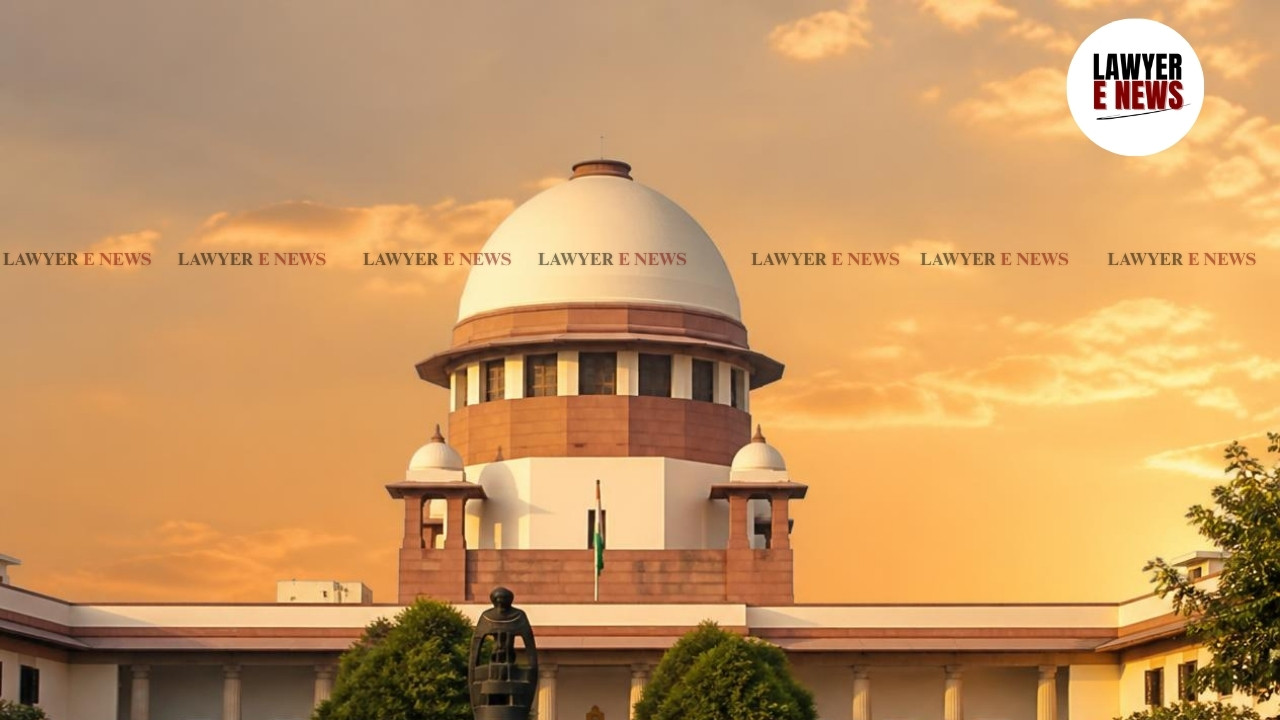
"Attempting to remedy such a structural disadvantage embedded in years of service assessments by mere anonymisation of the MDS is akin to adjusting the lens of a camera to alter the quality of an image captured much earlier", In a landmark ruling Supreme Court of India held that the Indian Army's system of Annual Confidential Reports (ACRs) was applied in a manner that structurally disadvantaged Short Service Commission Women Officers (SSCWOs) for years, rendering their subsequent consideration for Permanent Commission (PC) on an inherently unequal footing.
A bench of Chief Justice Surya Kant, Justice Ujjal Bhuyan, and Justice Nongmeikapam Kotiswar Singh allowed the appeals of approximately 73 SSCWOs from Course Nos. 4 to 7, commissioned between September 2010 and March 2012, invoking Article 142 of the Constitution to grant them Permanent Commission and pension benefits.
The Court framed four issues for determination: whether the ACRs of SSCWOs were casually graded due to their perceived ineligibility for PC and whether this adversely impacted their merit; whether disparate access to criteria appointments and career-enhancing courses further disadvantaged them in the value judgement component of the No. 5 Selection Board; whether the annual cap of 250 PC vacancies operated as an absolute bar to remedial relief and whether vacancies were correctly calculated; and whether male SSCOs had a legitimate expectation to be considered only against other male officers.
The Structural Flaw in ACR Grading
The Court found the Tribunal's reasoning on casual grading to be "patently erroneous." Under the Army's bell-curve-based ACR system, only a limited number of officers can receive the highest grade of 9 (outstanding), making grading inherently comparative and positional. During the entire decade of service of the Appellant-SSCWOs, their assessing officers — the Initiating Officer and Reporting Officer — knew that these women would serve only a finite tenure with no prospect of substantive career progression. The Court held that in such a context, higher grades were "informally reserved for male SSCOs who were eligible for PC and for whom such grades would materially affect their future prospects," while women were "routinely assigned average or middling scores."
The anonymisation of the Member Data Sheet presented to the No. 5 Selection Board, the Court observed, could not address a disadvantage that had crystallised years earlier at the stage of writing the ACRs themselves.
"Adjusting the Lens of a Camera After the Image Is Already Captured"
The Court's central metaphor for the structural problem was striking: "Attempting to remedy such a structural disadvantage embedded in years of service assessments by mere anonymisation of the MDS and removal of the recommendation column is akin to adjusting the lens of a camera to alter the quality of an image captured much earlier. The damage had been done years before the No. 5 Selection Board was even convened."
Since ACRs account for 75 of the 100 marks in PC consideration, the Court held that this long-term grading distortion could not be neutralised by procedural safeguards applied only at the final evaluation stage.
Disparity in Criteria Appointments and Courses: The Value Judgement Affected
On the second issue, the Court drew a distinction between the computerised evaluation (95 marks) and the value judgement component (5 marks). It accepted the Army's position that the number and nature of courses do not affect the computerised score for courses, which is merely an average of grades obtained. However, the Court held that criteria appointments and course exposure directly influence the 5-mark value judgement, which the policy dated February 24, 2012 expressly requires the Selection Board to assess.
SSCWOs had been excluded from the Junior Command Course, denied criteria appointments because they were not envisaged as future PC officers, and were not incentivised to undertake optional courses. The Court noted that "several Appellants fell short of the cut-off by less than 0.5 marks," making even a minor distortion in the value judgement outcome-determinative.
"A Race Where Only a Few Are Provided Access to Professional Training"
The Court illustrated the structural unfairness through a vivid analogy: "We can view the entire process as a race, where all participants are made to compete on the same track, but only a few are provided access to professional training facilities beforehand. When such runners are judged together solely on their final timings, the disparity embedded in the preparation itself is rendered invisible, though its effects are decisively felt."
The 250-Vacancy Cap: Neither Sacrosanct Nor Immutable
Turning to the annual ceiling of 250 PC vacancies under the policy circular dated January 15, 1991, the Court held that the cap cannot operate as an absolute shield against corrective relief where the evaluative framework itself has been found structurally unfair. Examining the record, the Court found that the ceiling was breached in 2002, 2003, 2004, 2005, 2006, 2009, 2010, 2011, and 2012 — each time with approval of the Competent Authority. It was also exceeded for the Special No. 5 Selection Board covering SSCWOs under the Babita Puniya directions.
"The inescapable inference, therefore, is that the ceiling of 250 vacancies is neither sacrosanct nor immutable," the Court held, adding that "the Respondents have time and again disregarded it on various grounds, including the directions previously issued by this Court in light of the discrimination faced by SSCWOs in their assessment for PC." The Court, however, clarified that whether the cap should be permanently revised upwards remains a policy matter not amenable to judicial direction in these proceedings.
Vacancy Calculation: Army's Method Upheld
On the subsidiary question of whether vacancies were computed correctly, the Court sided with the Respondents. It held that the policy circular's language — "maximum of 250 SSCOs will be granted Permanent Commission per year" and "from the batches considered in a year" — plainly refers to batches considered by the No. 5 Selection Board in the same calendar year, not batches commissioned in the same calendar year. The File Noting dated January 22, 1991, being a clarificatory document, could not supplant the policy circular's express text. "A contrary meaning cannot be imposed on the policy based on an unqualified expression in the File Noting," the Court held.
Legitimate Expectation of Male Officers Rejected
The Court firmly rejected the male SSCOs' claim that they had a legitimate expectation to be considered exclusively against other male officers. All Appellant-male SSCOs were commissioned after the Delhi High Court's judgment dated March 12, 2010 in Babita Puniya v. Secretary, which held SSCWOs entitled to PC consideration in all cadres and which operated without a stay from the date of its pronouncement. The Court held that "no material exists to suggest that the Respondents ever represented that the vacancy cap would be expanded to offset the enlarged pool of eligible officers."
More fundamentally, the Court held that the doctrine of legitimate expectation cannot override a constitutional mandate. Citing a coordinate bench judgment by CJI Surya Kant himself in K. Purushottam Reddy v. Union of India, the Court reiterated: "The doctrine of legitimate expectation is not a rigid rule and must be conceded where a superseding public interest or a statutory or constitutional bar exists." The inclusion of SSCWOs in the zone of PC consideration, the Court held, "is not a matter of discretion, but of constitutional obligation. Any expectation to the contrary is inherently illegitimate."
Directions Under Article 142
Invoking its extraordinary jurisdiction under Article 142 of the Constitution to do complete justice, the Court issued the following directions:
PC already granted to officers through the 2020 and 2021 Boards and under the AFT's judgments shall not be disturbed. SSCWOs released from service during the pendency of proceedings before the AFT, High Courts, or the Supreme Court shall be deemed to have completed 20 years of qualifying service and shall be entitled to pension and all consequential benefits, with arrears payable from January 1, 2025 (this direction excludes JAG and AEC cadre officers). SSCWOs continuing in service by virtue of the Court's interim orders dated May 9 and 19, 2025, who cleared the 60% cut-off in the 2020 and 2021 Boards, shall be granted Permanent Commission subject to medical and disciplinary clearance. Those considered by Boards after 2021 may pursue their remedies before the AFT or High Courts. The Respondents are further directed to review the method of evaluation of ACRs and the applicable cut-offs for future batches to examine the disproportionate impact on subsequently eligible SSCWOs.
Date of Decision: March 24, 2026