-
by sayum
04 August 2026 1:39 PM








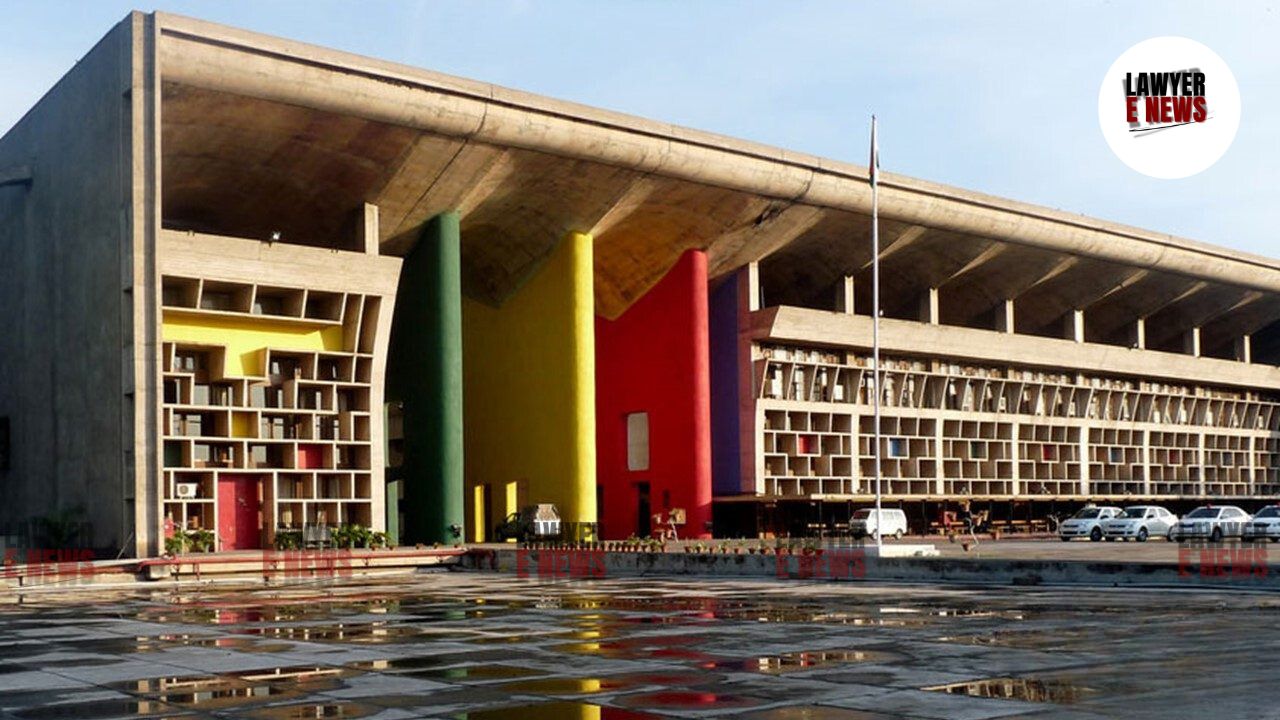
“A Plaintiff Cannot Transform a Suit for Injunction into One for Specific Performance at the Rebuttal Stage” – Punjab and Haryana High Court delivered a critical verdict on the limits of permissible amendments under Order VI Rule 17 of the Code of Civil Procedure, 1908. Justice Alka Sarin quashed the trial court’s order that had allowed an amendment converting a simple suit for permanent injunction into one for declaration, specific performance, and symbolic possession, observing that such an amendment “seeks to set up an entirely new case foreign to the original pleadings and cannot be permitted at such a late stage of the trial.”
The Court held that “where the amendment changes the nature of the suit or the cause of action, so as to set up an entirely new case, the amendment must be disallowed.”
“Amendment at Rebuttal Stage That Substitutes the Original Suit Cannot Be Allowed” – High Court Finds Trial Court’s View Legally Unsustainable
The suit was originally filed by the plaintiff (respondent herein) as a simpliciter action for permanent injunction based on an affidavit of possession dated 28.09.1994. The plaintiff claimed to have purchased the land for ₹15,000 and alleged interference by the defendants. In 2014, the defendants disclosed their ownership through a registered sale deed and claimed possession.
It was only in 2018—four years later and when the case was fixed for rebuttal evidence—that the plaintiff moved an application under Order VI Rule 17 CPC seeking to amend the plaint and change the nature of the suit to one for “declaration, specific performance, symbolic possession and consequential injunction.”
The Court found that “the amendment sought was not merely curative or clarificatory—it was a wholesale substitution of the original suit with an entirely different legal claim, which would necessarily require a de novo trial, new pleadings, fresh issues and fresh evidence.”
Justice Alka Sarin observed that “by way of the amendment, the nature of the suit itself has been changed and in fact, the earlier plaint has totally been substituted by a new plaint.”
“Delay, Change in Cause of Action, and Prejudice to Opponent Are Fatal to Plea for Amendment” – Amendment Dismissed
Rejecting the plaintiff’s plea that the sale deed in favour of the defendants came to his knowledge only in 2014, the Court noted that the written statement disclosing the sale deed was filed in 2014 itself, yet the amendment application was made only in 2018. The Court held that “there is absolutely no reason forthcoming from the amendment application as to why the plaintiff did not amend the suit or seek to challenge the sale deed till 2018.”
Quoting the Supreme Court in Life Insurance Corporation of India v. Sanjeev Builders Pvt. Ltd. [2023 (1) RCR (Civil) 851], the Court reiterated the settled principle that “an amendment which changes the nature of the suit or introduces a time-barred claim or prejudices the opposite party must be disallowed.”
The Court referred specifically to para 70(iv) of the Supreme Court’s judgment which lays down that “a prayer for amendment is generally required to be allowed unless… the amendment changes the nature of the suit or the cause of action so as to set up an entirely new case, foreign to the case set up in the plaint.”
The High Court also cited Vijay Gupta v. Gagninder Kr. Gandhi, 2022 SCC OnLine Del 1897, to reinforce the principle that “where the amendment is not based on the existing pleadings but seeks to raise a wholly new claim, such amendment is impermissible.”
“Plaintiff Cannot Seek Specific Performance Based on Affidavit and Panchayatnama in a Suit Initially Filed for Injunction” – Court Rejects Late Legal Strategy
The plaintiff sought to base the amended suit on an affidavit/panchayatnama dated 28.09.1994, documents which were not even relied upon in the original suit. The Court held that “such a change does not merely seek to amend the relief—it transforms the factual and legal foundation of the case altogether.”
Justice Alka Sarin emphasized that “what was originally a suit to protect possession now seeks to become a suit to assert ownership and enforce a contract for sale. This cannot be permitted under the guise of a mere amendment.”
The Court concluded that “the amendment would prejudice the defendants and result in an unfair trial, as they would be forced to meet an entirely different case than what was originally pleaded.”
Setting aside the trial court’s order dated 5 July 2019, the High Court allowed the revision petition and dismissed the plaintiff’s amendment application, holding:
“In view of the above, the impugned order dated 05.07.2019 cannot be sustained and the same is accordingly set aside. Consequently, the present revision petition stands allowed and the amendment application filed by the plaintiff-respondent No.1 is dismissed.”
The judgment underscores the strict judicial stance against allowing transformative amendments at advanced stages of civil trials and reaffirms that “litigation cannot be reshaped midway to create a fresh cause of action which alters the core character of the original suit.”
Date of Decision: 05 May 2025