-
by sayum
15 August 2026 10:03 AM







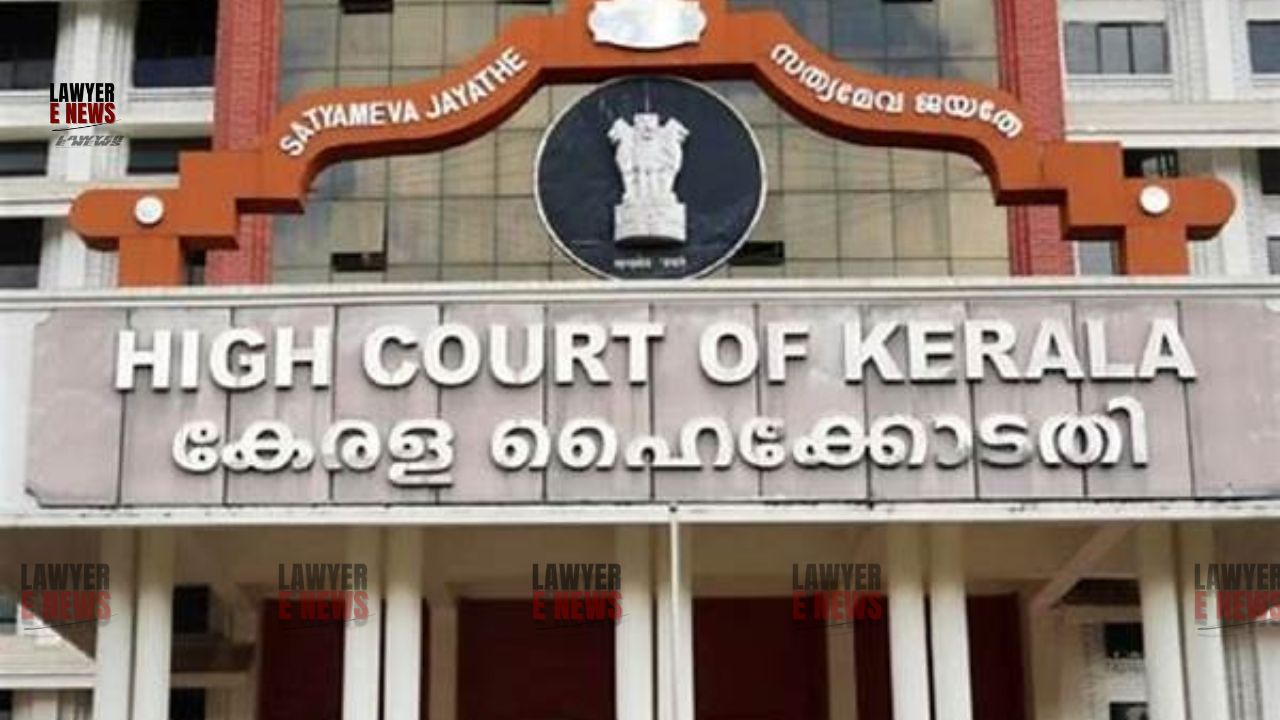
"The principle under Section 230 of the Contract Act is that where the principal is undisclosed, not properly identified, or incapable of being sued, the agent incurs personal liability." Kerala High Court, in a significant ruling dated July 20, 2026, held that an agent incurs personal liability on financial transactions if the foreign principal is undisclosed, improperly identified, or incapable of being sued.
A single-judge bench of Justice Mohammed Nias C.P. observed that a contracting party cannot be expected to repose exclusive reliance on a foreign principal whose legal existence cannot be verified, especially when the agent issues cheques without indicating any exclusion of personal liability.
The dispute arose after the plaintiffs paid substantial amounts to the defendants, who acted as agents for Global Employment Consultancy (GEC), to secure overseas employment. When the employment failed to materialize, the defendants allegedly refunded a portion of the amount in cash and issued cheques for the balance, which were subsequently dishonoured. The plaintiffs successfully filed recovery suits before the Sub Court in Ernakulam, prompting the defendants to file regular first appeals before the High Court.
The primary legal question before the court was whether the defendants, acting as agents, could escape liability under Section 230 of the Indian Contract Act by claiming the disputed amounts were transferred to a foreign principal. The court was also called upon to determine if the defendants could rebut the statutory presumptions under the Negotiable Instruments Act by merely alleging that the cheques were obtained under police coercion.
Agent Cannot Hide Behind Unidentified Foreign Principal
Rejecting the appellants' contention that they merely acted as agents and that the suit was bad for non-joinder of the principal, the court noted that the defendants failed to produce documents establishing the principal's full address or legal existence. The bench emphasized that for an agent to escape personal liability, the principal must be explicitly disclosed and legally capable of being sued.
Protection Under Section 230 Contract Act Denied
The court observed that the plaintiffs had independent dealings only with the defendants, transferring funds solely on their representations and instructions. Denying the protection of the Indian Contract Act, the court stated, "Equally, a contracting party cannot be expected to repose exclusive reliance on a foreign principal whose identity has not been properly disclosed or whose legal existence cannot be verified."
No Intent To Exclude Personal Liability On Cheques
The court further tested the liability of the agents under Section 28 of the Negotiable Instruments (NI) Act. Relying on the Full Bench decision of the Madras High Court in Sivagurunatha Pillai v. Padmavathi Ammal, the bench observed that an agent who signs a cheque without indicating that they are signing in a representative capacity becomes personally liable. The court found no indication on the disputed cheques that the defendants signed them merely as agents of GEC.
Holder Must Be Specifically Induced To Exclude Liability
Highlighting the stringent nature of Section 28 of the NI Act, the bench noted that mere knowledge on the part of the holder that the executant was acting as an agent does not absolve personal liability. The court held, "The only exception under Section 28 is where the holder induced the maker to sign on the belief that the principal alone would be liable, which must be specifically pleaded and proved."
Plea Of Coercion Amounts To Admission Of Execution
Addressing the defense that the cheques were obtained under police threat while the defendants were in judicial custody, the court ruled that such a defense inherently admits the execution and delivery of the instruments. Consequently, the statutory presumptions under Sections 118(a) and 139 of the NI Act immediately come into operation, shifting the burden entirely onto the defendants.
Bald Allegations Of Police Threat Insufficient
The court found that the defendants completely failed to discharge this evidentiary burden. Relying on the precedent in Dr. Jyothi Prasad Bhat v. K. Sundara Rajan & Ors., the bench noted the absence of any contemporaneous complaint against the police or proof that the cheques were actually signed during custody. The bench emphasized that unsubstantiated pleas cannot rebut statutory presumptions, stating that "except for the interested testimony of DW1, no acceptable evidence has been adduced to probabilise the defence."
Concluding that the trial court's findings were based upon a proper appreciation of pleadings and documentary evidence, the High Court declined to interfere with the lower court's decree. Consequently, all four regular first appeals filed by the defendants were dismissed, reaffirming their personal liability to honour the cheques issued to the plaintiffs.
Date of Decision: 20 July 2026