-
by sayum
15 August 2026 2:23 PM







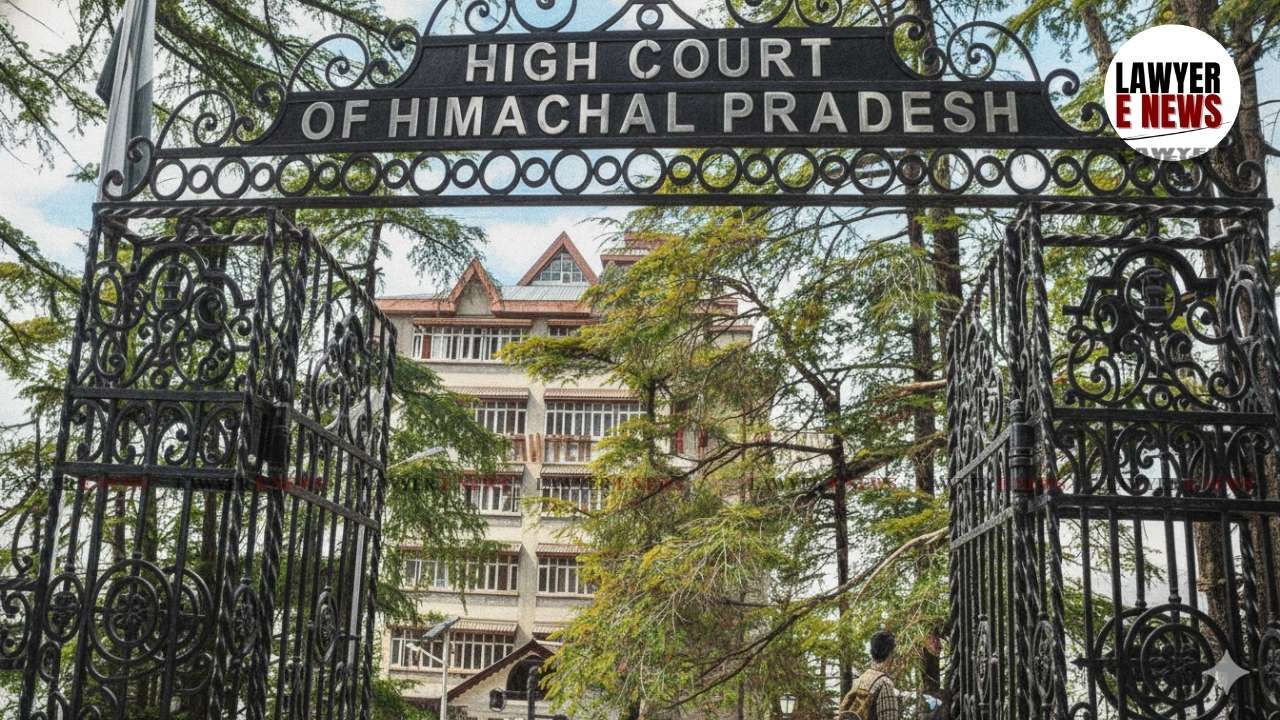
"Admissions, if true and clear, are by far the best proof of the facts admitted. Admissions in pleadings or judicial admissions, admissible under Section 58 of the Evidence Act, made by the parties or their agents stand on a higher footing than evidentiary admissions." Himachal Pradesh High Court, in a significant judgment, has reaffirmed that admissions made by a party to a suit constitute substantive evidence under the Indian Evidence Act.
A bench of Justice Rakesh Kainthla observed that such admissions are the "best proof" of the facts admitted and can be relied upon by the court even if the party making the admission was not confronted with the statement in the witness box under Section 145 of the Evidence Act.
Distinction Between Party Admissions And Witness Contradictions
The court was dealing with a property dispute where certain respondents had previously admitted in statements to revenue authorities that they were not tenants of the land. While the lower Appellate Court had brushed these admissions aside, the High Court held that this was a grave legal error. The Court emphasized that there is a cardinal distinction between a party who is the author of a prior statement and a witness who is sought to be discredited.
Admissions Under Section 21 Are Substantive Evidence
The bench noted that under Section 21 of the Evidence Act, an admission by a party is substantive evidence proprio vigore. Unlike the process of contradicting a witness under Section 145, there is no legal requirement to put the statement to the party during cross-examination for it to be admissible. The Court relied on the Supreme Court precedent in Bishwanath Prasad v. Dwarka Prasad, noting that admissions are decisive unless successfully withdrawn or proved erroneous.
Admissions Are The Best Proof Of Facts
Justice Kainthla highlighted that judicial admissions stand on a higher footing than mere evidentiary admissions. Referring to Nagindas Ramdas v. Dalpatram Ichharam, the Court observed that admissions in pleadings or those made during trial constitute a waiver of proof and can be made the foundation of the rights of the parties.
"What a party himself admits to be true, may reasonably be presumed to be so."
Revenue Record Presumption Requires Impeccable Rebuttal
The Court further addressed the presumption of correctness attached to revenue records under Section 45 of the H.P. Land Revenue Act. It held that oral testimony is generally insufficient to rebut a statutory presumption arising from the Jamabandi. The bench noted that while witnesses may lie, documents do not, and the presumption of truth can only be displaced by evidence of "impeccable integrity" or proof of fraud.
Jurisdiction Of Civil Court In Land Reform Matters
On the issue of jurisdiction, the High Court reiterated the settled law from the Full Bench decision in Chuhniya Devi v. Jindu Ram. It held that the Civil Court's jurisdiction to challenge the conferment of proprietary rights under the H.P. Tenancy and Land Reforms Act is strictly barred unless there is a proven violation of the principles of natural justice or the statutory authority has acted in total disregard of the law.
"The jurisdiction of the Civil Court to go into the question of conferment of proprietary rights is barred except when there is a violation of natural law or statutory authorities have not acted in conformity with fundamental principles of judicial procedure."
The appellant, Bidhia, had filed a suit for declaration and injunction claiming sole tenancy and subsequent ownership of the suit land. His brothers, the respondents, filed a rival suit claiming they were joint tenants along with Bidhia. The Trial Court decreed the suit in Bidhia's favor, relying on revenue entries and previous admissions made by the brothers. However, the District Judge (Appellate Court) reversed this, holding the revenue entries to be incorrect.
The primary question was whether the lower Appellate Court erred in ignoring the admissions made by the respondents where they claimed to be landless and not tenants of the suit land. The Court also examined whether the civil court had the jurisdiction to set aside the order conferring proprietary rights upon Bidhia in the absence of any plea of fraud or violation of natural justice.
Setting aside the Appellate Court's judgment, the High Court found that the lower court had misread the admissions and ignored the statutory bar on its jurisdiction. The High Court concluded that since the original owner and the revenue authorities had accepted Bidhia's status as a sole tenant, and the respondents had admitted to not being tenants in prior proceedings, the Trial Court's decision was legally sound and must be restored.
"Oral evidence to rebut the statutory presumption is at a much weaker level compared to documentary evidence and the order of a competent officer passed in exercise of jurisdiction."
The High Court allowed the appeals, setting aside the judgment of the District Judge, Kangra, and restoring the decree of the Trial Court.
Date of Decision: 02nd July 2026