-
by sayum
15 August 2026 2:23 PM







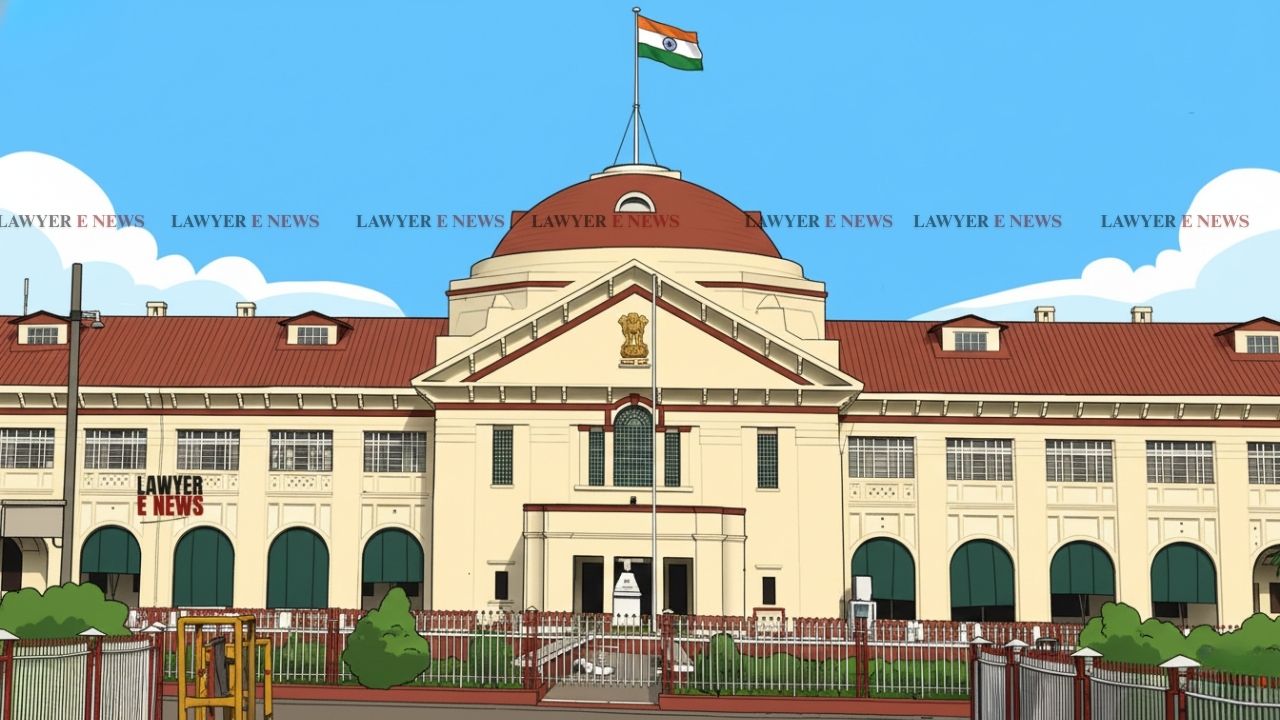
"In the absence of any evidence of penetration, even to the slightest extent, or any overt act unequivocally constituting an attempt to commit rape, the ingredients of Section 375 IPC, and consequently Section 376 read with Section 511 IPC, are not attracted." Patna High Court, in a significant judgment dated July 9, 2026, has set aside the conviction of a man for attempted rape, ruling that acts of physical molestation and attempting to remove a victim's clothing do not automatically attract the rigours of Section 376 read with Section 511 of the IPC.
A Single Bench of Justice Purnendu Singh observed that such acts, while establishing the use of criminal force to outrage a woman's modesty under Section 354 IPC, fail to meet the legal threshold for "attempt to commit rape" in the absence of an unequivocal overt act toward penetration.
The case originated from an incident on January 19, 2008, when the informant accompanied her father to a photo studio owned by the appellant, Himanshu Kr. Pathak. It was alleged that the appellant locked the informant inside the studio while her father was sent outside, subsequently undressing himself and attempting to remove the victim's salwar with the intent to commit rape. The trial court had convicted the appellant under Sections 376/511 and 342 of the IPC, sentencing him to three years of rigorous imprisonment.
The primary question before the court was whether the acts attributed to the appellant unequivocally established an attempt to commit rape under Section 376/511 IPC or were limited to outraging modesty under Section 354 IPC. The court also examined the reliability of the victim’s testimony as a "sterling witness" and the legal impact of the prosecution's failure to examine the Medical Officer and the Investigating Officer during the trial.
Distinction Between Attempt To Rape And Outraging Modesty
The Court meticulously analyzed the distinction between the offences of attempt to commit rape and outraging the modesty of a woman. It noted that for an act to be classified as an attempt under Section 511 IPC, it must be an overt act that goes beyond preparation and is directed towards the commission of the offence.
The Bench observed that while the appellant used criminal force by confining the victim, attempting to remove her clothing, and physically molesting her, these acts did not satisfy the essential ingredients of Section 375 IPC. The Court held that even if the prosecution's version were accepted in its entirety, the allegations squarely fell within the ambit of Section 354 IPC rather than Section 376/511 IPC.
“At best, the allegations disclose an act intended to outrage the modesty of the victim, thereby attracting the ingredients of Section 354 IPC. Consequently, the conviction of the appellant under Section 376 read with Section 511 IPC does not appear to be sustainable in law.”
Testimony Of Victim Must Be Of 'Sterling Quality' For Conviction
Relying on the Supreme Court's decision in Krishan Kumar Malik v. State of Haryana (2011), the High Court emphasized that while the solitary evidence of a prosecutrix is sufficient for conviction, it must inspire absolute confidence and be of "sterling quality." The Bench noted that a witness of high calibre must provide a version that is unassailable and consistent from the initial statement to the final deposition in court.
The Court referred to Rai Sandeep v. State (NCT of Delhi) (2012), noting that a "sterling witness" should be in a position to withstand strenuous cross-examination without any prevarication. In the present case, the Court found that the evidence of interested witnesses, including the parents of the victim, required careful scrutiny as they were prone to exaggeration to favor their own position.
“A victim may be treated as a ‘sterling witness’ and her testimony can be relied upon without additional corroboration, provided its quality and credibility are of an exceptionally high standard. The statement should remain consistent throughout, from the initial version to the oral evidence.”
Effect Of Non-Examination Of Medical Officer And Investigating Officer
The Court expressed concern over the prosecution's failure to examine the Medical Officer and the Investigating Officer who submitted the charge sheet. While acknowledging the precedent in Rajesh Patel v. State of Jharkhand (2013) that non-examination of a doctor does not ipso facto vitiate a case, the Court held that it significantly prejudiced the defense in this instance.
The Bench noted that medical evidence could have elicited details about any injuries sustained by the victim, which would have corroborated or refuted the story of forceful molestation. Furthermore, the absence of the IO prevented the defense from testing the fairness of the investigation or identifying contradictions in statements recorded under Section 161 CrPC.
“Significantly, the Investigating Officer who completed the investigation and submitted the charge-sheet was not examined during trial. Further, no Medical Officer was examined by the prosecution to substantiate the allegation of attempted rape, and consequently, no medical evidence is available on record in support of the prosecution case.”
Classification Of Witnesses and Requirement Of Corroboration
Citing Vadivelu Thevar v. State of Madras (1957) and Nand Lal v. State of Chhattisgarh (2023), the Court categorized oral testimony into three groups: wholly reliable, wholly unreliable, and neither wholly reliable nor wholly unreliable. The Bench placed the prosecution witnesses in the third category, necessitating corroboration by independent and credible evidence.
The Court concluded that the prosecution had miserably failed to establish the charges of attempted rape beyond a reasonable doubt. Since the appellant was specifically charged under Section 376/511 and not Section 354 IPC, and the evidence for the former was insufficient, the conviction could not be sustained.
The High Court allowed the appeal and set aside the judgment of conviction and order of sentence passed by the trial court. The appellant was acquitted of all charges, and the Court directed the refund of any fine deposited by him.
Date of Decision: 09 July 2026