-
by sayum
26 August 2026 1:49 PM







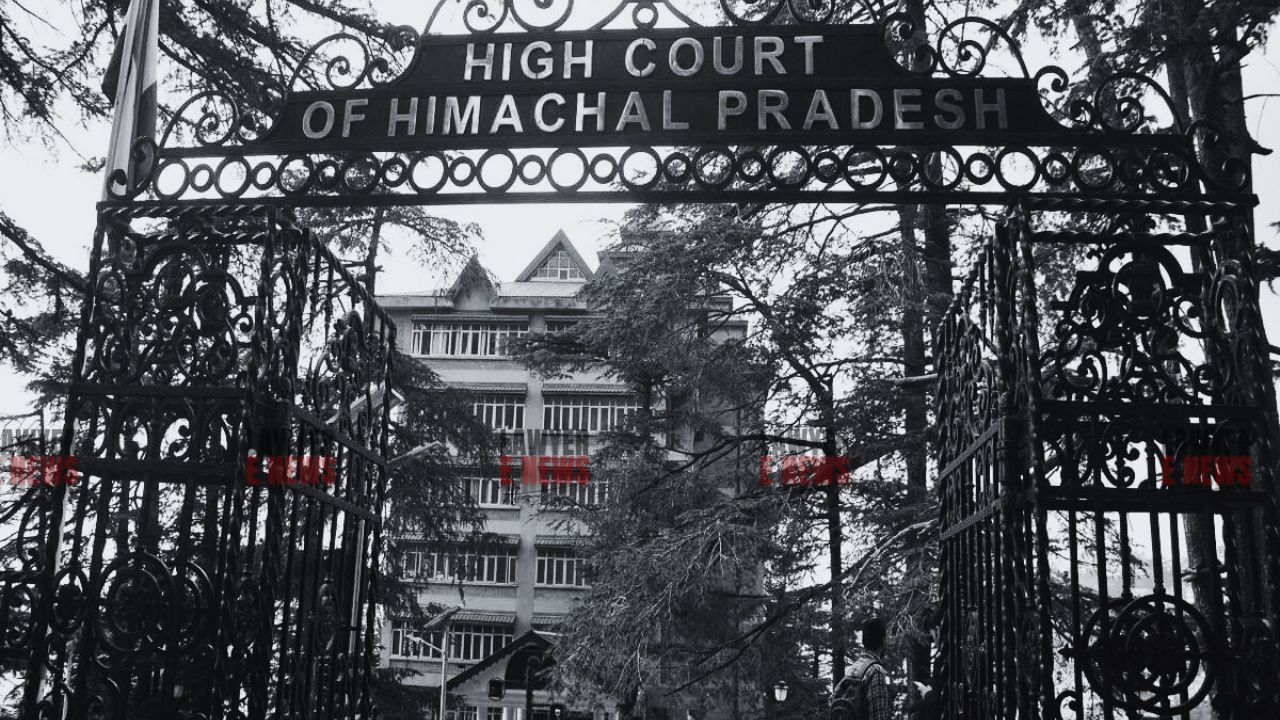
“Natural Justice Is Not a Ritual—Omission Must Show Prejudice, Else Disciplinary Action Will Stand” - High Court of Himachal Pradesh dismissed the writ petition of a former Depot Incharge challenging his dismissal from service. Justice Satyen Vaidya upheld the disciplinary action despite the petitioner’s criminal acquittal and alleged procedural lapses in inquiry, holding that “an acquittal based on technicalities cannot nullify proven charges of embezzlement in a departmental proceeding.”
The Court reaffirmed that non-supply of an inquiry report before punishment order, though procedurally irregular, would not invalidate the proceedings unless prejudice is demonstrated.
Embezzlement, Criminal Trial, and A Decade-Long Litigation
Mohan Lal Thakur, a former Incharge of the Retail Shop at the Himachal Pradesh State Civil Supplies Corporation Ltd. (HPSCSC), faced disciplinary proceedings after a 1990 inspection revealed shortages of essential commodities, leading to accusations of embezzlement worth over ₹90,000. He was removed from service via an order dated 30.03.1991.
Parallelly, he faced criminal prosecution under Section 409 IPC but was acquitted in 1999. The State's appeal failed in 2010.
Simultaneously, he challenged his dismissal before various forums: the Board of Directors (BOD), the erstwhile State Administrative Tribunal, and the High Court across multiple rounds. Ultimately, his claim reached the High Court again through CWPOA No. 3266 of 2019, challenging the BOD’s reaffirmation of dismissal via order dated 22.06.2013.
Was there a violation of natural justice due to non-supply of inquiry report before the penalty?
Justice Vaidya acknowledged that the initial disciplinary order was passed without supplying the inquiry report, violating the law laid down in Managing Director, ECIL v. B. Karunakar, (1993) 4 SCC 727, which mandates pre-decisional supply of the inquiry report to the delinquent.
However, the Court emphasized that this irregularity was later cured—the BOD had directed the disciplinary authority to furnish the report, which was done, yet “the petitioner failed to file any representation or show prejudice,” noted the judge.
“Though initially the punishment order was passed against the petitioner by the disciplinary authority without prior supply of inquiry report, later rectification was made… Even thereafter, the petitioner did not make any representation,” the Court observed.
Did the criminal acquittal nullify the departmental penalty?
The petitioner argued that having been acquitted by the criminal court, he should have been exonerated in the disciplinary proceedings as well. But the High Court flatly rejected the claim.
Justice Vaidya relied on the Supreme Court’s ruling in Maharana Pratap Singh v. State of Bihar (2025) and Ram Lal v. State of Rajasthan (2024) which held:
“Though acquittal in criminal case does not automatically entitle the accused to reinstatement, if charges, evidence, and circumstances in both proceedings are identical, the outcome may change.”
Yet, the Court found that in this case, the criminal acquittal was “based on non-examination of material witnesses and technical grounds”, whereas the departmental inquiry proceeded on different and substantive material.
“Parallels cannot be drawn in the material before the criminal court vis-a-vis the disciplinary authority… Above all, the petitioner had admitted his guilt,” the Court reasoned.
Was the appellate authority’s decision defective?
In earlier rounds, the High Court had repeatedly remanded the matter back to the BOD for failing to apply independent mind and for outsourcing its adjudicatory role to a committee. In the final round challenged here, the BOD considered the case afresh. Justice Vaidya held that:
“In light of previous orders, this Court cannot enlarge the scope of the challenge and will only examine the legality and propriety of the decision-making process under Article 226.”
Admissions of Guilt Undermine Petitioner’s Defence
The petitioner’s claim that he was forced to admit guilt under the lure of insurance indemnity was also rejected. The Court held:
“The petitioner has not been able to place on record any supporting material to prove that he was forced to make the admission.”
Moreover, the Inquiry Officer’s findings, based on evidence and the petitioner’s own admissions, had gone unchallenged on grounds of perversity.
No Judicial Review Unless Illegality or Perversity Is Proven
The Court concluded: “The petitioner has not been able to show any specific prejudice caused by non-supply of inquiry report… Despite previous two rounds, no court has found the punishment order vitiated. Accordingly, the petition is dismissed.”
Justice Vaidya reiterated the established law that judicial review in service matters is confined to examining the process, not the merit, and cannot be a forum for relitigating findings of guilt based on factual appreciation.
Date of Decision: 9 September 2025