-
by sayum
28 August 2026 2:11 PM







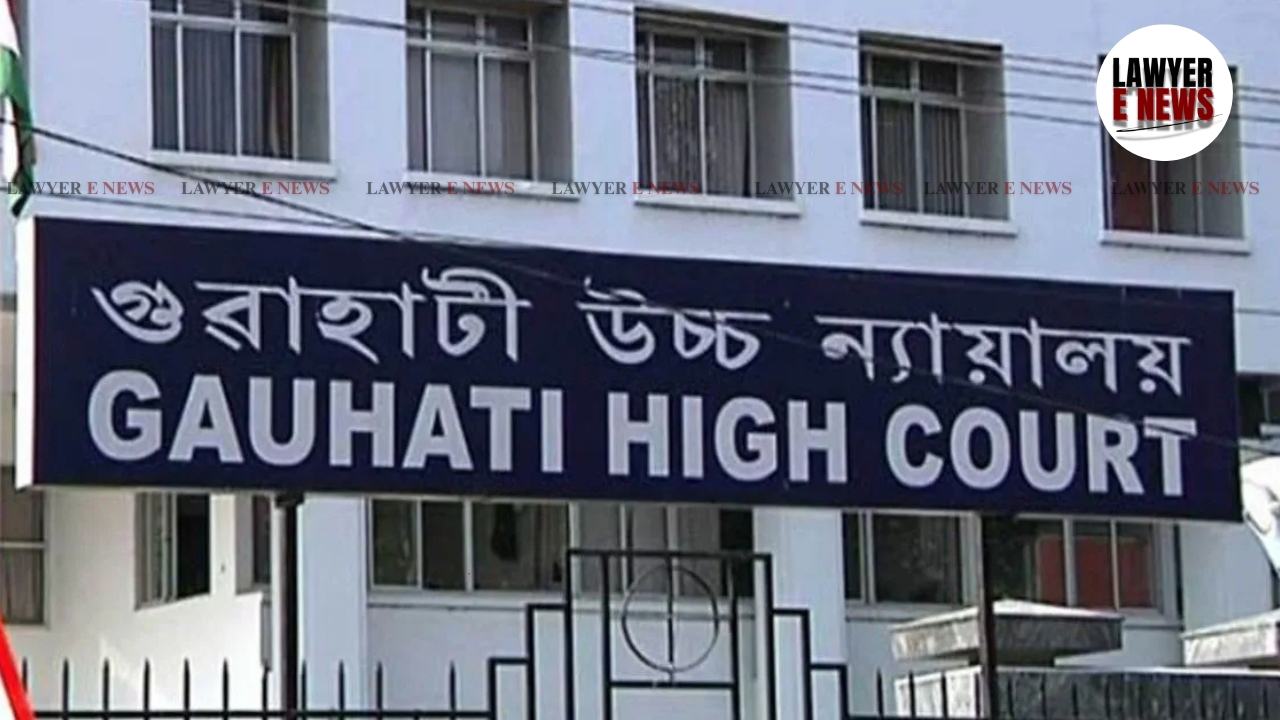
In a compelling exposition of sentencing jurisprudence under the NDPS Act, the Gauhati High Court, in its judgment dated 26 September 2025, held that the absence of aggravating factors enumerated in Section 32B must be given due weight while imposing punishment. While upholding the conviction of the accused under Sections 17(c) and 21(c) of the NDPS Act for possession of commercial quantities of Opium and Morphine, the Court held that awarding the maximum sentence of 20 years without justification or evidence of any such aggravating circumstances was legally untenable.
The Division Bench of Justice Manish Choudhury and Justice Mitali Thakuria modified the sentence to 12 years of rigorous imprisonment, observing:
“Where the minimum term of imprisonment or fine is prescribed, the Court must apply its judicial mind to aggravating or mitigating factors. Absence of Section 32B factors must reflect in sentencing discretion.”
“Total Compliance with Sections 42, 50, and 52A NDPS Act Proved — Defence Allegations of Procedural Irregularities Rejected”
The High Court unequivocally dismissed the contention that procedural lapses had vitiated the search, seizure, and trial process. It found that all statutory requirements under Sections 42(1), 42(2), 50, 52, 52A and 57 of the NDPS Act had been fully met.
On the crucial compliance with Section 42, the Court noted:
“The search and seizing officer (PW-3) reduced the information into writing, forwarded it to the Superintendent (PW-2), who acknowledged it and informed the Zonal Director (PW-6). The documentary and oral evidence establishes total compliance with Section 42(1) and 42(2).”
The Court also dismissed the argument that non-production of independent witnesses during trial rendered the prosecution evidence unreliable. It accepted the explanation that independent witnesses were present during seizure but could not be traced later.
“Presence of independent witnesses during search and seizure stands established. Non-examination at trial, despite repeated efforts, does not defeat the prosecution case where official testimony is cogent and consistent.”
Regarding compliance with Section 50, the Court noted: “Notices under Section 50 were served and written consent was obtained. The accused declined to be searched before a Magistrate or Gazetted Officer. This amounts to full compliance, even though the contraband was recovered from bags carried by the accused and not their persons.”
The Court further affirmed that sample collection, sealing, and storage complied with all legal mandates. The seized contraband was produced in court in sealed condition, and the Forensic Science Laboratory (FSL) confirmed the presence of Opium and Morphine, with high morphine content.
“No evidence suggests manipulation or tampering. FSL confirmed morphine content as high as 77.81%. The sealed packets were opened in court and were found intact. Chain of custody stands proved.”
“Addition of Section 17(c) Charge at Judgment Stage Did Not Prejudice the Accused”: High Court Upholds Altered Charge
A significant challenge raised by the appellants was that the trial court altered the charge by adding Section 17(c) (offence relating to Opium) at the stage of final judgment, without formally framing it or allowing further cross-examination.
Rejecting this contention, the Court invoked Section 216 CrPC and Supreme Court precedents to hold:
“Merely because Section 17(c) was not included at the framing stage does not ipso facto render the trial unfair. The accused were fully aware that the charge involved recovery of both Opium and Morphine. They cross-examined witnesses accordingly. No prejudice has been caused.”
The Court relied on Directorate of Revenue Intelligence v. Raj Kumar Arora (2025), affirming that courts can alter charges at any point before judgment if the evidence on record justifies it and no prejudice is caused.
“Recording of Section 313 CrPC Statement Twice Is Not Prejudicial if Same Questions Were Repeated”
The defence had also challenged the re-recording of statements under Section 313 CrPC, arguing that answers to some questions were not initially recorded. The High Court held this was a procedural irregularity without substantive prejudice, as the same questions were repeated and the accused exercised their right to lead defence evidence.
“The accused availed full opportunity to present their defence and adduced evidence through DW-1 and DW-2. The rerecording of statements was procedural correction, not a miscarriage of justice.”
“Contradictory Defence Testimony Fails to Dislodge Prosecution Case — DW Evidence Unreliable”
The Court found the testimonies of DW-1 and DW-2, produced to dispute Sohrab Khan’s presence at the scene, to be riddled with contradictions. The Court noted that DW-1 claimed Khan was arrested outside a hotel, but could not support his claims with any phone records or travel evidence. DW-2, a hotel staff, produced incomplete records with conflicting checkout times.
“The defence failed to explain glaring contradictions in the hotel records and gave no coherent account to discredit the prosecution’s version of arrest at the stadium.
“Slight Discrepancies in Description of Contraband (Powdery vs. Pasty) Do Not Vitiate Seizure”
On the alleged discrepancy between the inventory describing the contraband as powdery and the lab and court finding it sticky and pasty, the High Court held:
“Such inconsistency is minor. The core fact of sealed recovery and FSL confirmation of narcotic content remains unshaken. No tampering is alleged or proved.”
“In Absence of Prior Criminal Record or Other Section 32B Factors, Maximum Sentence Not Justified”
The trial court had awarded the maximum sentence of 20 years RI, invoking the recovery of commercial quantity. The High Court disagreed, holding that in the absence of evidence on aggravating factors under Section 32B, the sentence required reconsideration.
The Court held: “Section 32B provides a framework for courts to impose higher than minimum punishment, considering factors such as use of violence, targeting minors, or links to organized crime. None of these were present in this case.”
Referring to Shahejadkhan Mahebubkhan Pathan v. State of Gujarat (2013) 1 SCC 570, and Pradeep Bachhar v. State of Chhattisgarh (2018) 13 SCC 600, the Court followed the Supreme Court's view that first-time offenders may be spared from maximum punishment, especially where no aggravating elements exist.
Conviction Affirmed, Sentence Reduced to 12 Years Rigorous Imprisonment
In conclusion, while upholding the conviction under Sections 17(c)/21(c) of the NDPS Act, the Gauhati High Court observed:
“We are of the considered opinion that while the conviction is valid and supported by evidence, the sentence imposed requires modification. The absence of Section 32B factors justifies a sentence of 12 years RI instead of 20 years.”
The fine of ₹2,00,000/- and default sentence of 1 year RI were left untouched.
Date of Judgment: 26 September 2025