-
by sayum
28 August 2026 2:09 PM







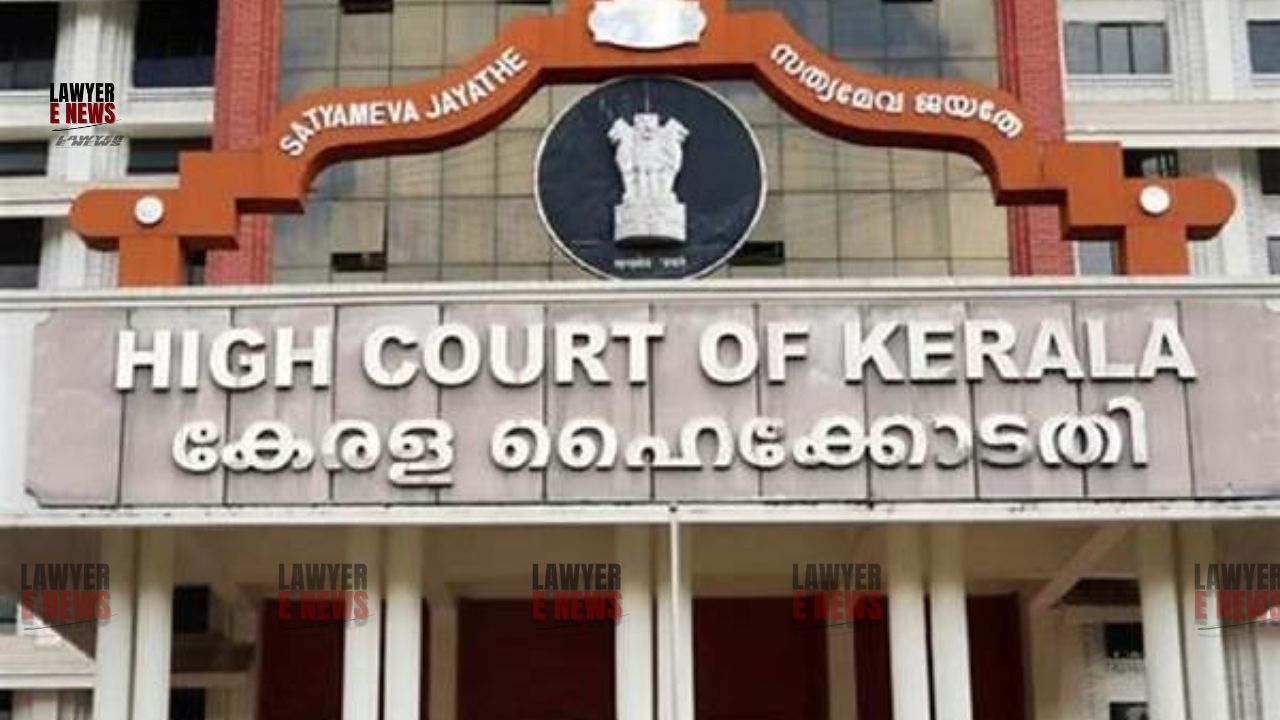
"No Evidence of Second Attempt to Inflict Fatal Injury – One Stab Wound Does Not Prove Intention to Kill" - In a significant reaffirmation of settled principles on the applicability of Section 307 of the Indian Penal Code (IPC), the Kerala High Court on October 6, 2025, dismissed the State's appeal challenging the acquittal of three accused persons in an alleged attempt to murder case. The Court upheld the conviction of accused no.1 under Section 324 IPC (voluntarily causing hurt by dangerous weapons), while confirming the acquittal of the other two accused under Sections 341, 324, 307 read with Section 34 IPC, citing lack of credible evidence and procedural lapses.
Presided over by Justice Johnson John, the Court emphasized the legal distinction between “intention to kill” and “causing hurt” and held that mere severity of injury is not conclusive to sustain a charge under Section 307 IPC, especially in the absence of premeditation or repeated attacks.
“Totality of the Circumstances Does Not Indicate That The Act Was Done With Intention or Knowledge Contemplated Under Section 307 IPC”
The prosecution alleged that on 5 August 2001, at about 7:30 p.m., the accused persons — Jaison (A1), Biju (A2), and Mohanan (A3) — attacked PW1 and PW2, due to prior enmity. According to the prosecution, A2 and A3 wrongfully restrained PW1, while A1 stabbed him with a knife below the left chest. When PW2 intervened, A1 inflicted a cut injury above PW2’s left ankle. The case was initially registered under Section 324 IPC, and later Section 307 was added.
The trial court convicted A1 (Jaison) under Section 324 IPC, sentencing him to two years’ imprisonment, but acquitted him under Section 307 IPC. A2 and A3 were acquitted of all charges, including Sections 341, 324, and 307 read with Section 34 IPC. The State appealed against the acquittals, while A1 appealed against his conviction under Section 324 IPC.
Whether the act of accused no.1 attracted Section 307 IPC?
The Court noted that although PW1 sustained a serious stab wound, it was a single blow inflicted during a sudden verbal altercation without any evidence of premeditation or repeated attempts to inflict fatal injuries.
Quoting the Supreme Court’s ruling in Hari Kishan v. Sukhbir Singh (AIR 1988 SC 2127), the High Court observed:
“When a person sustains injuries in a fight between two parties in a sudden quarrel, the case does not fall under Section 307 IPC.”
It further found support in State of Maharashtra v. Balram Bama Patil (1983 KHC 367), emphasizing that intention or knowledge under Section 307 must be independently proven and cannot be inferred solely from the nature of the injury.
“Even as per the prosecution case, the first accused stabbed PW1 only once and there was no second attempt from the side of the first accused to stab PW1,” the Court noted, rejecting the State's argument.
Whether A2 and A3 shared common intention under Section 34 IPC?
The High Court affirmed the trial court’s findings that accused nos. 2 and 3 were implicated belatedly without supporting material. The initial FIR (Exhibit P10) and hospital intimation (Exhibit P4) only mentioned A1. A2 and A3 were added six days later through Exhibit P15, raising doubts about the veracity of the accusations.
The Court highlighted the dangers of post-event embellishments and quoted the apex court in Lalita Kumari v. Government of Andhra Pradesh [2013 (4) KLT 632 (SC)]:
“The object sought to be achieved by registering the earliest information as F.I.R. is inter alia... that the earliest information received in relation to the commission of a cognizable offence is recorded so that there cannot be any embellishment etc., later.”
The testimony of independent witness PW3 also failed to mention A2 and A3, adding further weight to the trial court’s finding that their presence was doubtful.
Reliability of the Recovery Under Section 27 of the Indian Evidence Act:
The prosecution claimed that the knife used (MO1) was recovered based on A1's disclosure. However, the High Court rejected this evidence, citing non-compliance with Section 27 requirements.
“The Investigating Officer failed to depose the exact words of the accused or prove the disclosure statement. No independent witnesses witnessed the recovery either,” the Court held.
Referring to Ramanand @ Nandlal Bharti v. State of Uttar Pradesh [2022 KHC 7083], the Court reiterated:
“The investigating officer is obliged to depose in his evidence the exact statement and not by merely saying that a discovery panchnama of weapon of offence was drawn... This is how the law expects the investigating officer to draw the discovery panchnama as contemplated under S.27 of the Evidence Act.”
Thus, the alleged recovery was deemed procedurally defective and unreliable.
“Falsus in Uno Falsus in Omnibus Has No Application in Indian Law”: Court Defends Partial Credibility of Witnesses
Addressing the argument that the testimonies of PWs 1 and 2 should be rejected entirely due to contradictions regarding A2 and A3, the Court invoked the principle reiterated in Ram Vijay Singh v. State of U.P. [2021 (1) KLT Online 1159 (SC)] and T.G. Krishnamurthy v. State of Karnataka [2023 LiveLaw (SC) 67], clarifying:
“The principle of ‘falsus in uno, falsus in omnibus’ has no application in India… it is the duty of the court to remove the chaff from the grain in its pursuit for truth.”
Accordingly, their evidence was accepted as credible against A1, especially as it was corroborated by medical evidence (PW7 and PW8) and wound certificates (Exhibits P3 and P5).
“Recovery of Weapon Not a Sine Qua Non for Conviction”: Court Confirms Conviction Under Section 324 IPC
Rejecting A1's appeal against his conviction under Section 324 IPC, the Court cited Rakesh v. State of U.P. [2021 (4) KLT Online 1170 (SC)], observing:
“Recovery of the weapon used in commission of an offence is not a sine qua non for convicting an accused.”
In this case, the medical evidence and consistent eyewitness accounts were sufficient to uphold A1’s conviction. The Court confirmed the sentence of two years’ imprisonment, finding no grounds for interference.
The High Court meticulously reappreciated the entire evidence, balancing the need for credible prosecution with protection against unfounded allegations. The judgment draws a clear line between hurt and attempt to murder, reiterates procedural safeguards under Section 27, and reinforces the nuanced approach Indian courts must take in witness credibility assessment.
Date of Decision: October 6, 2025