
-
by sayum
28 August 2026 2:11 PM







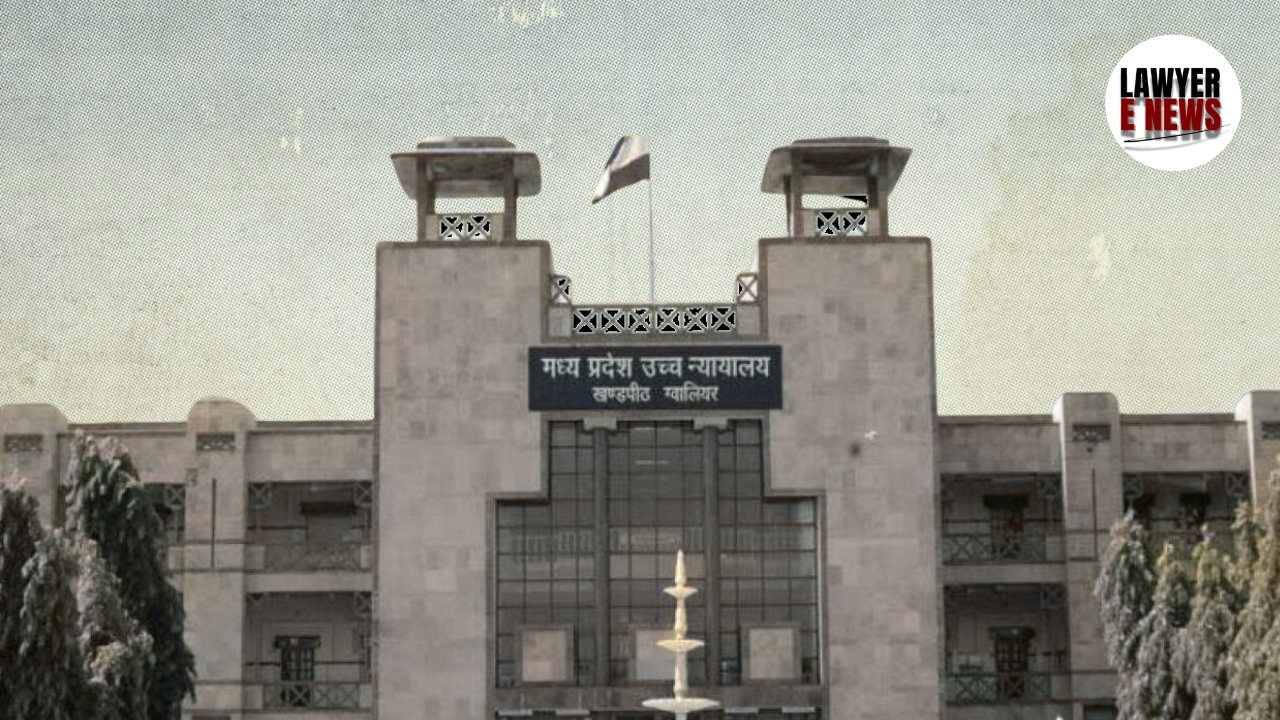
"Functional Use and Therapeutic Purpose, Not Perfume or Packaging, Determine Tax Category" – Division bench of the Madhya Pradesh High Court comprising Justice Vivek Rusia and Justice Jai Kumar Pillai delivered a significant ruling in a long-standing tax dispute between M/s Hindustan Unilever Ltd. and the Commercial Taxes Department, interpreting the tax classification of White Petroleum Jelly I.P. under the MP VAT Act, 2002. The Court ruled emphatically that the product qualifies as a “Drug and Medicine” under Entry 19A of Part II of Schedule II, rejecting its categorization as a cosmetic.
The verdict sets aside the orders of the Madhya Pradesh Commercial Tax Appellate Board and quashes the reassessment proceedings initiated by the tax authorities. The judgment not only brings clarity to the classification of petroleum jelly but also reiterates the legal principles governing the taxation of products with both cosmetic and medicinal characteristics.
“Merely Being Non-Prescriptive Does Not Make a Product Cosmetic” – Court Applies Functional Test to Classify White Petroleum Jelly I.P.
Central to the Court’s reasoning was its emphasis on the “functional use” and “therapeutic effect” of White Petroleum Jelly. The Court observed:
“It is also not a product which is exclusively used for beautification; sometimes it is recommended as a medicine for curing the skin during the extreme winter season.”
The Court recognized the curative properties of White Petroleum Jelly – especially its ability to heal minor wounds, burns, abrasions, diaper rash, and dry skin – and applied the “functional test” laid down by the Supreme Court in Ponds India Ltd. v. Commissioner of Commercial Tax (2008) 113 STJ 355 (SC), as well as subsequent rulings in Hindustan Lever (2015) and Reckitt Benckiser (2023).
Rebutting the Tax Board’s simplistic reliance on common parlance or commercial appearance, the Court stated:
“Subjective appearance or mode of sale cannot override statutory classification when therapeutic use is established.”
“Product Manufactured Under Valid Drug Licence Must Be Treated as Medicine Unless Revenue Proves Otherwise” – High Court Criticizes Reassessment
A particularly stern rebuke was reserved for the Department’s attempt to reopen already concluded assessments, solely based on audit objections. The Court noted:
“The appellant had been assessed earlier as selling a drug. The reassessment merely due to change in opinion, without new material, is impermissible.”
The Court reaffirmed the principle that revenue authorities bear the burden of proving a change in the nature or usage of a product when attempting to reclassify it to impose a higher tax burden. Here, no such material evidence was produced by the Department.
The Court also set aside the interest levied under Section 18(1)(a) of the MP VAT Act, observing that the appellant had paid tax as per its returns in line with the classification previously accepted by the Department
“Specific Entry Prevails Over Residuary: White Petroleum Jelly I.P. Fits Entry 19A as ‘Drug and Medicine’” – Court Rejects Revenue's Cosmetic Argument
The High Court decisively rejected the Revenue’s attempt to classify the product under Entry Nos. 41/49 (cosmetics and toilet articles) of the earlier MP Commercial Tax Act, 1994, declaring that:
“Entry 19A is a specific entry dealing with Drugs and Medicines, including medicated ointments produced under drug licence. The product fits squarely within this entry.”
The Court reminded that the principle of specific entry prevailing over general or residuary entries is well-established in tax jurisprudence.
Significantly, the product in question contains Light Liquid Paraffin I.P. grade, and is manufactured and sold under a valid drug license—a fact not disputed even by the Revenue. The Court concluded that mere over-the-counter availability or non-prescription sales do not change the medicinal character of the product
“Not All Skin-Care Products Are Cosmetics – When Healing is the Purpose, It’s a Drug” – Court Distinguishes Heinz Case Relied on by State
The State Government attempted to rely on the Supreme Court’s 2023 decision in Heinz India Ltd. v. State of Kerala, where Nycil prickly heat powder was held to be a cosmetic under Kerala VAT law. But the Madhya Pradesh High Court distinguished this case, observing:
“In Heinz, the entry itself explicitly included medicated talcum powder. The legislative language was materially different from the MP VAT Act, where no such inclusion exists.”
The Court further noted that White Petroleum Jelly I.P. is not perfumed, is not sold as a beautification product, and is even part of essential drug lists in some jurisdictions.
“Care is Not Cure, But Cure Cannot Be Called Cosmetic” – All Appeals Allowed, Classification as Drug Reinstated
Summing up, the Court held: “A product that is used mainly in curing or treating ailments or diseases and contains curative ingredients even in small quantities, is to be branded as a medicament.”
Thus, the Court ruled in favour of Hindustan Unilever Ltd., allowing both VAT Appeals and answering both Tax References in its favour. It quashed the reassessment orders, reversed the Tax Board’s classification, and nullified the interest demand under Section 18(1)(a).
Date of Decision: 11 September 2025





