-
by sayum
04 August 2026 1:39 PM







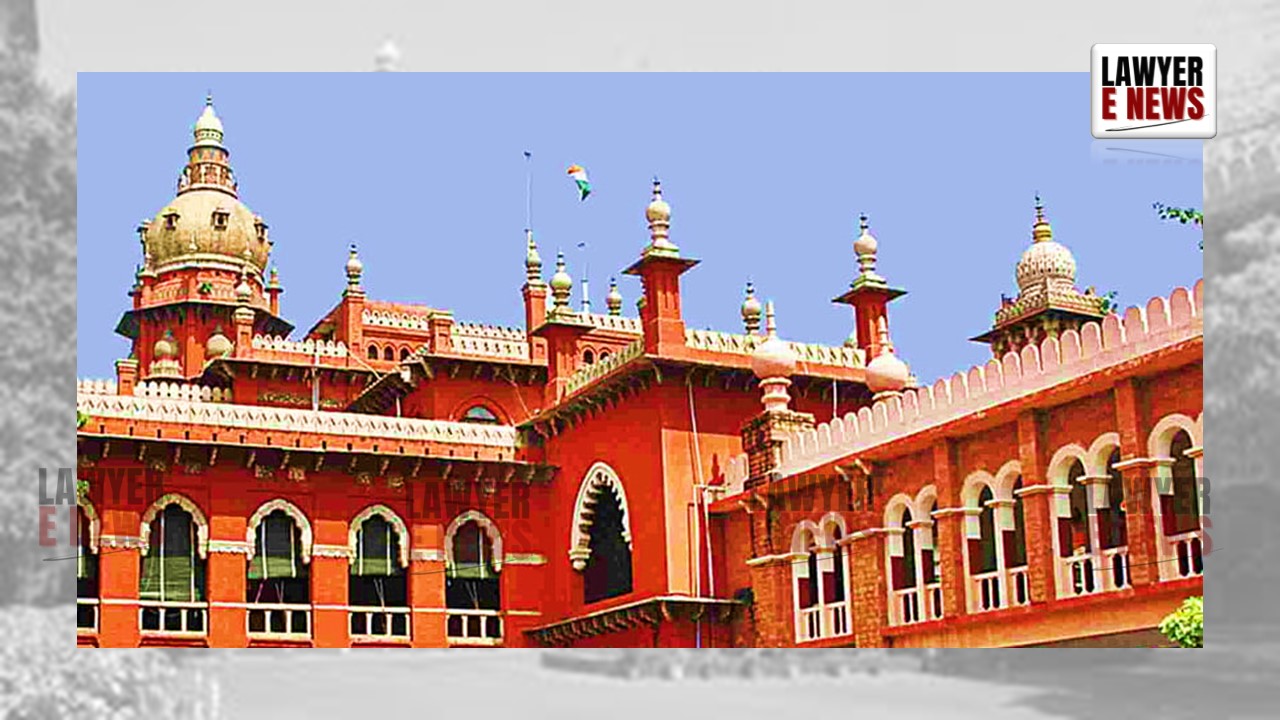
“To maintain equilibrium and peaceful co-existence, the ends of justice would be achieved by accepting the compromise and terminating the proceedings”, In a humane and legally nuanced decision, the Madras High Court quashed the conviction of six men who had been found guilty under provisions of the SC/ST (Prevention of Atrocities) Act, accepting a voluntary compromise reached with the victim, a Scheduled Caste complainant from the same village.
Justice M. Nirmal Kumar, invoking Section 482 of the CrPC, observed that where parties have chosen peace over punishment, the Court must not stand in the way of reconciliation—particularly when the dispute arose from a village-level personal conflict, not a heinous or systemic atrocity.
“Now both the appellants and the de facto complainant are residing in the same village with peace and harmony… The compromise is voluntary and not obtained by force or threat.”
“A Casteist Slur and Assault, But No Public Witness—A Personal Dispute, Not a Community Crime”
The case stemmed from an incident in Sundarakavundanur village in 2018. The complainant, a member of the Scheduled Caste, had gone to aid a man injured in a local accident. Referring to the victim as a "relative," he drew objection from the appellants, who later allegedly used caste slurs and physically assaulted him at his house in front of family members.
The Trial Court convicted all six under:
Section 147 IPC (rioting)
Section 325 r/w 149 IPC (grievous hurt with common object)
Section 3(1)(s) and 3(2)(va) of the SC/ST Act
However, the High Court noted the absence of any public eyewitness, despite the incident allegedly occurring in a public space.
“All eyewitnesses were either the complainant or his close relatives. Not a single independent public witness was examined.”
“Criminal Process Must Not Be Used Where the Village Has Chosen Reconciliation Over Retaliation”
Acknowledging that both the complainant and accused now live peacefully in the same village, the Court held that continuing the prosecution would serve no public interest, and could reignite tensions that had already been healed through voluntary compromise.
Justice Nirmal Kumar applied the Supreme Court’s principles in Ramgopal v. State of M.P. and Ramawatar v. State of M.P., which allow criminal courts to accept compromise even post-conviction where:
The offence is not heinous
The victim and accused have reconciled
The proceedings are predominantly private in nature
“To maintain equilibrium and peaceful co-existence… the ends of justice would be achieved by accepting the compromise and terminating the proceedings.”
“Justice Is Not Always in Sentencing—Sometimes It Is in Letting Go”
Referring to the factual background, the Court also took note of prior disputes involving the complainant, who had previously entered a temple festival on a motorcycle in an allegedly inebriated state, aggravating local tensions. This further confirmed that the episode was more of a village altercation, not a sustained caste-based vendetta.
The Court emphasized:
“The incident appears to be an emotional reaction arising out of a prior misunderstanding. The parties have since restored their cordial relationship.”
Conviction and Sentence Set Aside
Allowing the appeal, the Court quashed the conviction and discharged the appellants from the case:
“This Court is inclined to set aside the conviction and sentence imposed by the Trial Court… The appellants are discharged from the above case.”
The Court also ordered that no further coercive steps be taken against them in connection with the matter.
This decision reinforces that criminal law is not an irreversible machine, and that where parties to a social conflict have restored peace and mutual respect, courts may prioritise restorative over punitive justice—especially in deeply personal and community-rooted disputes.
“A fight settled in the village shouldn’t be fought in court forever… Justice is served not only when punishment is meted, but when peace prevails.”
Date of Decision: 21 May 2025