-
by sayum
25 August 2026 12:32 PM







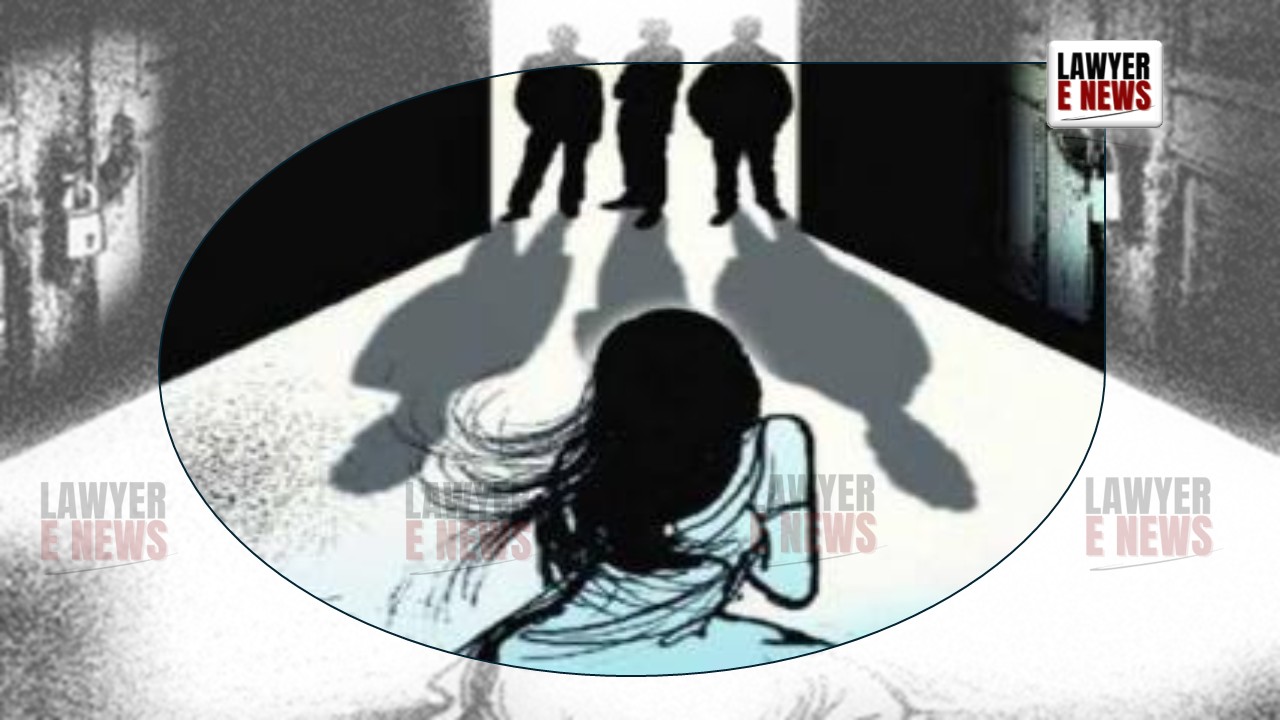
Bombay High Court quashed an FIR registered at Kapurbawadi Police Station, Thane, against a 58-year-old US citizen, accused of rape on the false promise of marriage. The Court ruled that the allegations did not establish a prima facie case under Section 376 of the IPC and that the complaint appeared to be motivated by personal vengeance.
Justice M.S. Sonak and Justice Jitendra Jain observed, “For an act to amount to rape on the false promise of marriage, it must be shown that the accused had no intention to marry from the very beginning. A breach of promise is not equivalent to a false promise made with fraudulent intent.”
"Complainant Herself Rejected Marriage Multiple Times, Yet Continued the Relationship"
The case involved a Canadian resident complainant, who met the accused through the dating app “Bumble” in November 2022. The two engaged in a relationship, meeting in Canada and the USA multiple times between January 2023 and October 2023. The complainant alleged that on November 24, 2022, in Thane, the accused engaged in sexual relations with her under a false promise of marriage.
However, the Court noted that the complainant herself admitted rejecting the accused’s marriage proposal multiple times, citing their age difference. The Court further observed that despite the alleged November 2022 incident, the complainant continued meeting the accused for nearly a year and engaged in multiple intimate encounters with him in Canada and the USA.
The complainant first approached the Jersey City Police Department (USA) in February 2024, but the case was closed due to insufficient evidence. She then filed an online complaint with the Thane Police in June 2024, leading to an FIR in August 2024 and a Look Out Circular (LOC) in October 2024. Following this, the accused approached the Bombay High Court for relief.
"Complainant Sought Financial Compensation Before Filing the FIR"
The Court found that the complainant’s allegations lacked consistency and credibility. Referring to her complaint to the Jersey City Police, the Court observed, “The complainant initially did not mention any incident of November 2022 in Thane but sought financial compensation from the accused. This clearly casts doubts on the intent behind the criminal complaint.”
Citing Pramod Suryabhan Pawar v. State of Maharashtra (2019) 9 SCC 608, the High Court reiterated, “A promise to marry that is subsequently not fulfilled does not amount to rape unless it is shown that the promise was false from the beginning and was never intended to be kept.”
"Allowing Prosecution to Continue Would Be an Abuse of Process"
The High Court held that the allegations failed to meet the threshold for a case under Section 376 IPC and observed, “If an adult, educated woman willingly engages in a relationship, she cannot later claim rape simply because the relationship did not culminate in marriage.”
Relying on the Supreme Court’s ruling in State of Haryana v. Bhajan Lal (1992 SCC (Cri) 426), the Court held, “Permitting prosecution to continue in such cases would amount to an abuse of the judicial process.”
The Court, therefore, quashed the FIR and the charge sheet.
The Bombay High Court’s ruling underscores the difference between a breach of promise and a fraudulent misrepresentation to secure consent for sexual relations. The judgment reinforces that false allegations, driven by ulterior motives, cannot be allowed to misuse the criminal justice system.
Justice Sonak, in his concluding remarks, stated, "Criminal law cannot be used as a tool for arm-twisting or revenge. The sanctity of rape laws must be protected from false or motivated complaints."
Date of Decision: 28 February 2025