-
by sayum
12 August 2026 1:53 PM







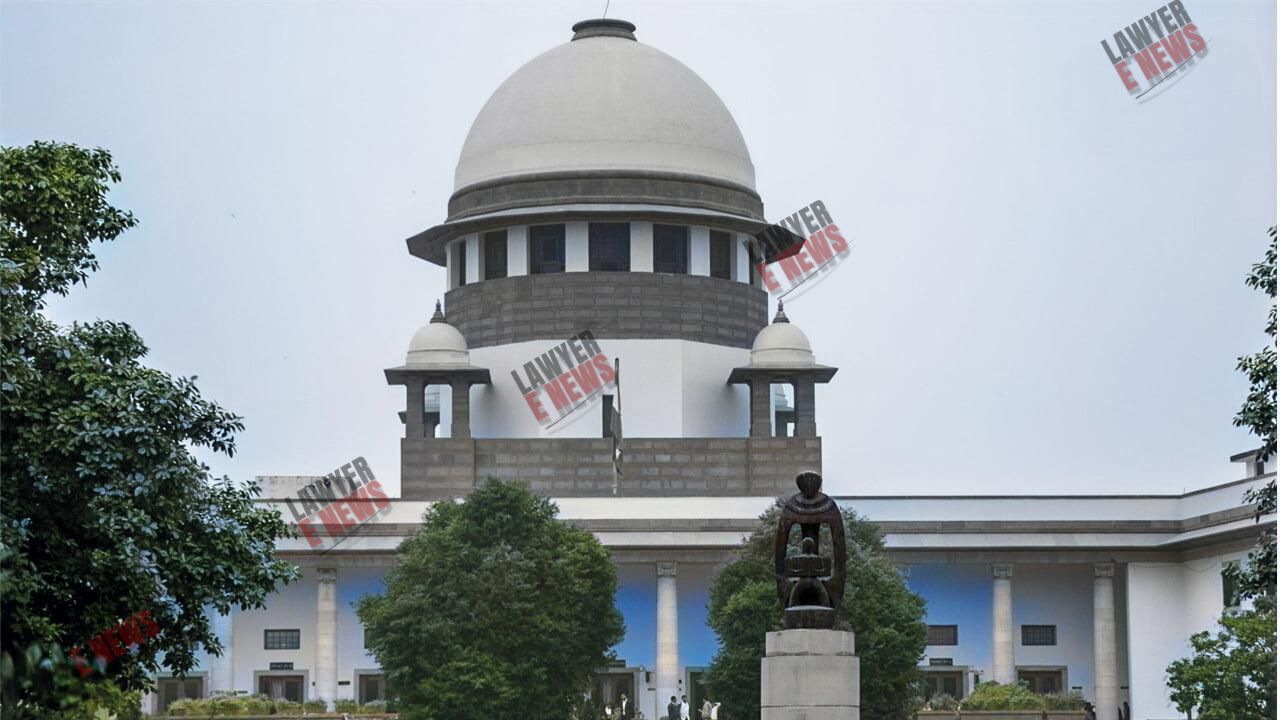
Murder in Broad Daylight with Swords – No Leniency for the Guilty - In a landmark ruling Supreme Court of India upheld the life imprisonment of the accused in a gruesome daylight murder, rejecting the defense of alibi and affirming the reliability of eyewitness testimony. Supreme Court dismissed the appeals of the convicted individuals and directed Accused No. 9, Tanaji Shamrao Kale, to surrender within one month to serve the remainder of his sentence.
The case stems from a deadly attack on Murlidhar Kale on July 18, 2001, arising out of a long-standing family feud over irrigation rights. The prosecution established that the accused, armed with swords and sticks, brutally assaulted the deceased in full public view, striking his shoulders, wrists, and knees with lethal force.
The trial court convicted the accused under Sections 148 and 302 read with 149 of the Indian Penal Code (IPC) and sentenced them to life imprisonment. The Bombay High Court later confirmed the conviction. Accused No. 9, Tanaji Shamrao Kale, a police constable, had secured bail, while the others had remained in custody.
"The Accused Butchered Him in Broad Daylight" – Supreme Court Cites Eyewitness Accounts
The Supreme Court placed immense reliance on the testimony of eyewitnesses, rejecting claims that their statements were inconsistent. The Court particularly highlighted the statement of PW-1, the deceased’s nephew, who provided a harrowing account of the attack: "The incident took place on 18.07.2001 at about 10:15 a.m. to 10:30 a.m. At that time, I was taking meals in my house. My mother was fetching water from the hand pump when she screamed that the accused were assaulting my uncle Murlidhar with swords. I ran towards the spot and saw them repeatedly striking him on his shoulders, wrists, and knees."
The Court noted that PW-1’s testimony was consistent with the statements of PW-2 and PW-5, both of whom also witnessed the attack. PW-2, an independent bystander with no enmity against the accused, corroborated the prosecution’s case, strengthening its credibility.
Rejecting the defense’s attempt to discredit the eyewitnesses, the Supreme Court ruled: "The presence of independent eyewitnesses, including a passerby, lends strong credibility to the prosecution case. Failure to examine other alleged witnesses does not dilute the reliability of these witnesses, whose accounts remain unimpeachable."
"Alibi Must Be Proven Beyond Doubt – Mere Assertion is Not Enough," Supreme Court Rejects Accused No. 9’s Defense
Accused No. 9, Tanaji Shamrao Kale, a police constable, claimed that he was on duty with the Crime Branch at the time of the murder, attempting to establish an alibi defense. However, the Court dismissed this argument, citing the testimony of PW-10, Investigating Officer Vasant Zunjare, who stated: "Though official duty was assigned to Accused No. 9 on July 18 and 19, 2001, he was not present at the police station on those days. He has failed to establish that he was elsewhere when the crime was committed."
The Court underscored that an alibi must be proven beyond doubt, and mere assertion of official duty without corroborative proof does not suffice.
"An accused claiming an alibi must prove it with clear and cogent evidence. The burden of proof lies on the accused, and in the absence of such proof, the plea of alibi fails," the Court held.
"He Told the Assailants to Strike Harder" – Supreme Court Highlights Premeditation and Brutality of the Crime
The manner of assault was particularly brutal and premeditated, with the accused striking the deceased with swords on vital body parts. The Court cited PW-1’s chilling testimony, which described how Accused No. 9 actively participated in the killing: "He told the assailants why they were beating him like a woman. He then took the sword from the hands of his brother Ratu Kale and started giving blows to the right knee of Murlidhar."
The Supreme Court held that sustained assault using deadly weapons constitutes murder under Section 302 IPC, reiterating the principles laid down in Lakhan Sao v. State of Bihar (2000). The Court observed: "When multiple assailants use lethal weapons on vital parts of the body with repeated blows, the intention to kill is evident beyond doubt. There is no question of reducing culpability."
"No Leniency for Those Who Kill Without Mercy"
After carefully examining the evidence, the Supreme Court ruled: "The presence of the accused at the crime scene, coupled with consistent and reliable eyewitness testimony, leaves no doubt regarding their guilt. The appeals are devoid of merit and are accordingly dismissed."
The Court directed Tanaji Shamrao Kale to surrender within one month to serve his remaining sentence, further stating: "Justice cannot be sacrificed for misplaced sympathy. The brutality of this crime warrants no leniency."
This judgment underscores the significance of reliable eyewitness testimony in criminal cases, particularly when independent witnesses corroborate key facts. The Supreme Court has reaffirmed that those who commit premeditated, brutal murders cannot escape punishment on flimsy defenses like an unproven alibi.
Date of decision: March 5, 2025