-
by sayum
12 August 2026 1:53 PM







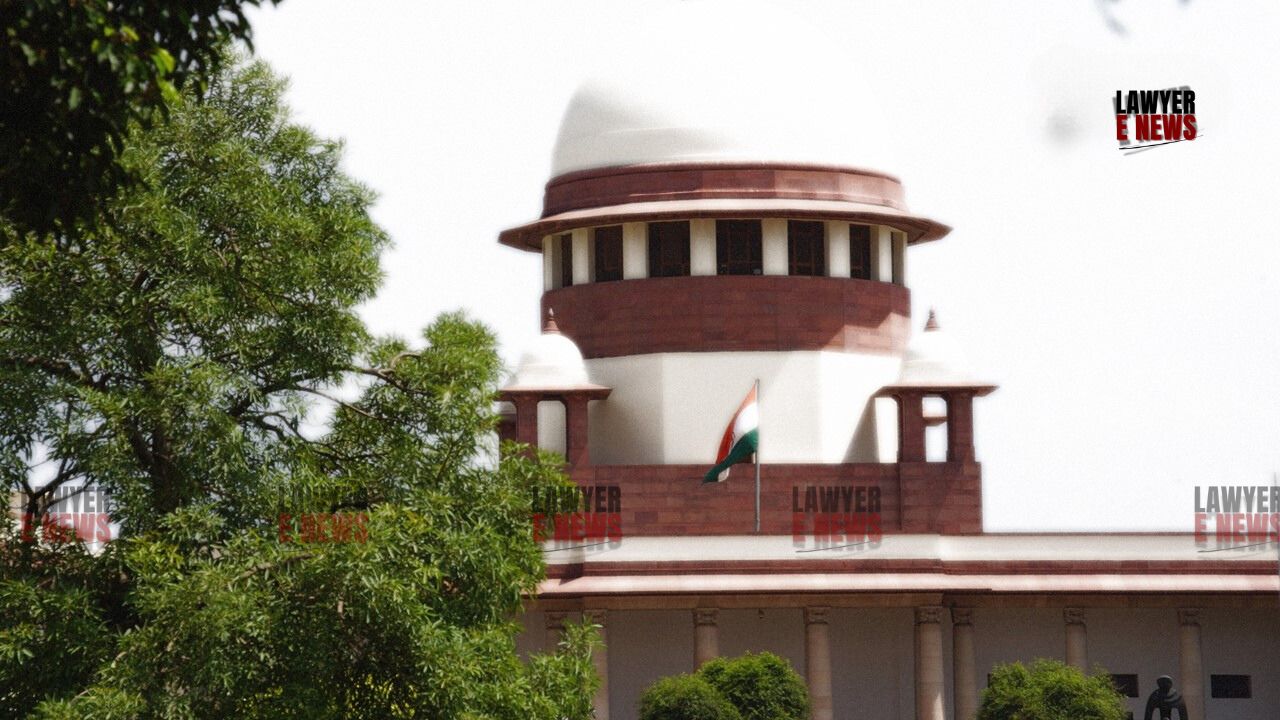
Court Orders Are Not Mere Formalities – Breach of Undertaking Justifies Contempt - In a significant judgment delivered on March 5, 2025, the Supreme Court of India upheld the Karnataka High Court's ruling that found the appellants guilty of contempt for violating their undertaking given before the Trial Court. Supreme Court affirmed that an undertaking given to a court is binding, and its breach amounts to contempt. The Court modified the sentence of imprisonment but enhanced the compensation payable by the contemnors from ₹10 lakhs to ₹13 lakhs with interest.
Breach of Trust: The Defendants Ignored Their Own Undertaking
The case arose from a dispute concerning a Joint Development Agreement (JDA) dated April 30, 2004, wherein the appellants had agreed to construct residential apartments within 24 months. The construction remained incomplete beyond the stipulated deadline of October 31, 2006, leading to the plaintiffs issuing a legal notice canceling the JDA on March 23, 2007, and subsequently filing Original Suit No. 4191 of 2007.
During the pendency of the suit, the appellants (defendants) gave an undertaking before the Trial Court on July 11, 2007, and reiterated it on August 13, 2007, stating that they would not alienate the property to any third party. However, despite this, the defendants executed multiple sale deeds between 2007 and 2011, violating their own commitment to the court.
When the plaintiffs discovered the unauthorized sales, they filed an interlocutory application (I.A. No. 3) under Order XXXIX Rule 2A of the Code of Civil Procedure, 1908, seeking action against the defendants for contempt. The Trial Court dismissed the application, holding that the plaintiffs had failed to prove willful disobedience "beyond reasonable doubt." The High Court, however, overturned this decision, holding the appellants guilty of contempt and imposing a sentence of imprisonment, attachment of property, and a fine of ₹10 lakhs.
"An Undertaking Given to the Court is Sacrosanct" – Supreme Court Rejects Defendants' Excuses
The Supreme Court dismissed the appellants' arguments that they were not expressly authorized to give the undertaking and that the Trial Court never explicitly restrained them from selling the property. The Court ruled: "An undertaking given to the court is not a mere formality—it is a solemn assurance that binds the party to its word. To permit a party to renege on such a promise would render court proceedings meaningless."
The Court cited Samee Khan v. Bindu Khan (1998) to emphasize that even if an injunction order is later set aside, disobedience during its validity does not get erased.
"The subsequent dismissal of a suit does not absolve a party of liability for breach of an injunction order. The integrity of court orders must be upheld at all costs."
"Lawyers Represent Their Clients – They Do Not Act Arbitrarily" – Supreme Court on Advocate’s Authority
The appellants argued that their lawyer had given the undertaking without their express authorization. The Supreme Court rejected this defense outright, stating: "An advocate-client relationship is fiduciary in nature. An advocate cannot act without authorization, but at the same time, a client cannot later disown an undertaking made on their behalf when it suits them."
The Court relied on Himalayan Coop. Group Housing Society v. Balwan Singh (2015), holding that: "A client is bound by the statements made by their lawyer in court unless it is proven that the lawyer acted without authority. The appellants had ample time to challenge the undertaking, but they failed to do so."
"Defiance of Court Orders Undermines the Rule of Law" – Supreme Court Justifies Contempt Punishment
The Supreme Court firmly held that the defendants had knowingly and willfully violated the undertaking and the court’s subsequent orders. It ruled that contempt powers must be exercised to preserve the dignity of the judicial process: "The power of contempt is not meant to protect the dignity of an individual judge but to ensure that judicial orders are respected and obeyed. If court orders are flouted with impunity, the very foundation of justice is shaken."
The Court relied on Supreme Court Bar Assn. v. Union of India (1998), reiterating that: "Contempt jurisdiction exists to ensure that the majesty of law is upheld and public confidence in the judiciary remains intact. A blatant violation of court orders cannot be ignored."
"Justice Cannot Be Sacrificed for Misplaced Sympathy"
The Supreme Court upheld the High Court's decision to hold the appellants guilty of contempt but modified the punishment in light of the advanced age of one of the contemnors. The Court ruled: "Given that the contemnor was 63 years old at the time of filing the appeal and is now around 68 years old, the sentence of imprisonment is set aside. However, the attachment of property remains, and the compensation is enhanced to ₹13 lakhs."
The compensation will also carry simple interest at 6% per annum from August 2, 2013, the date when the Trial Court dismissed the contempt application.
This ruling serves as a stern warning against the casual disregard of court orders and undertakings. The Supreme Court has made it clear that an undertaking given to a court is as binding as an injunction, and any breach will result in serious consequences.
Date of Decision : March 5, 2025