-
by sayum
12 August 2026 1:53 PM







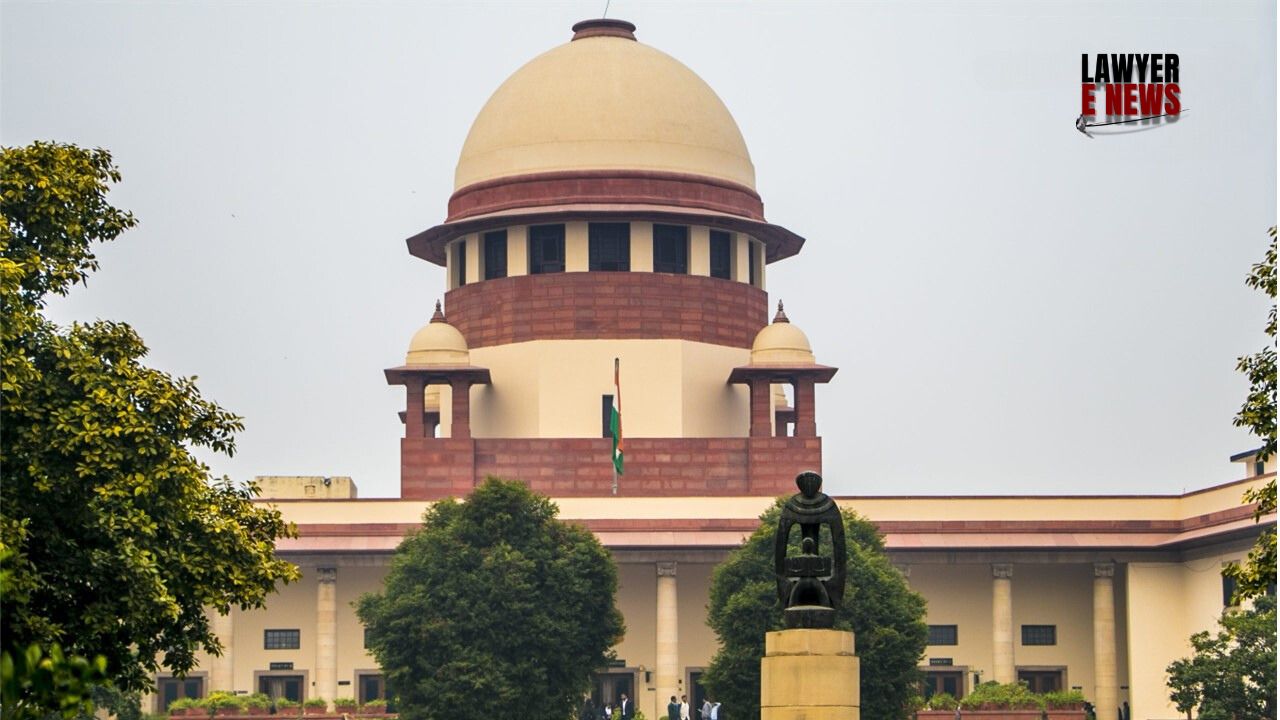
Once a Dying Declaration is Proven, Lack of Ballistic Evidence is Insignificant - In a significant ruling Supreme Court of India dismissed the appeals of three convicts sentenced to life imprisonment for the murder of Nagender Yadav, holding that the dying declaration made by the deceased was credible and required no further corroboration. Court upheld the conviction under Section 302 read with Section 34 IPC, confirming that all three accused shared a common intention in committing the murder.
The Court ruled that the failure of forensic analysis to conclusively link the recovered bullet to the firearm used in the crime did not weaken the prosecution’s case, as a well-established dying declaration itself forms sufficient basis for conviction.
Murder in the Dead of Night: A Crime Witnessed in its Aftermath
The case revolved around the brutal murder of Nagender Yadav on the night of May 15-16, 2012, at his residence. The prosecution alleged that accused No.1, Dinesh Kumar @ Khali, along with his associates Deepak Kumar @ Chintu (Accused No.2) and Suresh @ Hanumant (Accused No.3), attacked the deceased, with Dinesh firing the fatal shot.
According to PW-1 (Bindu, the deceased’s wife), she was asleep along with her husband and child when she was awakened by a gunshot around 12:30 AM. She saw her husband staggering towards her in pain, bleeding from the abdomen, and heard him say:
"Dinesh @ Khali shot me. Deepak Kumar @ Chintu and Suresh @ Hanumant were with him."
PW-2, the deceased’s brother, corroborated this statement, testifying that while transporting the deceased to the hospital, he repeated the same dying declaration.
Despite efforts to save him, Nagender succumbed to his injuries shortly after reaching the hospital. The prosecution’s case relied heavily on his dying declaration, eyewitness testimony, and the subsequent recovery of the firearm at the instance of accused No.1.
The Trial Court convicted all three accused under Section 302 IPC read with Section 34, sentencing them to life imprisonment, while accused No.1 also faced additional charges under the Arms Act. The Delhi High Court upheld the conviction, leading to the present appeal before the Supreme Court.
"A Dying Declaration is the Voice of Truth" – Supreme Court Rejects Defense's Arguments
The defense argued that the crime scene was dark, making it improbable that the deceased could have recognized his attackers. They also pointed out that no dying declaration was recorded by a doctor at the hospital, and that forensic examination failed to establish whether the bullet recovered from the deceased's body was fired from the accused’s weapon.
The Supreme Court rejected these arguments, emphasizing that: "A dying declaration is admissible under Section 32 of the Indian Evidence Act, 1872, and once it is found to be genuine and voluntary, it alone can form the basis for conviction without the need for corroboration."
The Court cited PW-1’s unshaken testimony, stating: "I asked my husband about the injury. He told me to call my family members and said that Dinesh Kumar @ Khali had shot him, with Deepak Kumar @ Chintu and Suresh @ Hanumant present at the time."
"Common Intention Can Be Inferred From Conduct" – Supreme Court on Section 34 IPC
The defense contended that only accused No.1 (Dinesh Kumar) fired the fatal shot, and the others should not be convicted under Section 34 IPC. The Supreme Court rejected this claim, holding that mere presence and active participation in the crime were sufficient to establish common intention.
The Court noted that Accused Nos. 2 and 3 had accompanied the shooter to the deceased’s house at midnight and stood by as he fired, stating: "Section 34 IPC does not require all accused to perform the same act. Common intention can be inferred from the facts, circumstances, and conduct of the accused before, during, and after the crime."
"Once a Dying Declaration is Proven, Lack of Ballistic Evidence is Insignificant" – Supreme Court Dismisses Forensic Argument
The defense attempted to cast doubt on the firearm evidence, pointing out that the Forensic Science Laboratory (FSL) could not confirm whether the bullet recovered from the body was fired from the weapon seized from Accused No.1.
The Supreme Court dismissed this argument, stating: "When a dying declaration is clear, reliable, and voluntary, minor lapses in forensic evidence do not weaken the prosecution’s case. A conviction can rest solely on a trustworthy dying declaration."
No Leniency for Cold-Blooded Murder
After thoroughly analyzing the evidence, the Supreme Court dismissed the appeals, ruling: "The dying declarations made by the deceased to PW-1 and PW-2 remain unshaken. The defense has failed to prove any contradictions or inconsistencies. The guilt of all three accused has been established beyond reasonable doubt."
The Court ordered the appellants to surrender within one month to serve the remainder of their life sentence, while also directing the authorities to consider their cases for remission at the appropriate stage, in accordance with law.
This judgment underscores the legal sanctity of dying declarations and reiterates that forensic evidence, while valuable, is not indispensable when direct, credible testimony establishes the crime beyond doubt. By applying Section 34 IPC to all three accused, the Court has reaffirmed the principle that criminal liability extends to those who act with a shared intent to commit a crime, even if only one person pulls the trigger.
Date of decision : March 5, 2025