-
by sayum
15 August 2026 2:23 PM







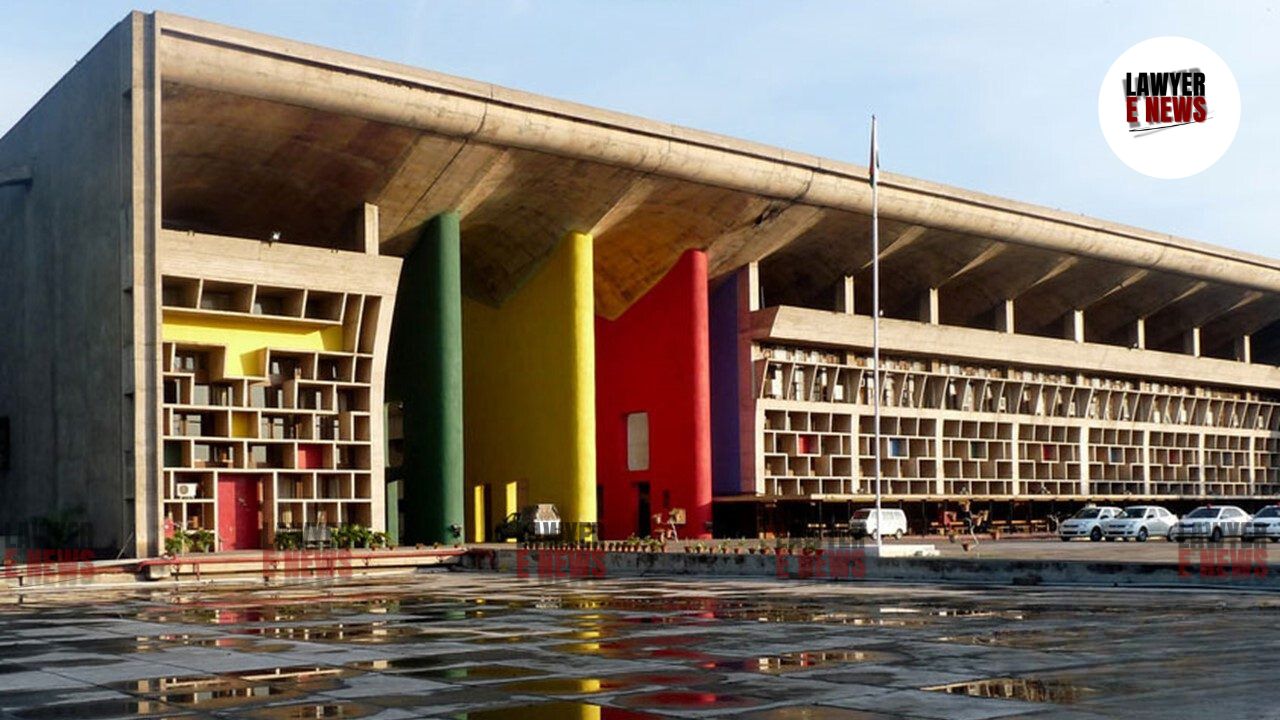
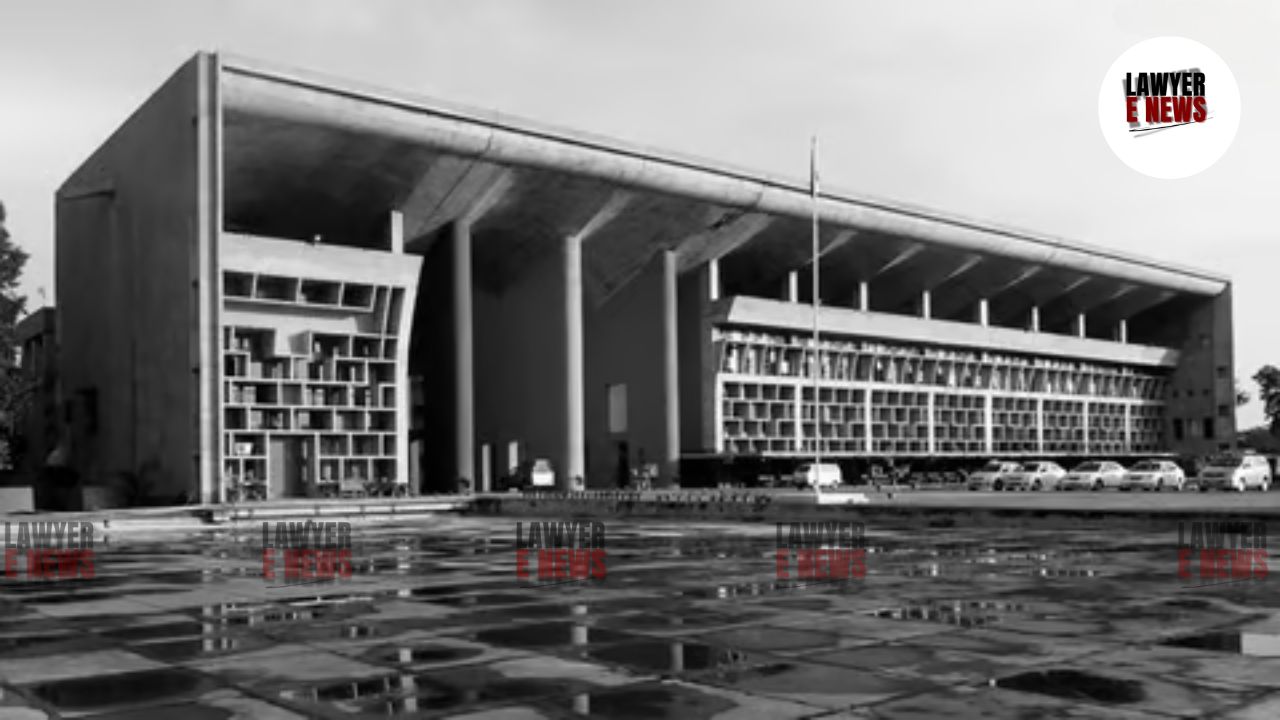
"Human nature and family responsibilities occupy the mind of kith and kin to such an extent that they give more importance to get the victim treated rather than to rush to the Police Station." Punjab and Haryana High Court, in a significant ruling , held that a delay in lodging a First Information Report (FIR) cannot be the sole ground to dismiss a motor accident claim, especially when the family’s priority is the medical treatment of the victim.
A bench of Justice Harkesh Manuja observed that in Indian conditions, it is unrealistic to expect a common man to act mechanically and rush to the police station immediately after a traumatic accident.
The case arose from a motor vehicular accident on July 09, 2014, which resulted in the death of one Anil. The Motor Accident Claims Tribunal (MACT), Palwal, had dismissed the claim petition filed by the parents of the deceased primarily due to a seven-day delay in lodging the FIR and because the informant was not an eyewitness. The Tribunal also labeled an eyewitness, PW-1 Sandeep, as a "planted witness" because he did not personally take the injured to the hospital, choosing instead to inform the family.
The primary question before the court was whether a seven-day delay in lodging an FIR is fatal to a claim under the Motor Vehicles Act when the injured was undergoing continuous treatment. The court was also called upon to determine whether an FIR must necessarily be lodged by an eyewitness and whether the "unnatural" conduct of a witness can be measured by a fixed standard.
Delay In FIR Not A Ground To Deny Justice To Accident Victims
The Court found that the Tribunal placed "undue emphasis" on the delay in lodging the FIR. Justice Manuja noted that the injured remained hospitalized for six days before succumbing to his injuries, making the delay naturally explained by the family's focus on medical care. The bench emphasized that the purpose of an FIR in accident cases is primarily to intimate the police to initiate an investigation and prove the factum of the accident.
Court Adopts Supreme Court’s View On Human Priorities During Emergencies
Relying on the precedent in Ravi v. Badrinarayan (2011), the Court observed that "delay in lodging the FIR thus, cannot be the ground to deny justice to the victim." The bench noted that unless the kith and kin of a victim regain a certain level of tranquility of mind, the delay in lodging an FIR deserves to be condoned, provided the claim is otherwise genuine and not a fabrication.
Informant Need Not Be An Eyewitness To Set Criminal Law In Motion
Addressing the Tribunal's finding that the FIR was lodged by the deceased's brother who was not an eyewitness, the High Court held this reasoning to be "equally untenable." Citing Hallu v. State of M.P. (1974), the Court clarified that Section 154 of the CrPC does not require the informant to have personal knowledge of the incident. An FIR is merely intended to set the criminal law in motion and can be based on information received from other sources.
No Straightjacket Formula To Measure Human Conduct Of Witnesses
The Court strongly disagreed with the Tribunal’s assessment that the eyewitness, PW-1 Sandeep, was a "planted witness" because he didn't accompany the victim to the hospital. Justice Manuja remarked that human conduct cannot be measured by any straightjacket formula as reactions vary per individual. The Court found it perfectly natural that the witness, after seeing the driver take the victim to the hospital, chose to inform the family instead.
"The reaction of each individual varies according to the facts and circumstances prevailing at the time of the occurrence... Such conduct appears to be perfectly natural and consistent with ordinary human behaviour."
MACT Claims To Be Decided On Preponderance Of Probabilities
The bench reiterated that proceedings under the Motor Vehicles Act are summary in nature and are not governed by strict rules of evidence as required in criminal trials. Citing Bimla Devi v. HRTC (2009) and Kaushnuma Begum v. New India Assurance Co. Ltd. (2001), the Court held that Tribunals must adopt a liberal and pragmatic approach, deciding cases on the touchstone of "preponderance of probabilities" rather than proof beyond reasonable doubt.
Adverse Inference Drawn Against Driver And Owner For Not Testifying
The Court noted that while the driver and owner admitted the vehicle was insured, they denied the accident in their written statement. However, significantly, neither the driver nor the owner entered the witness box to rebut the evidence led by the claimants. The bench held that in such circumstances, an adverse inference ought to be drawn against the respondents, further establishing the involvement of the offending vehicle.
Pragmatic Guesswork Required To Assess Notional Income Of Deceased
In assessing the compensation, the Court noted the deceased was an agriculturist and milk vendor without a formal salary certificate. Following the ratio in Chandra @ Chanda @ Chandraram vs. Mukesh Kumar Yadav (2022), the Court held that while minimum wage notifications are a yardstick, they are not absolute. The bench adopted a "pragmatic and realistic approach" to fix the notional monthly income at Rs. 10,000, considering the economic realities of life.
Court Re-calculates Compensation Under Conventional And Future Heads
Following the principles laid down in Sarla Verma and Pranay Sethi, the Court granted 40% future prospects and applied a multiplier of 16 for the 32-year-old deceased. Since the deceased was a bachelor, a 50% deduction was made for personal expenses. The Court also awarded Rs. 3,00,000 for medical expenses, noting that families in emergencies cannot be expected to preserve every single medical bill and receipt.
The High Court set aside the Tribunal's order and allowed the appeal, awarding a total compensation of Rs. 17,76,000 to the parents. The Court held the driver, owner, and insurance company jointly and severally liable, directing them to pay the amount with 9% interest per annum. The ruling reinforces the principle that technicalities like FIR delay or witness behavior should not defeat the social welfare purpose of the Motor Vehicles Act.
Date of Decision: July 02, 2026