
-
by sayum
28 August 2026 2:11 PM







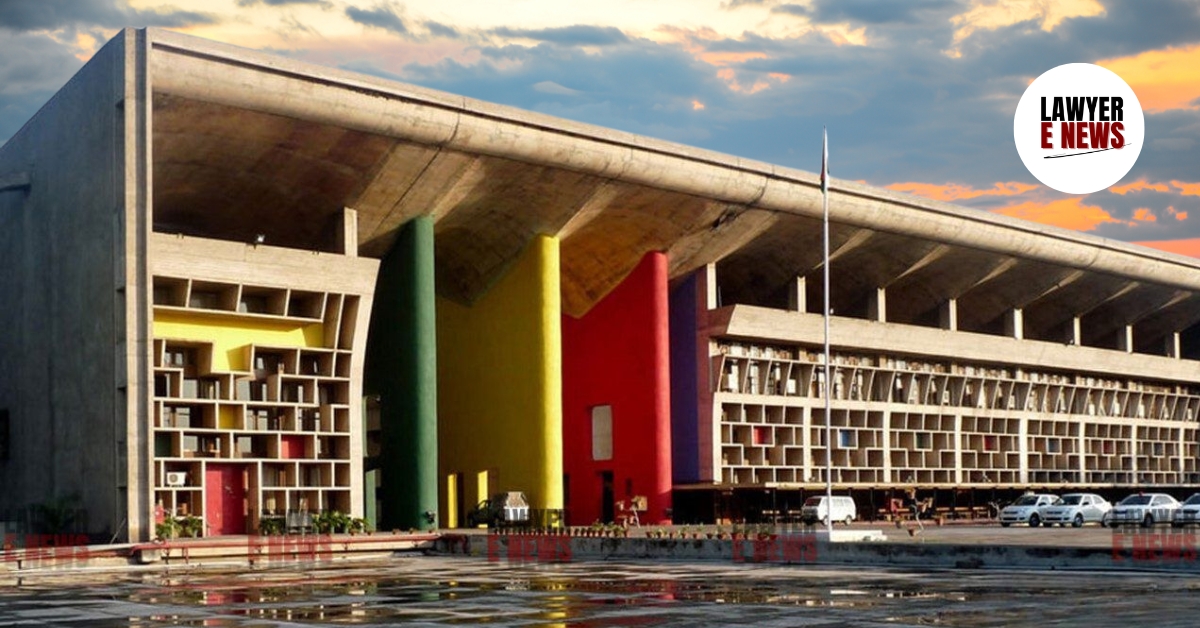
“The right to speedy and expeditious trial is one of the most valuable and cherished rights guaranteed under the Constitution” — P&H High Court Punjab and Haryana High Court granted major relief to a man convicted under the Narcotic Drugs and Psychotropic Substances Act (NDPS Act) for possession of 1 kg of opium, by reducing his sentence from two years’ imprisonment to the period already undergone — 3 months and 20 days.
While affirming the conviction under Section 18 of the NDPS Act, the Court held that in light of the 21-year delay in the trial, the age and financial hardship of the accused, and the absence of a mandatory minimum punishment, leniency in sentencing was warranted.
“Punishment Should Fit the Crime — But Also the Circumstances” — Court Relies on Supreme Court Precedents to Reduce Sentence
Justice H.S. Grewal, delivering an oral order, invoked the principle that sentencing is not a mechanical formality, but a matter of judicial discretion guided by proportionality and reformative considerations. Referring to Deo Narain Mandal v. State of U.P. (2004) 7 SCC 257, the Court emphasized:
“Background of each case, including gravity of the offence, the manner in which it is committed, age of the accused, must be considered while determining sentence… discretion is not to be used arbitrarily or whimsically.”
The Court further cited the Supreme Court’s ruling in Ravada Sasikala v. State of A.P., AIR 2017 SC 1186, where it was held that sentencing must balance societal interests and the possibility of reformation, stating:
“The imposition of sentence serves a social purpose, but opportunities of reformation must be granted by evaluating all attending circumstances.”
“Trial Lasted Over Two Decades — Accused Already Suffered Mental Agony and Financial Hardship” — High Court Cites Delay in Granting Relief
The appellant Jodh Singh was convicted by the Special Court, Ludhiana, via judgment dated 10.10.2011, for possessing 1 kg of opium. He was sentenced to 2 years of rigorous imprisonment and a ₹10,000 fine, with 3 additional months in case of default.
The High Court, noting that the FIR dated back to 26.05.2004, remarked:
“The appellant has already faced the rigors of trial for more than 21 years… he has suffered the agony of protracted litigation and financial hardship.”
The Court emphasized the constitutional right to speedy trial, noting that prolonged delays erode the purpose of punitive justice.
“Conviction Stands, But Sentence Reduced; Fine Enhanced as Balancing Measure” — Bail Bonds Discharged, Imprisonment Substituted with Financial Penalty
While affirming the conviction under Section 18 of the NDPS Act, the Court modified the sentence:
“The sentence imposed is reduced to the period already undergone — 3 months and 20 days — which is justifiable to serve the interest of justice.”
However, the Court enhanced the fine from ₹10,000 to ₹30,000, directing the appellant to deposit it within 3 months. In case of default, the appellant would be required to undergo 3 more months of rigorous imprisonment.
“The appellant is on bail. He need not surrender. His bail bonds are discharged.”
This balancing act was justified by the Court’s reliance on consistent precedents such as Haripada Das v. State of West Bengal (1998) 9 SCC 678 and Alister Anthony Pareira v. State of Maharashtra (2012) 2 SCC 648.
Conviction Affirmed under Section 18 NDPS Act.
Sentence Reduced to period already undergone (3 months and 20 days).
Fine Enhanced to ₹30,000 (to be deposited within 3 months).
Bail Bonds Discharged; no further incarceration unless default in payment.
Date of Decision: 23 September 2025





