-
by sayum
06 August 2026 1:57 PM







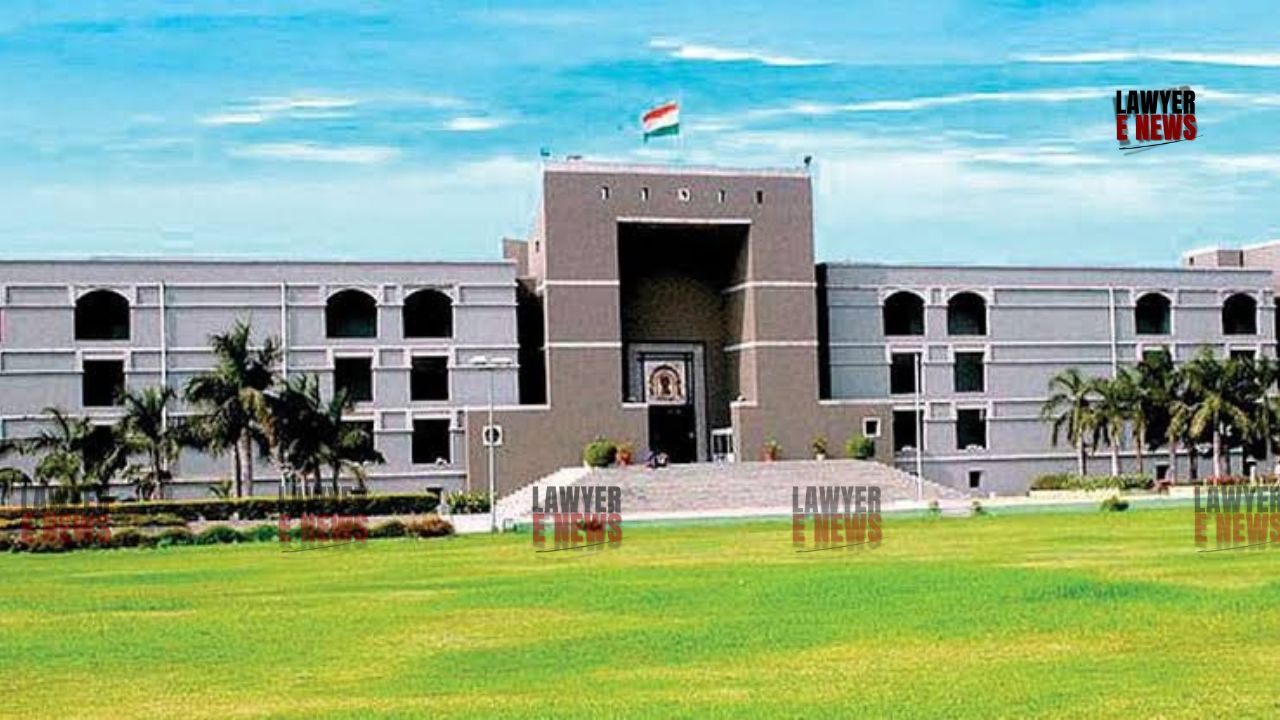
“Driving a Government Vehicle Negligently is a Dereliction, Not a Duty”—Gujarat High Court decisively ruled that a State Transport driver, convicted for rash and negligent driving causing death, cannot claim immunity under Section 197 of the Code of Criminal Procedure (CrPC) merely because he was on official duty. In doing so, the Court refused to interfere with the concurrent findings of conviction by the Trial and Appellate Courts, though it exercised discretion to reduce the sentence in view of the applicant’s age (over 60) and the two-decade gap since the incident.
Justice L. S. Pirzada categorically held: “Driving a government vehicle in a rash and negligent manner is not an act in discharge of official duty. It cannot be cloaked under the protection of Section 197(1) CrPC.”
This observation dealt a critical blow to the applicant’s last-ditch legal argument seeking annulment of his conviction on procedural grounds after exhausting appeal.
High Court Denies Protection of Official Capacity: “Immunity Under Section 197 CrPC Not for Dereliction of Duty”
The central issue before the Court was whether the applicant, a State Transport bus driver, could invoke Section 197 CrPC, which bars prosecution of public servants without prior sanction for acts “done in discharge of official duty”. The applicant claimed that since he was driving a government bus as part of his duties, the entire prosecution was void ab initio due to absence of sanction.
The Court was unambiguous: “Driving negligently and causing death is not part of official duty, but a breach of it. Therefore, no sanction is needed under Section 197 CrPC. The plea raised for the first time at the revision stage is untenable in law.”
Relying on the Supreme Court’s decision in P.K. Pradhan v. State of Sikkim, (2001) 6 SCC 704, the Court emphasized that sanction is needed only when the alleged act is so integrally connected with official duty that it would be impossible to separate them. In contrast, reckless driving, even of a state vehicle, falls clearly outside the protective umbrella.
“Revision is Not Re-Appreciation”—Court Reiterates Limited Scope Under Section 397 CrPC
The applicant had challenged his conviction under Sections 279, 338, and 304-A IPC (rash driving, causing grievous hurt, and death by negligence) and certain provisions of the Motor Vehicles Act. However, the High Court reiterated the narrow scope of revisional jurisdiction under Sections 397 and 401 CrPC.
Quoting the settled law, the Court said: “Revisional jurisdiction is supervisory and not appellate. It is not open to the revisional court to re-appreciate evidence unless there is gross miscarriage of justice or glaring illegality.”
Justice Pirzada leaned on the Supreme Court’s observations in State of Kerala v. Puttumana Illath Jathavedan Namboodiri, (1999) 2 SCC 452, stating that:
“Ordinarily, the High Court would not interfere with concurrent findings of fact unless shown to be perverse or patently illegal.”
Here, the Trial Court had, based on eyewitnesses and medical records, concluded that the driver was at fault. The Appellate Court independently reaffirmed this conclusion. The High Court saw no perversity or procedural illegality warranting revisional interference.
Incident Leading to Conviction: One Dead, Two Injured After State Bus Collides with Motorcycle
The incident occurred on 12th September 1996 when the applicant, driving a State Transport bus, collided with a motorcycle on the Bhavnagar–Ahmedabad Highway near Limda Dhal, killing Jashuben, injuring her husband (the complainant), and another rider.
The Trial Court, in 2002, convicted the applicant under IPC Sections 279 (rash driving), 337, 338, 304-A, and also for violations under the MV Act. The conviction was confirmed in appeal in 2005, prompting the present revision after two decades.
The Court noted:“The evidence of multiple eyewitnesses, including the complainant and independent observers, clearly established that the applicant drove the ST bus rashly and failed to exercise due care, resulting in fatal consequences.”
Sentence Reduced from 1 Year to 3 Months—Court Exercises Compassion After Two Decades
Though the High Court upheld the conviction, it found merit in the argument for reduction of sentence, considering the 20-year delay, the applicant’s age (now over 60), and the absence of prior criminal record.
Justice Pirzada observed: “Considering the passage of time, the advanced age of the applicant, and the partial sentence already undergone, this Court deems it just to reduce the sentence to 3 months each under Sections 279, 338, and 304-A IPC.”
The sentences were ordered to run concurrently, and the applicant was granted the benefit of set-off under Section 428 CrPC for time already spent in custody.
The Court directed: “The applicant shall surrender before the concerned court within four weeks to serve the reduced sentence. The bail bond furnished stands cancelled.”
This judgment serves as a strong reaffirmation of the principle that government employment does not confer immunity for criminal acts committed during work, especially when those acts depart from the duty owed to the public.
By maintaining the conviction and denying the Section 197 CrPC shield, the Gujarat High Court sent a clear message:
“Negligence behind the wheel—especially when operating a public transport vehicle—has legal consequences, regardless of the uniform one wears.”
At the same time, the Court balanced justice with compassion by modifying the sentence, mindful of the long delay and the driver’s current age.
Date of Decision: 01 October 2025