-
by sayum
27 August 2026 3:32 PM







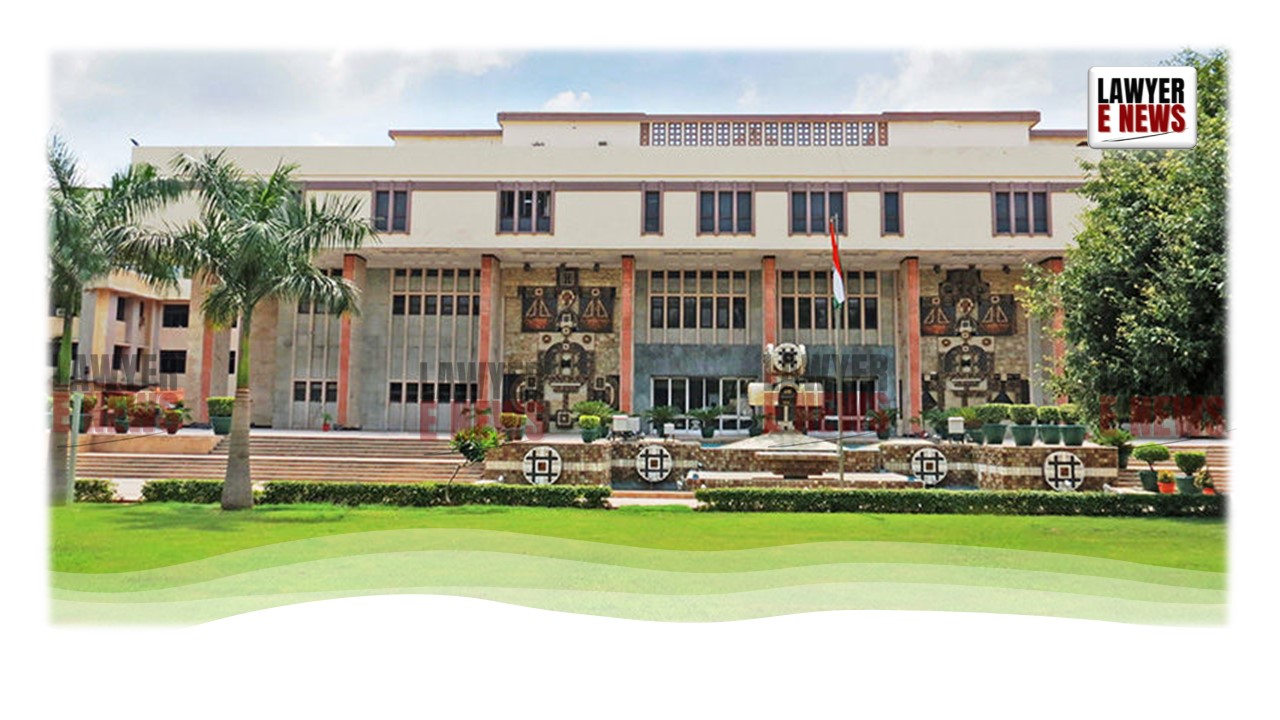
"Intent of respondent no. 2 is, therefore, writ large of only scandalising and lowering the image of these Judicial Officers in the general public, thereby lowering the authority of the Court," Delhi High Court, in a significant ruling, held that personally attacking named judicial officers on social media and imputing an absence of justice in their courts constitutes criminal contempt.
A bench of Justice Navin Chawla and Justice Ravinder Dudeja observed that while a campaign for judicial reforms or audio-video recording of proceedings is permissible, creating sensationalism and distrust against specific judges by name goes beyond the constitutional protection of fair criticism.
The case originated from suo motu criminal contempt proceedings initiated upon references made by two judicial officers against an advocate, Mr. Gulshan Pahuja. The respondent operated a YouTube channel titled “Fight 4 Judicial Reforms,” where he uploaded videos featuring banners that specifically named judges and suggested that litigants should "abandon hope of justice" in their courts. The proceedings also involved interviews with other advocates who subsequently tendered unconditional apologies for their remarks.
The primary question before the court was whether the publication of banners naming specific judicial officers and imputing improper motives amounts to criminal contempt under Section 2(c) of the Contempt of Courts Act, 1971. The court was also called upon to determine the boundary between the right to fair criticism under Article 19(1)(a) of the Constitution of India and the act of scandalizing the judiciary.
Distinction Between Reform Campaigns and Personal Attacks
The Court clarified that the respondent’s campaign for audio-visual recording of court proceedings does not, in itself, constitute contempt. The bench emphasized that every person is entitled to hold and express an opinion on improving the justice dispensation system. However, the Court noted that naming specific judicial officers in banners was not intended to promote reform but to create sensationalism.
The bench observed that naming judicial officers in such a manner is intended to create distrust against them, thereby lowering their authority. The Court held that such actions are not protected as a exercise of the right to free speech when they aim to impair the administration of justice.
Scope of Section 2(c) and Scandalizing the Court
The Court relied heavily on the precedent in Brahma Prakash Sharma & Ors. v. State of Uttar Pradesh, noting that the object of contempt proceedings is not to protect judges personally but to protect the public interest. The bench reiterated that casting unwarranted and defamatory aspersions upon the character or ability of judges tends to create distrust in the popular mind.
The Court emphasized that the sense of confidence which people have in the administration of justice is weakened when the authority of the court is lowered. It noted that the summary jurisdiction for contempt exists specifically to prevent interference with the course of justice and to maintain the authority of law.
"The path of criticism is a public way... provided that members of the public abstain from imputing motives to those taking part in the administration of justice and are genuinely exercising a right of criticism and not acting in malice."
Necessity of Cogent Evidence for Allegations Against Integrity
Addressing the respondent's justification, the Court observed that Pahuja had not verified the facts of the cases mentioned in his videos from the actual judicial records. The bench held that any attack on a judicial officer’s integrity or competence must be supported by cogent evidence and cannot be made lightly or based on mere hearsay.
The Court remarked that a judicial officer, unlike a complainant, has no means to justify their actions in the public domain. It noted that while judicial officers may make mistakes, the remedy lies in the hierarchy of courts through appeals and revisions, rather than through public vilification or scandalous social media posts.
Mockery of the Judicial System and the Supreme Court
Regarding a specific video where the respondent used derogatory language and mocked the Supreme Court, the bench found the conduct unpardonable. The Court held that the intent was to bring the entire judicial system to disrepute and to lower its dignity. It rejected the plea of bona fides, stating that the acts were a clear case of res ipsa loquitur.
The bench noted that the respondent's use of derogatory terms against the highest court of the land was intended to mock the system and lower its authority. The Court held that such conduct constitutes criminal contempt of court that requires strict action to maintain the majesty of the law.
"Justice must be rooted in confidence; and confidence is destroyed when right-minded people go away thinking: ‘The Judge was biased.’"
Rejection of Bona Fide Defence under Section 13(b)
The respondent invoked Section 13(b) of the Contempt of Courts Act, 1971, claiming truth and public interest as a defence. However, the Court found the intent to be mala fide, aimed at scandalizing the court rather than generating a healthy debate. The bench concluded that the respondent’s actions were calculated to interfere with the due course of justice.
The Court finally accepted the unconditional apologies of the other two respondents, Mr. Shiv Narayan Sharma and Mr. Deepak Singh, finding them to be genuine. They were discharged from the proceedings after undertaking not to repeat such conduct in the future.
The High Court found Mr. Gulshan Pahuja guilty of criminal contempt under Section 2(c) of the Contempt of Courts Act, 1971. The Court has issued a notice to the respondent under Rule 13(1) of the Contempt of Courts (Delhi High Court) Rules, 2025, to show cause regarding the quantum of punishment. The matter is set for further hearing on the aspect of sentencing.
Date of Decision: 21 April 2026