-
by sayum
28 July 2026 1:44 PM







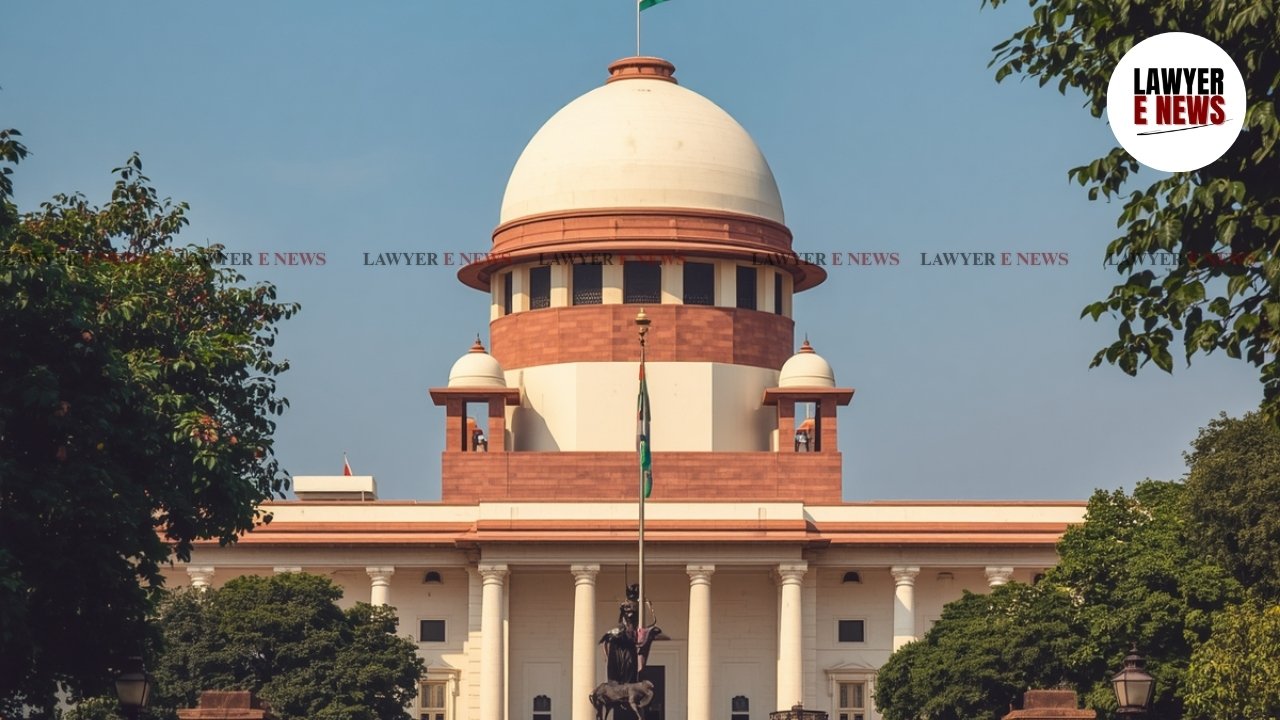
"An affidavit is not an 'evidence' within the meaning of Section 3 of the Indian Evidence Act, 1872 and the same can be used as 'evidence' only if, for sufficient reasons, the Court passes an order under Order XIX of CPC," Supreme Court, in a significant ruling dated May 21, 2026, held that a mere affidavit cannot be treated as "evidence" within the definition of the Indian Evidence Act unless the court specifically passes an order under Order XIX of the CPC.
A bench comprising Justice Ujjal Bhuyan and Justice Vijay Bishnoi observed that such documents cannot form the basis for a court’s conclusion regarding a factual situation unless the deponent is available for cross-examination.
The appeal arose from a long-standing testamentary dispute where the appellants challenged the validity of a Will executed by one B. Sheena Nairi in favor of his sister. The wife and children of the testator alleged that the Will was forged and produced affidavits from attesting witnesses who purportedly denied their signatures. The Trial Court, First Appellate Court, and the High Court had concurrently upheld the Will's validity, leading to the present appeal.
The primary questions before the court were whether the affidavits filed by attesting witnesses denying the execution of the Will could render the document invalid. The court was also called upon to determine if the exclusion of natural heirs from a Will constitutes a "suspicious circumstance" and whether the First Appellate Court must strictly comply with the technicalities of Order XLI Rule 31 of the CPC.
Affidavits Do Not Constitute 'Evidence' Under Indian Evidence Act
The Supreme Court clarified the evidentiary status of affidavits by referring to its earlier coordinate bench decision in Ayaaubkhan Noorkhan Pathan v. State of Maharashtra. The Court noted that the definition of "evidence" under Section 3 of the Indian Evidence Act, 1872, does not generally include affidavits. The bench emphasized that the filing of an affidavit cannot be regarded as sufficient evidence for any Court or Tribunal to reach a final conclusion.
Court Explains Use Of Order XIX CPC For Affidavits
The bench observed that an affidavit can only be treated as evidence if the Court, for sufficient reasons, passes a specific order under Order XIX of the CPC. Even in such cases, if the deponent is available, the opposing party must be given an opportunity to cross-examine them. In the present case, the court noted that the suspicious affidavits were filed even before the written statements were submitted, raising doubts about their authenticity.
"An affidavit is not an 'evidence' within the meaning of Section 3 of the Indian Evidence Act, 1872 and the same can be used as 'evidence' only if, for sufficient reasons, the Court passes an order under Order XIX of CPC."
Exclusion Of Natural Heirs Not A Suspicious Circumstance Per Se
Addressing the contention that the testator excluded his wife and children from the property, the Court held that mere deprivation of natural heirs does not automatically amount to a suspicious circumstance. The bench noted that the very purpose of executing a Will is to interfere with the normal line of succession. Relying on Rabindra Nath Mukherjee v. Panchanan Banerjee, the court stated that such exclusion is a legal right of the testator.
Testator's Intention Must Be Gathered From The Will's Recitals
The Court highlighted that the Will in question specifically recited that the testator had already provided sufficient properties and assets to his wife and children in Bombay. The bench observed that the appellants failed to enter the witness box to refute these recitals or provide particulars of the assets they had already received. Consequently, the exclusion was deemed a voluntary and reasoned act of the testator rather than a suspicious anomaly.
"Mere deprivation of natural heirs, by itself, may not amount to a suspicious circumstance because the whole idea behind the execution of a Will is to interfere with the normal line of succession."
Substantial Compliance With Order XLI Rule 31 CPC Is Sufficient
The appellants had further argued that the First Appellate Court failed to frame specific "points for determination" as required under Order XLI Rule 31 of the CPC. Rejecting this technical plea, the Supreme Court held that if an appellate court has considered the entire evidence and provided detailed reasoning, the judgment is not vitiated merely because the points were not formally formulated. The court emphasized that rules of procedure should not compromise substantial justice.
Proof Of Execution Under Section 68 Of The Evidence Act
The bench affirmed that the Will was duly proved through the testimony of one of the attesting witnesses, B. Jagannatha Nairi, as required under Section 68 of the Indian Evidence Act. The witness categorically deposed that the testator signed the Will in his presence and that they signed in the presence of each other. The Court held that once the execution is proved by a reliable witness, the examination of other attesting witnesses can be dispensed with.
The Supreme Court concluded that the concurrent findings of the lower courts were well-reasoned and supported by the evidence on record. Finding no merit in the challenges regarding the evidentiary value of the affidavits or the alleged suspicious circumstances, the bench dismissed the appeal and affirmed the High Court’s judgment upholding the Will’s validity.
Date of Decision: 21 May 2026