-
by sayum
28 August 2026 6:47 AM







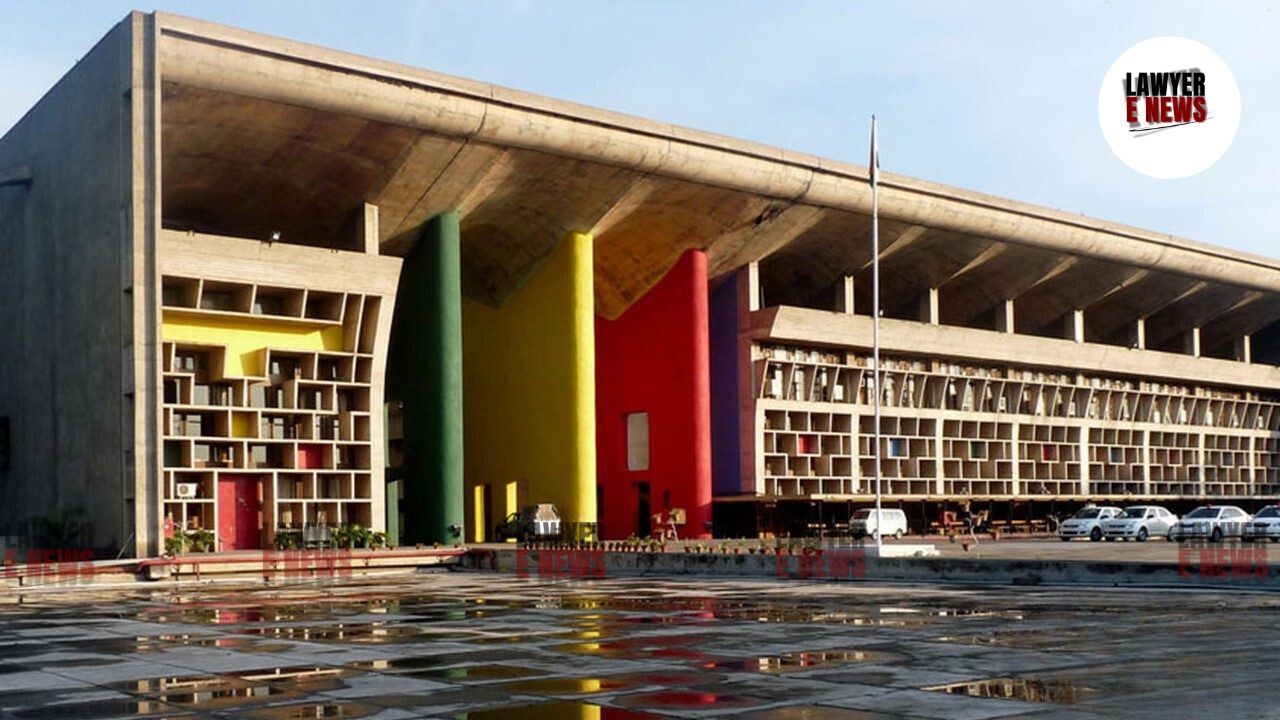
"The very fact that a healthy person turns into an invalid, being deprived of normal companionship and incapable of leading a productive life, makes one suffer loss of dignity," Punjab & Haryana High Court, in a significant judgment dated May 14, 2026, held that victims of motor accidents suffering from 100% permanent disability are entitled to substantial compensation under non-pecuniary heads, specifically for the loss of marriage prospects and the loss of dignity.
A single-bench of Justice Sudeepti Sharma observed that permanent disability not only impairs physical facilities but carries "multiple non-quantifiable implications" that deprive a person of a productive life and normal companionship.
The court made these observations while significantly enhancing a compensation award for a claimant who was only 18 years old at the time of the accident. The Bench noted that the impact of such grievous injuries on a young individual's ability to find a life partner and lead a dignified life must be factored into the "just compensation" mandated under Section 168 of the Motor Vehicles Act, 1988.
The appellant, Vivek, met with a motor vehicular accident on January 24, 2011, which resulted in a cervical spine injury with quadriparesis and 100% permanent disability. He challenged the 2014 award of the Motor Accident Claims Tribunal (MACT), Hisar, which had granted him a total compensation of Rs. 14,13,009/-. The appellant sought an enhancement of this amount, arguing that the Tribunal had underestimated his income and failed to adequately compensate for the loss of his future life quality.
The primary question before the court was whether the non-pecuniary damages awarded by the Tribunal were adequate given the claimant's 100% disability and young age. The court was also called upon to determine the correct application of the multiplier system for attendant charges and whether "loss of dignity" and "loss of marriage prospects" constitute distinct heads for enhancement.
Permanent Disability Impairs Cognitive Abilities and Personal Dignity
The Court emphasized that the assessment of compensation in injury cases must aim to restore the claimant to the position they were in prior to the accident, as far as money can do so. Justice Sharma noted that a healthy person turning into an "invalid" suffers a loss that goes beyond mere financial earning capacity.
Court Explains Non-Quantifiable Impact of Injuries
The Bench observed that permanent disability impairs not just cognitive abilities but the very essence of a productive life. The court held that being deprived of normal companionship causes a victim to suffer a profound "loss of dignity." It reiterated that the Motor Vehicles Act is a beneficial legislation intended to provide stability and continuity in victims' lives.
Enhancement of Non-Pecuniary Damages for Loss of Marriage Prospects
Addressing the specific head of 'loss of marriage prospects,' the Court found that the Tribunal had awarded a meager amount despite the appellant being only 18 years old. The Bench noted that the Tribunal failed to consider the devastating impact of a 100% disability on the claimant’s ability to marry or find a life partner.
Impact On Matrimonial Prospects Must Be Factorized
Relying on the Supreme Court’s decision in Rahul Ganpat Rao Sable versus National Insurance Company (2023), the Court held that non-pecuniary loss arising from permanent disability, including marriage prospects, deserves just compensation. Consequently, the Court enhanced the award under this head to Rs. 5,00,000/-, observing that the claimant has his entire life before him but is now deprived of normal matrimonial joys.
Application of Multiplier System for Attendant Charges
The Court further found that the appellant, suffering from quadriparesis and bowel incontinence, would require continuous assistance for the rest of his life. It criticized the practice of awarding lump-sum amounts for attendant charges without a scientific basis.
Multiplier Method Essential For Calculating Attendant Cost
Citing the Apex Court’s ruling in Kajal Vs. Jagdish Chand (2020), the Bench held that the multiplier system must be used to determine attendant charges to account for inflation and longevity. The Court assessed that a person with 100% disability requires two attendants for 24-hour care and awarded Rs. 8,00,000/- under this head, specifically tailored to ensure proper care and prevent complications like bedsores.
Significant Enhancement for Pain, Suffering, and Agony
The Court also took note of the "intangible but devastating consequence of pain and suffering" as highlighted in KS Muralidhar versus R Subbulakshmi (2024). Given that the claimant was hospitalized eight times and remains in a serious condition, the Court deemed it fit to award Rs. 15,00,000/- under the head of 'pain and suffering.'
Reassessment of Income and Future Prospects
On the pecuniary side, the Court increased the assessed monthly income from the unskilled labor rate to Rs. 10,000/- and applied a multiplier of 18 instead of 16. Furthermore, following the mandate in Pranay Sethi, the Court added 40% towards future prospects, noting that the Tribunal had erred in omitting this calculation.
The High Court allowed the appeal and enhanced the total compensation from Rs. 14,13,009/- to Rs. 68,98,009/-. The modified award carries an interest rate of 9% per annum from the date of filing the petition. The Insurance Company was directed to deposit the enhanced amount within two months.
Date of Decision: 14 May 2026