-
by sayum
28 August 2026 6:47 AM







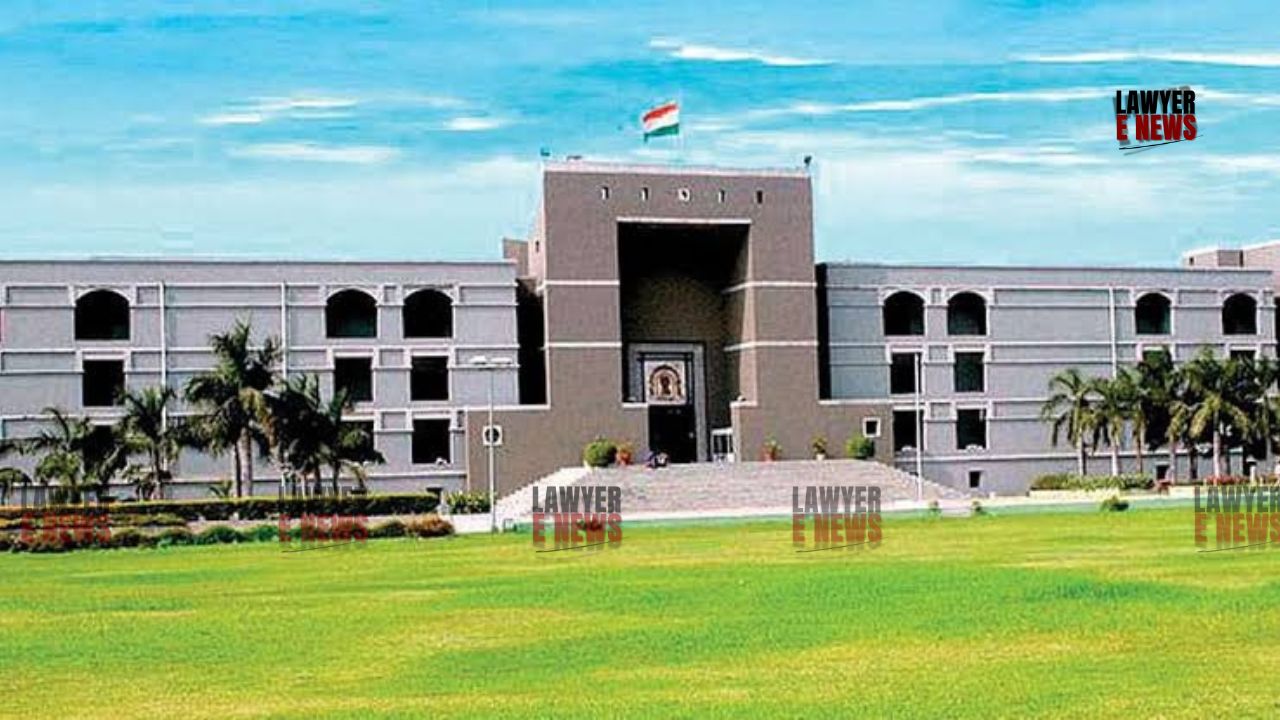
"Power of the Disciplinary Authority to initiate an inquiry against its employee on the formation of an opinion cannot be made subject to the requirement of there being a written complaint and a sworn affidavit as it would run counter to the statutory Rule," Gujarat High Court, in a significant ruling, held that the High Court’s power to initiate departmental inquiries against judicial officers is an absolute administrative power that does not necessarily require a written complaint or a sworn affidavit.
A bench of Justice N.S. Sanjay Gowda and Justice J. L. Odedra observed that while guidelines exist to prevent frivolous complaints by litigants, they cannot be used as a shield to prevent the High Court from acting on information regarding a judicial officer's misconduct.
The petitioner, a serving Additional District Judge, approached the High Court seeking to quash a departmental inquiry and suspension order. The proceedings were initiated following allegations of developing intimate relations with an outsourced clerk, utilizing court staff for her business ventures, obstructing CCTV cameras, and engaging in prayers while presiding over the court. The petitioner primarily contended that the inquiry was vitiated as it was not backed by a sworn affidavit as per Central Government guidelines.
Court Defines Primary Legal Questions
The primary question before the court was whether the High Court could initiate a departmental inquiry and lay a charge-sheet in the absence of a written complaint accompanied by an affidavit, as suggested by the Ministry of Law and Justice guidelines dated December 31, 2014. The court was also called upon to determine if statements made by the petitioner in his written submissions, alleging that a senior judge influenced junior judges, amounted to criminal contempt.
Statutory Rules Override Administrative Guidelines
The Court noted that the Gujarat State Judicial Service is governed by the Gujarat Judicial Service Rules, 2005, which in turn attract the Gujarat Civil Services (Discipline and Appeal) Rules, 1971. Under Rule 9(2) of the 1971 Rules, the Disciplinary Authority is empowered to initiate an inquiry whenever it is of the "opinion" that there are grounds to investigate the truth of any imputation of misconduct.
Formation Of Opinion Is The Sole Prerequisite For Inquiry
The Bench emphasized that the statutory rules do not contemplate the requirement of any complaint, oral or written, for the initiation of an inquiry. It observed that the formation of an opinion by the authority is the only statutory prerequisite. The source of information regarding misconduct, whether from knowledge, information, or a formal complaint, is irrelevant to the validity of the power exercised by the Disciplinary Authority.
"The source of the authority’s information regarding misconduct would not be really relevant, and what would be relevant is that he has received some information which is sufficient to form an opinion about the probable misconduct."
Distinction Between Litigant Complaints And Suo Motu Action
Addressing the 2014 guidelines issued by the Ministry of Law and Justice, the Court clarified that these instructions were intended to protect the subordinate judiciary from disgruntled litigants. The requirement of a sworn affidavit was meant to ensure that litigants are held accountable if their allegations are found to be false or motivated. However, these guidelines cannot fetter the High Court's independent power to maintain discipline within the organization.
High Court's Disciplinary Power Is Absolute And Independent
The Bench held that if the highest judicial body in the State has reasons to believe there are grounds for an inquiry, the argument that it must wait for a formal complaint supported by an affidavit is "wholly untenable." The Court reiterated that the High Court's power to initiate disciplinary proceedings is an independent and absolute power that cannot be subjected to external procedural restrictions that run counter to statutory rules.
"Any attempt to put fetters on this power would essentially mean the obligation of the head of the organization to maintain discipline will be destroyed and this is clearly impermissible, both in law and in equity."
Vagueness Of Charges Not A Ground For Writ Interference
Regarding the petitioner’s argument that the charges were vague, the Court held that such contentions must be raised before the Inquiry Officer or the Disciplinary Authority. It noted that when an inquiry is already in progress, the High Court exercising jurisdiction under Article 226 of the Constitution would not typically interfere to examine the nuances of the material placed before the Inquiry Officer.
Criminal Contempt Proceedings For Scandalizing The Judiciary
The Court expressed deep concern over the petitioner’s conduct during the litigation. After the judgment was reserved, the petitioner filed a written submission directly—bypassing his senior counsel—alleging that a senior judge of the High Court had "good control" over all branches and was capable of "directing his junior judges." The Bench found this assertion to be a prima facie case of criminal contempt.
"This assertion by an Additional District Judge against a senior judge of this Court... is clearly an act which scandalizes and lowers the authority of the Court... these assertions clearly constitute a criminal contempt."
The Court concluded that the petitioner's attempt to attribute bias or influence to a senior judge tended to interfere with the due course of judicial proceedings. Consequently, while dismissing the writ petition, the Court directed the registry to place the papers before the relevant Division Bench for the initiation of criminal contempt proceedings against the Additional District Judge.
The High Court dismissed the petition, affirming the validity of the departmental inquiry and the suspension. It held that the High Court’s administrative side is fully empowered to act on internal information regarding judicial misconduct without being bound by the procedural requirements meant for litigants. The petitioner was directed to be personally present before the Contempt Bench on June 15, 2026.
Date of Decision: 08 May 2026