-
by sayum
26 August 2026 8:00 AM







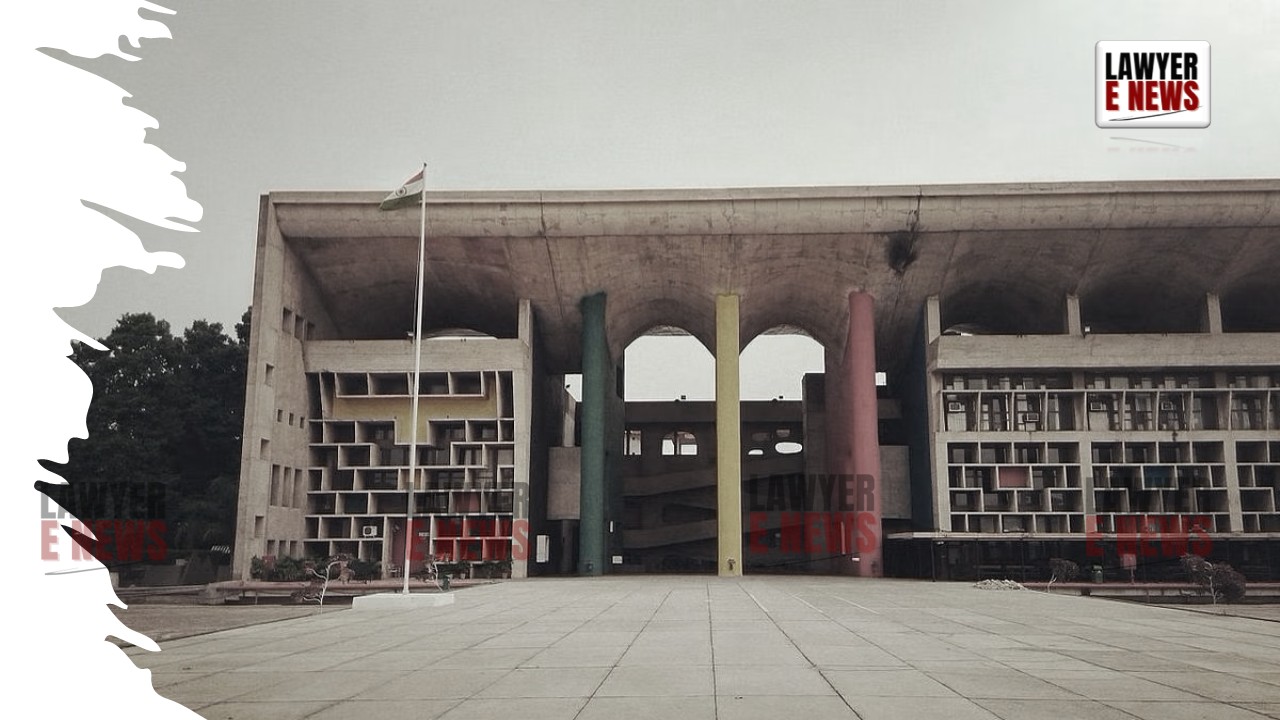
“Law Of Limitation Is Not A Technicality – It Is Based On Public Policy”, In a firm reiteration that courts will not reward prolonged inaction, the Punjab and Haryana High Court dismissed a Civil Revision Petition challenging the refusal to stay execution proceedings during the pendency of an application under Order 9 Rule 13 CPC.
Justice Nidhi Gupta, exercising supervisory jurisdiction under Article 227 of the Constitution, held that the petitioner, who sought to set aside an ex parte decree more than seven years after its passing and eleven years after institution of the suit, had “chosen to sleep over her rights.” The Court found no jurisdictional error in the trial court’s order declining stay of execution.
“Whether Service Was Proper Is A Question Of Fact”
The petitioner’s principal contention was that she had not been duly served in the original civil suit and, therefore, the ex parte decree dated 25.03.2019 was not maintainable. She had filed an application under Order 9 Rule 13 read with Section 151 CPC on 06.12.2025 seeking to set aside the decree and simultaneously sought stay of execution proceedings.
Rejecting the attempt to stall execution at this stage, the High Court clarified that the issue of service is a matter to be adjudicated by the trial court in the pending Order 9 Rule 13 proceedings. The Court observed that “the said issue as to whether petitioner was served in accordance with law or not, is a question which will be determined by the trial court… as per the evidence led by the parties.”
Thus, the supervisory jurisdiction under Article 227 could not be invoked to pre-empt findings on disputed factual questions.
Execution Cannot Be Halted Merely Because Order 9 Rule 13 Is Filed
A decisive factor for the Court was the extraordinary delay. The civil suit had been decreed ex parte on 25.03.2019. The petitioner moved the application to set aside the decree only on 06.12.2025 — more than seven years after the decree and eleven years after the suit was instituted.
The Court noted that for purposes of considering stay of execution, this delay was crucial. The petitioner’s inaction disentitled her from seeking equitable relief of stay.
The High Court further rejected the contention that the decree-holder lacked locus standi to initiate execution proceedings. It referred to the findings of the trial court, which had recorded that the exchange deed dated 07.11.1994 was forged and fabricated, and consequently “all the subsequent transactions arising from that document also become inoperative and come to an end.” The petitioner’s subsequent sale of land, therefore, did not advance her case.
“We Should Not Keep The Sword Of Damocles Hanging Indefinitely”
Justice Nidhi Gupta placed strong reliance on recent Supreme Court precedents underscoring that limitation is rooted in public policy.
Quoting from Union of India v. Jahangir Byramji Jeejeebhoy (2024), the Court highlighted:
“It would be a mockery of justice if we condone the delay of 12 years and 158 days and once again ask the respondent to undergo the rigmarole of the legal proceedings.”
The Supreme Court had further cautioned:
“The question of limitation is not merely a technical consideration. The rules of limitation are based on the principles of sound public policy and principles of equity. We should not keep the ‘Sword of Damocles’ hanging over the head of the respondent for indefinite period of time…”
The High Court emphasised that a litigant “cannot turn around and say that no prejudice would be caused” after approaching the court long beyond the prescribed period.
Relying also on Pathapati Subba Reddy v. Special Deputy Collector (LA), the Court reiterated that “merits of the case are not required to be considered in condoning the delay” and that delay cannot be excused “as a matter of generosity.”
Scope Of Article 227: No Patent Illegality, No Interference
The High Court underscored that supervisory jurisdiction under Article 227 is limited. Interference is warranted only in cases of patent illegality, perversity, or jurisdictional error. Upon examining the impugned order declining stay of execution, the Court found “no error” warranting interference.
Importantly, the Court clarified that its observations would not affect the merits of the pending application under Order 9 Rule 13 CPC, which the trial court would decide independently on evidence.
Revision Dismissed, Execution To Proceed
Dismissing the Civil Revision Petition, the Court upheld the order refusing to stay execution proceedings. The judgment sends a clear message that filing a belated application to set aside an ex parte decree does not automatically entitle a party to stall execution.
In reaffirming that “law of limitation is based upon public policy,” the High Court has reinforced that equity aids the vigilant — not those who sleep over their rights.
Date of Decision: 13/02/2026