
-
by sayum
26 August 2026 6:42 AM







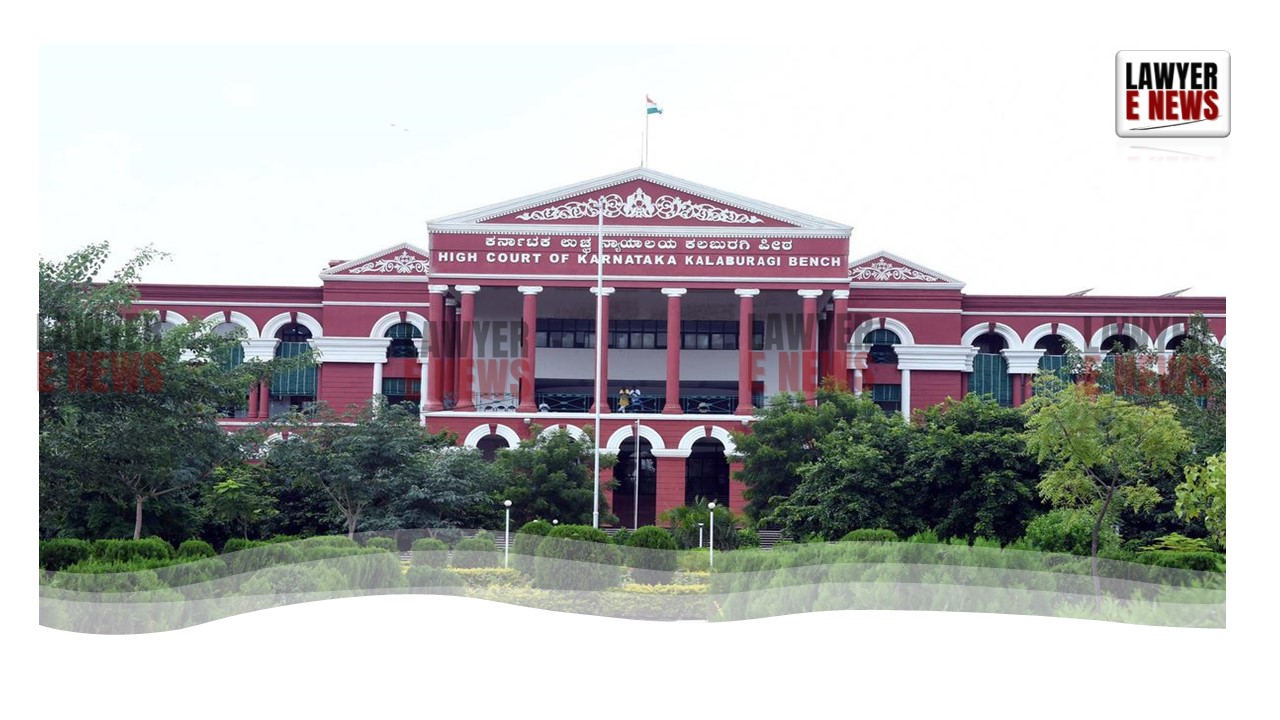
“To Save Precious Judicial Time, Proceedings Against Absconding Accused Can Be Obliterated When Acquittal Is Inevitable”, In a significant ruling on the doctrine of parity and the scope of inherent powers under Section 482 Cr.P.C., the Karnataka High Court quashed the split-up sessions case against Accused No.14 after all other co-accused were acquitted in a trial resting entirely on circumstantial evidence.
Justice M. Nagaprasanna held that once the prosecution case had collapsed in its entirety and all similarly placed accused were acquitted on merits, compelling the split-up accused to face a separate trial on identical material would amount to abuse of process. The Court observed that though an accused who evades trial should ordinarily face it, the inherent jurisdiction of the High Court exists “to save precious judicial time” when the outcome is foregone.
The petitioner, arrayed as Accused No.14 in Crime No.151/2019, was charged with offences under Sections 143, 144, 147, 148, 341, 302, 120B and 427 read with Section 149 of the IPC, along with Section 3(2) of the Prevention of Damage to Public Property Act, 1984.
While Accused Nos.1 to 13 and 15 to 21 faced trial in S.C. No.1529/2021, the petitioner was unavailable, leading to a split-up charge. The Sessions Court, by judgment dated 30.08.2025, acquitted all the accused who faced trial.
After being taken into custody, the petitioner approached the High Court seeking quashing of the split-up proceedings on the ground of parity.
“Circumstances Must Form a Complete Chain”: Trial Court’s Findings on Collapse of Prosecution Case
The Sessions Court had meticulously examined the case, which was based solely on circumstantial evidence. Relying upon Hanumant v. State of M.P., Govindareddy v. State of Mysore and Sharad Birdhichand Sarda v. State of Maharashtra, the Court reiterated the settled principle that:
“The circumstances should be of a conclusive nature and tendency and they should be such as to exclude every hypothesis but the one proposed to be proved.”
The prosecution relied on alleged motive, conspiracy under Section 10 of the Evidence Act, and recovery of incriminating materials. However, the trial court recorded that independent witnesses did not support the prosecution, panch witnesses turned hostile, and no reliable evidence established conspiracy or recovery.
It ultimately concluded that:
“There is no cogent, coherent or convincing evidence available to bring home the guilt of the accused.”
With the chain of circumstances broken and the prosecution failing to prove guilt beyond reasonable doubt, all tried accused were acquitted.
“When Entire Case Has Collapsed, Parity Must Follow”
Before the High Court, the State argued that the petitioner, having absconded, must undergo a full-fledged trial. The Court acknowledged the principle that an absconding accused should not ordinarily be shown indulgence.
However, Justice Nagaprasanna emphasized that the inherent power under Section 482 Cr.P.C. is designed to prevent abuse of process and secure the ends of justice. The Court observed that the very evidence which was tested in trial had already been found wholly insufficient.
The Court reasoned that since:
“None of the witnesses have supported the case of the prosecution and prosecution has miserably failed in driving home the guilt beyond all reasonable doubt,”
the petitioner “also becomes entitled to the benefit of acquittal,” as any trial on identical material would inevitably culminate in acquittal.
The Court candidly noted that while abscondence is not to be encouraged, “to save precious judicial time,” it was appropriate to obliterate the proceedings.
“Inherent Powers Exist to Prevent Futile Trials”: Scope of Section 482 Cr.P.C.
This ruling reinforces that though inherent powers must be exercised sparingly, they may be invoked where continuation of criminal proceedings would serve no purpose.
When the prosecution case rests entirely on circumstantial evidence and the entire chain has already been judicially disbelieved, a split-up case cannot survive independently on the same evidentiary foundation.
The Court effectively held that forcing a redundant trial would amount to mechanical prosecution and abuse of judicial process.
Allowing the petition, the High Court quashed the proceedings in S.C. No.1529/2021 pending before the I/c LX Additional City Civil and Sessions Judge, Bengaluru, insofar as they related to the petitioner.
The petitioner was held entitled to be set at liberty, and the Registry was directed to communicate the order to jail authorities for release in accordance with law.
The judgment stands as a pragmatic affirmation of judicial discretion under Section 482 Cr.P.C. It underscores that while the criminal justice system must ensure accountability, it cannot insist upon ritualistic trials where the prosecution’s entire case has already disintegrated.
By extending parity to the split-up accused, the Karnataka High Court has reaffirmed that the criminal process cannot be reduced to a formality, and that courts must intervene where continuation of proceedings would be nothing more than an exercise in futility.
Date of Decision: 24/02/2026





