-
by sayum
26 August 2026 6:42 AM







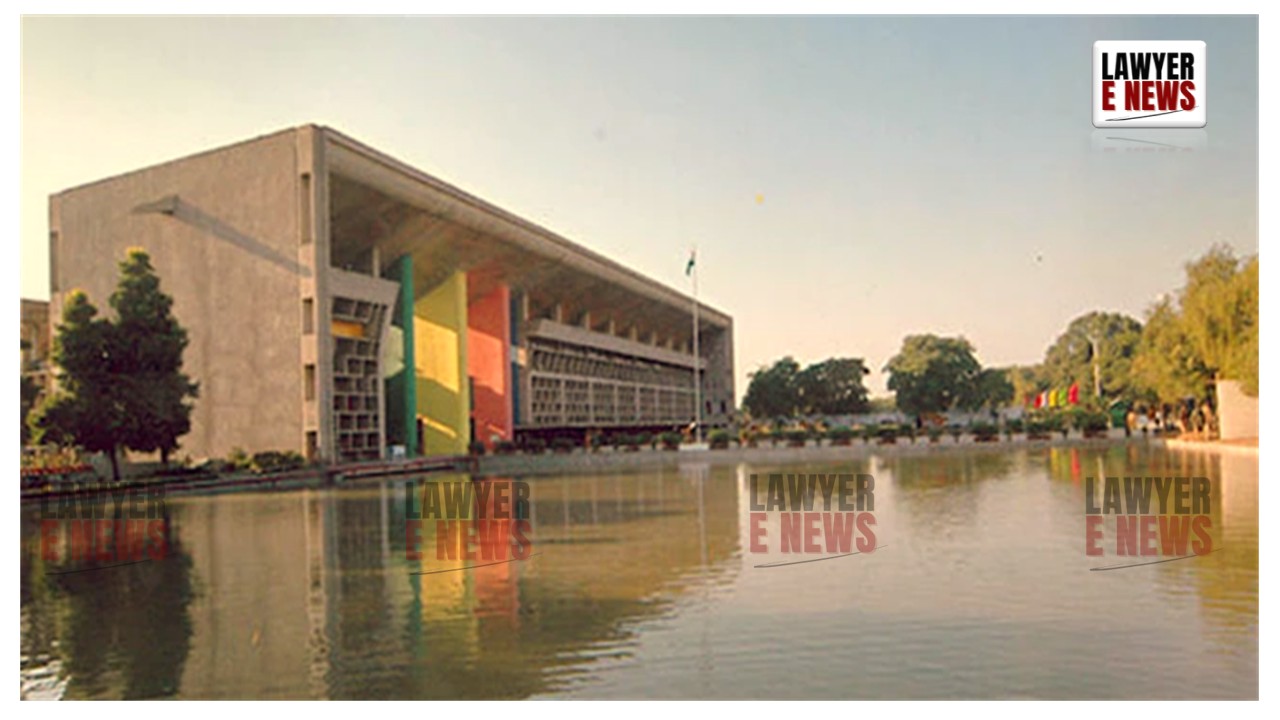
“The Victim Must Have an Unconditional Right to Prefer an Appeal — It Cannot Be Circumscribed by Any Condition Precedent”, In a significant clarification on the scope of a victim’s right to appeal against acquittal, the Punjab & Haryana High Court at Chandigarh has held that an application seeking leave to appeal under Section 378(4) Cr.P.C. cannot restrict the statutory right granted to a victim under the proviso to Section 372 Cr.P.C.
Justice Jasjit Singh Bedi disposed of an application filed by Didar Singh seeking leave to appeal against the acquittal of the accused in a complaint case under Sections 323, 324, 341, 506, 148, 149, 34 and 120-B IPC. The Court directed that the leave petition be treated as an appeal under Section 372 Cr.P.C. and remitted the matter to the Sessions Judge, Malerkotla for adjudication.
The ruling follows the recent authoritative pronouncement of the Supreme Court in M/s. Celestium Financial vs. A. Gnanasekaran, which has substantially expanded and clarified the independent appellate rights of victims.
Acquittal in Complaint Case
The appellant had filed a complaint alleging that the accused formed an unlawful assembly and assaulted him with deadly weapons and sticks, causing injuries. After trial, the Sub Divisional Judicial Magistrate, Malerkotla, acquitted the accused on 30.10.2023.
Aggrieved, the complainant approached the High Court under Section 378(4) Cr.P.C., seeking leave to appeal against acquittal.
Supreme Court’s Landmark Interpretation of Sections 372 and 378(4) Cr.P.C.
While considering the maintainability of the application, the High Court relied upon the Supreme Court’s detailed comparative interpretation of Sections 372 and 378(4) Cr.P.C. in Celestium Financial.
The Supreme Court had emphatically held:
“The victim of a crime must have an absolute right to prefer an appeal which cannot be circumscribed by any condition precedent.”
It further observed that the right of a victim must be placed on par with the right of a convicted accused who can file an appeal under Section 374 Cr.P.C. as a matter of right.
“Similarly, a victim of a crime, whatever be the nature of the crime, unconditionally must have a right to prefer an appeal.”
The Supreme Court made it clear that insisting upon special leave under Section 378(4) would defeat the legislative intent behind insertion of the proviso to Section 372 Cr.P.C.
“It would be contrary to what has been intended by the Parliament by insertion of the proviso to Section 372 of the CrPC.”
The Court also emphasized that Parliament deliberately conferred a “superior right” upon victims by inserting the proviso to Section 372 without amending Section 378 to impose restrictions.
High Court’s Decision: Treat Leave Petition as Appeal Under Section 372
In light of the binding precedent, Justice Jasjit Singh Bedi held that the present application under Section 378(4) could not be entertained as a leave petition.
Instead, the Court directed that the application be treated as an appeal under Section 372 Cr.P.C., which the victim is entitled to file as of right.
The matter was remitted to the Sessions Judge, Malerkotla, District Sangrur, with a direction to entrust it to the appropriate Court for disposal in accordance with law.
The Registry was directed to transmit the complete paperbook and trial Court record forthwith.
Victim’s Right Elevated to Substantive Status
This order reinforces the evolving jurisprudence recognizing victims as independent stakeholders in criminal proceedings.
The High Court’s approach affirms that the victim’s right to appeal against acquittal is not dependent on prosecutorial initiative or judicial permission. It is a substantive statutory right conferred by Parliament.
By following Celestium Financial, the Court has reiterated that the proviso to Section 372 Cr.P.C. must be interpreted purposively to ensure meaningful access to appellate remedies for victims.
The decision marks another step in strengthening victim-centric criminal jurisprudence, ensuring that acquittals in complaint cases can be challenged without procedural barriers such as the requirement of special leave.
Date of Decision: 12 February 2026





