-
by sayum
09 October 2026 7:24 AM







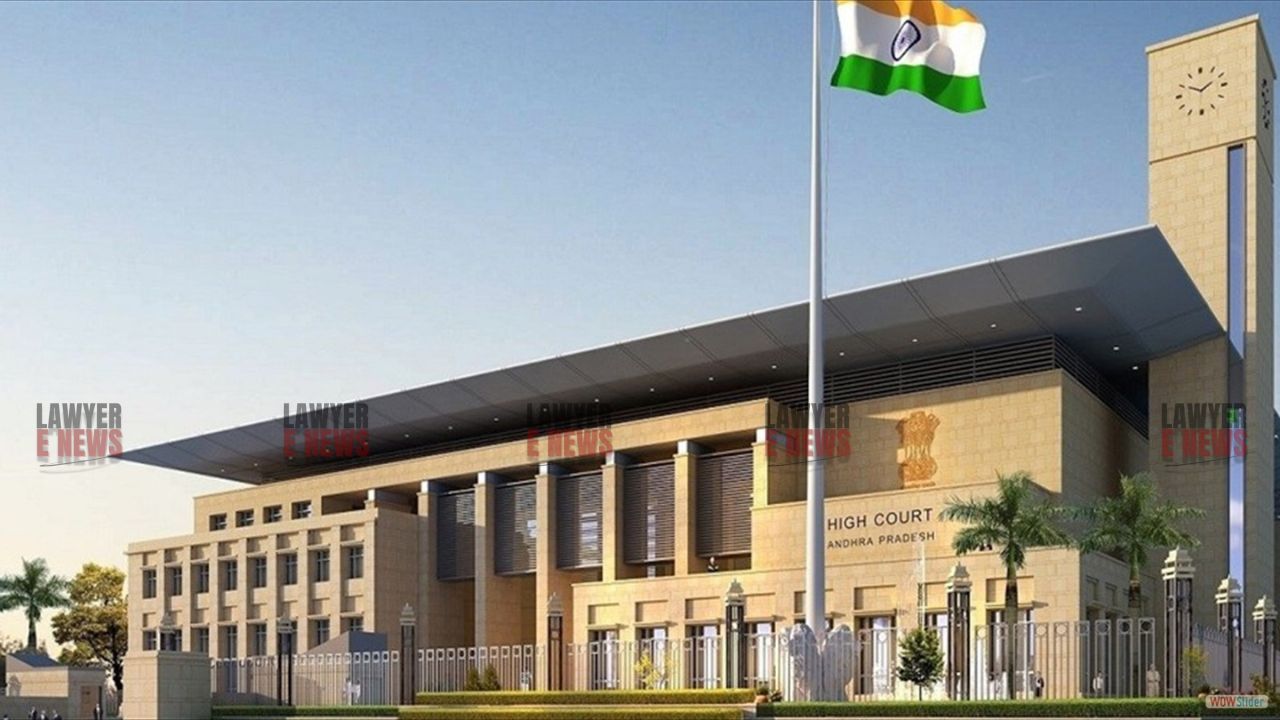
"This Court feels it appropriate to grant a last and final opportunity for the petitioner to appear for the examination to be scheduled in the month of October, 2026. It is made clear that this arrangement and direction is issued keeping in view the peculiar facts of this case and this order cannot be used as a precedent." Andhra Pradesh High Court, in a ruling dated October 5, 2026, held that students who have exceeded the eight-year maximum duration for completing the Bachelor of Dental Surgery (BDS) course may be granted a final opportunity to appear for pending examinations if the delay in completion was attributable to the university’s failure to conduct examinations strictly in accordance with the prescribed academic schedule.
A bench of Justice Harinath.N observed that procedural lapses by the examining body entitle students to equitable relief under Article 226 of the Constitution of India.
The petitioner, a final-year BDS student, had cleared all subjects except for one paper in 'Oral Medicine, Diagnosis and Radiology'. Having exhausted the eight-year window period for completing the course, the respondent university refused to permit her to pay the examination fee or appear for the October/November 2026 examinations. The petitioner challenged this inaction, citing that the delay was exacerbated by the university's failure to conduct supplementary examinations in 2025, thereby depriving her of a timely opportunity to clear the paper.
The primary question before the court was whether the High Court could exercise its writ jurisdiction to permit a student to appear for a final-year BDS examination despite the expiry of the maximum eight-year completion period. The court was further tasked with determining whether a university's failure to adhere to its academic calendar provides a valid ground to grant a one-time exemption to a student in the interest of justice.
Academic Lapses Justify Equitable Relief
The court acknowledged that the petitioner's inability to clear the course within the mandatory window was significantly linked to the administrative failures of the university. Specifically, the court noted that the supplementary examinations for 2025 were not conducted on time, shifting the schedule to March 2026. Had the university adhered to the academic calendar, the petitioner would have had the requisite chances to pass the subject within the eight-year period.
Court Distinguishes Supreme Court Precedents
The court meticulously addressed the reliance placed by the university on the Supreme Court’s decision in Siddanth Mahajan vs. State of Rajasthan. It observed that the Apex Court, in that matter, was dealing with the legality of admissions granted after the lowering of NEET percentile requirements, rather than the specific issue of a university’s failure to conduct examinations according to its own fixed schedule. Consequently, the High Court held that the strict application of the eight-year rule could be relaxed in instances where the institution’s procedural delays effectively curtailed the student’s academic opportunities.
"The issue of non-conducting of examinations strictly in accordance with the academic schedule for the academic year was not the subject that fell for consideration before the Hon’ble Supreme Court while considering C.A.No.014875-014880/2025 in the matter of Siddanth Mahajan Vs. State of Rajasthan."
Grant of One-Time Measure
Given that the petitioner had successfully cleared all other subjects, the court deemed it appropriate to grant a final opportunity as a one-time measure to prevent the loss of an entire academic career. The court explicitly directed the university to receive the examination fee, issue a hall ticket, and permit the petitioner to appear for the October/November 2026 examinations. However, the bench cautioned that this direction was restricted to the peculiar facts of the case and should not be cited as a precedent for future litigation regarding course duration extensions.
"This Court feels it appropriate to grant a last and final opportunity for the petitioner to appear for the examination to be scheduled in the month of October, 2026."
The writ petition was disposed of with instructions to the respondent authorities to facilitate the petitioner’s appearance in the theory and practical examinations for the pending subject. The court emphasized that this relief was essential to correct the imbalance caused by the university's deviations from the prescribed academic timeline.
Date of Decision: 05 October 2026