-
by sayum
09 October 2026 7:24 AM







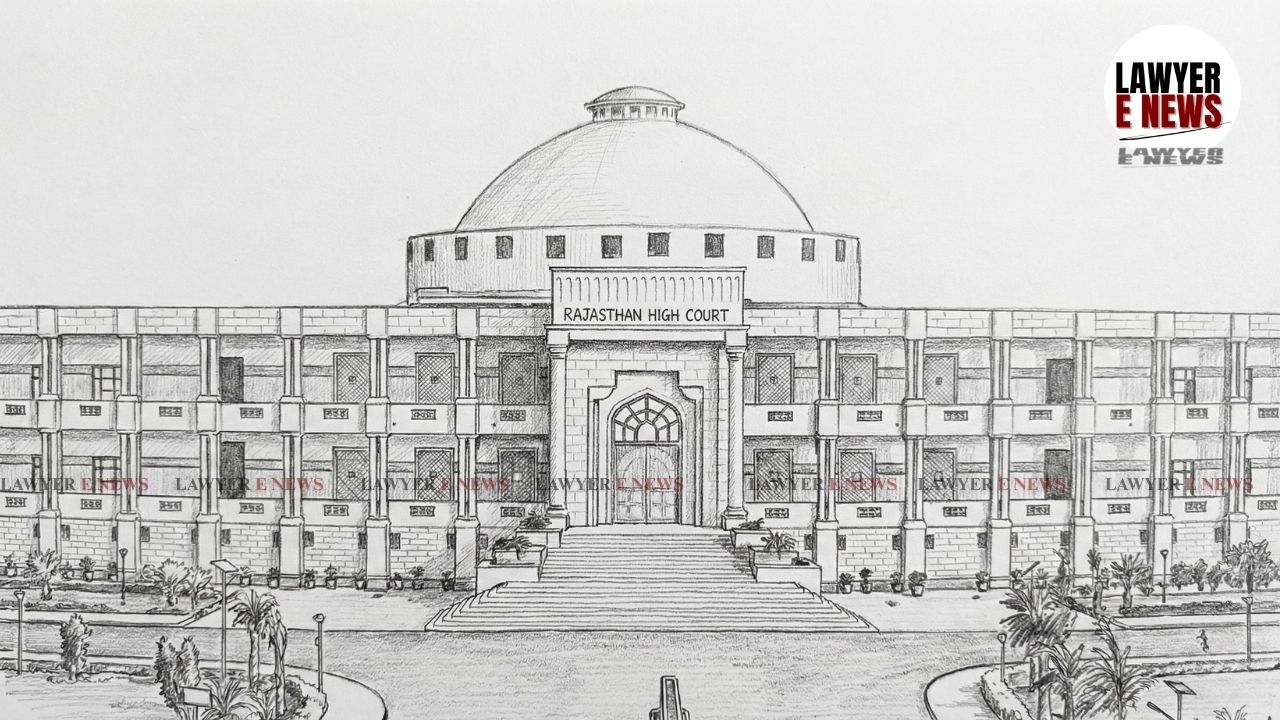
"The building in question is not merely a physical structure; it is a Temple of Justice, a symbol of the rule of law, and a reflection of the Constitution and of democracy itself." Rajasthan High Court, in a scathing ruling dated August 24, 2026, took serious note of the structural instability of its own Principal Seat building in Jodhpur, declaring that the safety of the institution "transcends the concern of a mere building" and directly implicates the fundamental faith of the public in the justice system.
A division bench of Dr. Justice Pushpendra Singh Bhati and Justice Rekha Borana observed that, given the perilous condition of the structure, the maxim salus populi suprema lex esto—the safety of the people is the supreme law—must guide all remedial interventions.
The Court took suo motu cognizance of the structural failures on August 10, 2026, following reports of severe defects, including corrosion in steel reinforcement and cracking in the dome structure. The matter concerns the construction quality of the Rajasthan High Court building, which has faced consistent criticism from legal experts and IIT consultants since 2023. The proceedings involve multiple state respondents, including the PWD and the Rajasthan State Road Development and Construction Corporation (RSRDC), who were tasked with the building's oversight.
The primary issue before the Court was to determine the extent of the structural risk posed to the High Court building and the accountability of the state agencies responsible for its construction. Additionally, the Court sought to address the systemic failure in maintaining public infrastructure and the urgent need for a time-bound, scientific restoration plan that ensures the safety of the judiciary, the legal fraternity, and the common citizenry.
The bench expressed profound dissatisfaction with the "unduly casual manner" adopted by the Managing Director of RSRDC, who cited his recent appointment to explain his ignorance regarding the building's severe structural degradation. The Court emphasized that this project, funded by public money, represents a "Temple of Justice" and that officials cannot hide behind administrative lapses to escape accountability.
Accountability for Public Works
The Court underscored that the failure to ensure structural integrity in a high-stakes government project constitutes a grave breach of public trust. The bench remarked that the state's failure to act on red-flagged issues identified as early as 2023 reflected a lack of sensitivity that is entirely unacceptable for those entrusted with maintaining institutional infrastructure.
"No Court Shall Protect Erring Officials"
In an unprecedented move to ensure that the investigation remains unhindered, the division bench issued a strict prohibition on any subordinate court granting protection to individuals implicated in the construction fiasco. The order explicitly states that any such protection order passed by lower courts shall be "deemed to be of no effect" unless issued by a Division Bench of the High Court or the Supreme Court.
Directing a Comprehensive Audit
Experts from IIT Bombay and IIT Jodhpur informed the Court that while the central dome is currently repairable, the structural defects are "critical and wholly unsatisfactory." The professors noted that nearly 60 percent of the building requires immediate attention. The Court mandated a holistic approach to the restoration, rejecting piecemeal repairs and insisting that the structural integrity must be guaranteed for at least the next fifty years.
"Nearly sixty per cent of the building requires urgent and immediate attention," observed Professor Sauvik Banerjee of IIT Bombay.
The Court further directed the state to consider the Bar’s suggestion for a dedicated, permanent team of engineers to monitor judicial infrastructure, preventing future occurrences of such systemic failure. The scope of the current remedial work is to be extended to include the lawyers' chambers, which were also identified as suffering from structural deficiencies.
The Rajasthan High Court directed all state officials to present comprehensive records of the ongoing restoration and the actions taken against delinquent officers on the next date of hearing, September 15, 2026. The bench cautioned that it would initiate contempt proceedings against any official whose inaction or lack of oversight contributed to the current crisis.
Date of Decision: 24 August 2026