-
by kapil
27 October 2026 5:18 AM







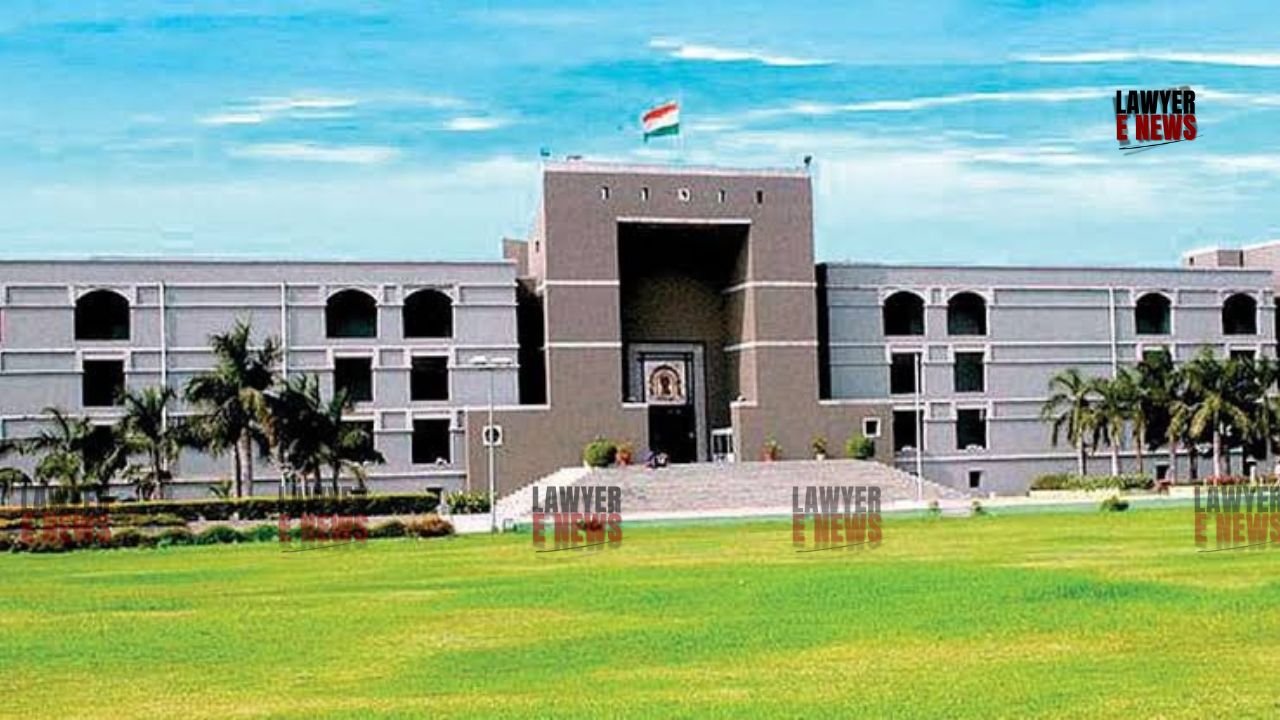
"The right to avoid unauthorized alienation accrues to the minor upon attaining majority and must be exercised within the period of limitation prescribed by law. Therefore, no third party has been given any right to question the disposal of the immovable property by a natural guardian or objecting to the application filed by the natural guardian." Gujarat High Court, in a judgment, has clarified that third parties lack the locus standi to object to a natural guardian’s application seeking judicial permission to alienate a minor's property under Section 8 of the Hindu Minority and Guardianship Act, 1956 (HMGA).
A bench of Justice J.C. Doshi held that the proceedings under Section 8 are not adversarial in nature and that the court's primary duty is to act as parens patriae to ensure the welfare of the minor.
Court Reaffirms Parens Patriae Jurisdiction
The court observed that Section 8 of the HMGA provides a statutory framework where the court must play an active, supervisory role. The bench noted that the doctrine of parens patriae—the state’s obligation to protect those unable to protect themselves—is the governing principle. Consequently, when a natural guardian seeks permission to sell a minor's share, the court must meticulously examine whether the transaction is for the "evident advantage" or "necessity" of the minor, rather than entertaining objections from extended family members who lack a legal interest in the specific property.
The dispute arose after the death of one Chintalkumar Kavar, whose agricultural land was inherited by his widow, Alpaben, and their minor daughter, Khushi. Seeking to secure funds for the minor's education and welfare, the mother filed an application under Section 29 of the Guardians and Wards Act, 1890, read with Section 8 of the HMGA, seeking permission to sell the minor's undivided share in the land. The minor’s grandmother and uncles filed objections, which were rejected by the District Court, leading the objectors to move the High Court under Article 227 of the Constitution.
The primary question was whether third-party relatives, such as grandparents or uncles, possess the legal standing to challenge a natural guardian's application for the alienation of a minor's property. The court was also tasked with determining the limits of its supervisory jurisdiction under Article 227 in matters involving a minor's welfare and whether the District Court’s decision to grant permission for the sale was perverse or contrary to the minor's best interest.
Locus Standi
The High Court held that the legal scheme of Section 8 of the HMGA is designed to balance the management of a minor's estate with judicial oversight. The court emphasized that the statute grants the minor the right to void an unauthorized transaction upon attaining majority, but it does not vest a right in third parties to intervene in the management of the minor's estate.
Exclusion of Third-Party Interference
The bench remarked that the objectors, who had not contributed to the minor's maintenance, were attempting to harass the widow and minor daughter through litigation. The court stated that such objections were "frivolous" and "without any locus standi." By excluding such parties, the court aims to prevent the minor’s property from becoming a site of exploitation or a means to delay the realization of benefits intended for the child's upbringing.
"The best interest of the child is not a passive consideration but a vigorous principle that requires foresight, caution, and meticulous scrutiny in every matter affecting the minor's property—'for an evident advantage to the minor.'"
Supervisory Power Under Article 227
The court underscored that its jurisdiction under Article 227 is correctional and limited to cases of "serious dereliction of duty" or "flagrant violation of fundamental principles." It cannot act as a court of first appeal to reweigh evidence. Finding that the District Court had correctly applied the "best interest of the child" standard and properly evaluated the necessity of the sale, the High Court refused to substitute its own decision.
Final Directions and Costs
The High Court dismissed the petition as a "sheer abuse of the process of the court." Concluding that the petitioners had dragged the widow and child into extended litigation without valid legal grounds, the court imposed a cost of Rs. 10,000 on the petitioners, to be paid directly to the minor. The court directed that if the cost is not paid, the District Legal Services Authority shall recover the amount as arrears of land revenue.
Date of Decision: 01 September 2026