-
by kapil
27 October 2026 5:10 AM







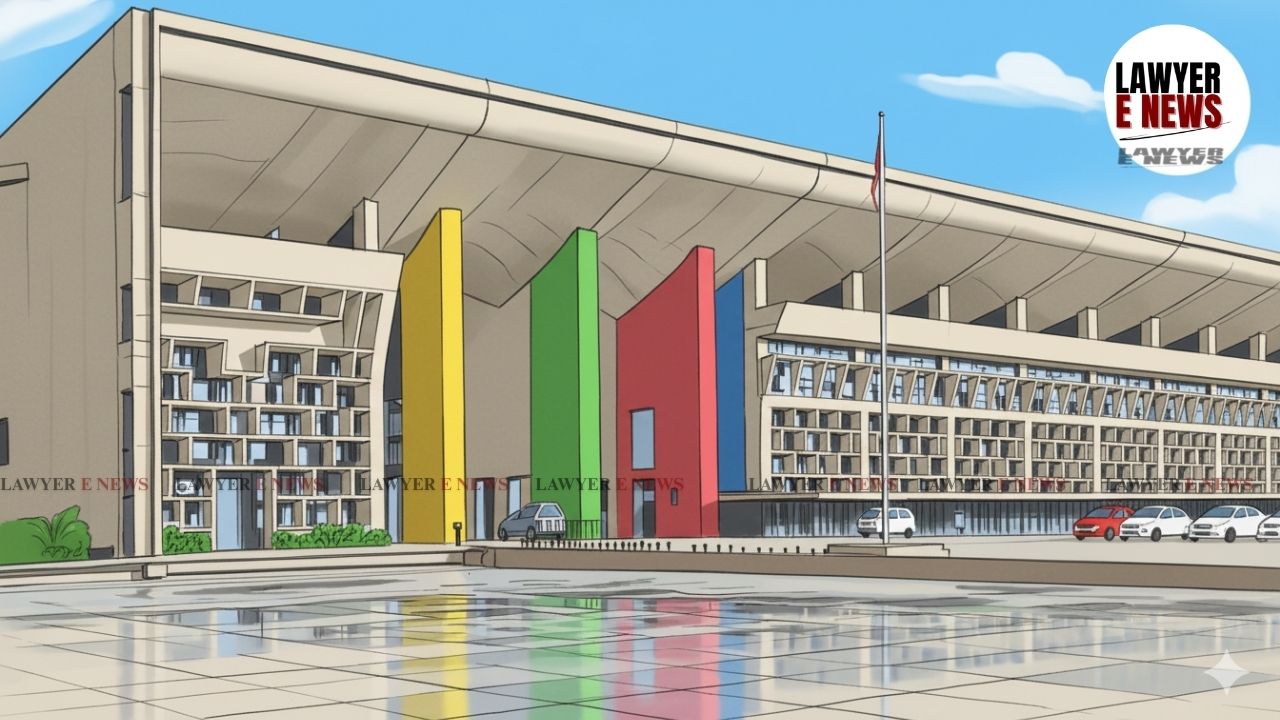
"The power under Article 226 of the Constitution of India to issue writs is rather wide but is required to be exercised only in exceptional circumstances." Punjab and Haryana High Court, in a significant ruling, held that a writ petition challenging an order of the Debts Recovery Tribunal (DRT) cannot be entertained when an efficacious alternative remedy is available under Section 18 of the SARFAESI Act.
A division bench comprising Justice Jasgurpreet Singh Puri and Justice Sanjiv Berry observed that bypassing the statutory appellate mechanism is impermissible unless the case falls within the strictly recognized exceptions to the rule of alternate remedy.
The petitioners, a partnership concern and its partner, had availed financial facilities from the respondent-Bank and subsequently faced recovery proceedings under the SARFAESI Act. After two previous rounds of litigation where the DRT had quashed the bank's actions and granted liberty to initiate fresh proceedings, the DRT dismissed the petitioners' third Securitization Application challenging a fresh sale notice. Instead of filing a statutory appeal against this dismissal, the petitioners approached the High Court under Article 226 of the Constitution, arguing that the DRT's order was passed wholly without jurisdiction.
The primary question before the court was whether the High Court should entertain a writ petition under Article 226 against a DRT order when the borrower has a statutory right to appeal under Section 18 of the SARFAESI Act. The court was also called upon to determine whether the DRT's dismissal of the securitization application was inherently without jurisdiction, which would justify bypassing the appellate tribunal.
DRT Possessed Valid Jurisdiction
The court outright rejected the petitioners' contention that the impugned order of the DRT was passed without jurisdiction. The bench noted that the petitioners' core grievance was merely that the DRT should not have dismissed their application based on findings from a previous round of litigation. The court clarified that a disagreement with the tribunal's substantive reasoning does not equate to an inherent lack of jurisdiction to pass the order.
Supreme Court Mandates Exhaustion Of Statutory Remedies
Relying on a catena of Supreme Court judgments, including United Bank of India v. Satyawati Tondon and Varimadugu Obi Reddy v. B. Sreenivasulu, the High Court emphasised that the SARFAESI Act is a complete code unto itself. The bench observed that laws enacted for the recovery of public dues and bank funds contain comprehensive procedures for redressal. The court noted that borrowers frequently adopt the circuitous route of filing writ petitions specifically to avoid the mandatory pre-deposit condition contemplated under the second proviso to Section 18 of the SARFAESI Act.
"Rule of Discretion, Not Compulsion"
The High Court acknowledged the principles laid down in Whirlpool Corporation v. Registrar of Trade Marks and the recent South India Bank Ltd. v. Naveen Mathew Philip judgment. The bench observed that the rule of exclusion of writ jurisdiction due to the availability of an alternative remedy is a rule of discretion and policy, not one of absolute compulsion. However, the court stressed that this extraordinary jurisdiction must be exercised with immense circumspection.
"The High Court ordinarily must insist that before availing the remedy under Article 226 of the Constitution, the alternative remedy available under the relevant statute must be exhausted."
Exceptions To Alternate Remedy Rule Not Applicable
The bench outlined the well-recognized exceptions where a writ can bypass a statutory remedy: enforcement of fundamental rights, violation of principles of natural justice, proceedings being wholly without jurisdiction, or a challenge to the vires of an Act. Applying these parameters, the court found that the petitioners entirely failed to demonstrate how their grievance fit into any of these exceptional categories.
Court Declines To Exercise Discretionary Powers
Concluding its analysis, the bench firmly held that the factual matrix of the dispute did not warrant interference under the extraordinary writ jurisdiction. The court observed that it is exclusively for the specialized appellate authorities created under the statute to examine the merits of the factual matrix and the assessment made by the DRT.
The High Court dismissed the civil writ petition, holding it to be non-maintainable due to the availability of a statutory alternative remedy. However, the court granted liberty to the petitioners to avail themselves of the proper legal recourse by filing an appeal under Section 18 of the SARFAESI Act in accordance with law.
Date of Decision: 13 July 2026