-
by kapil
27 October 2026 5:10 AM







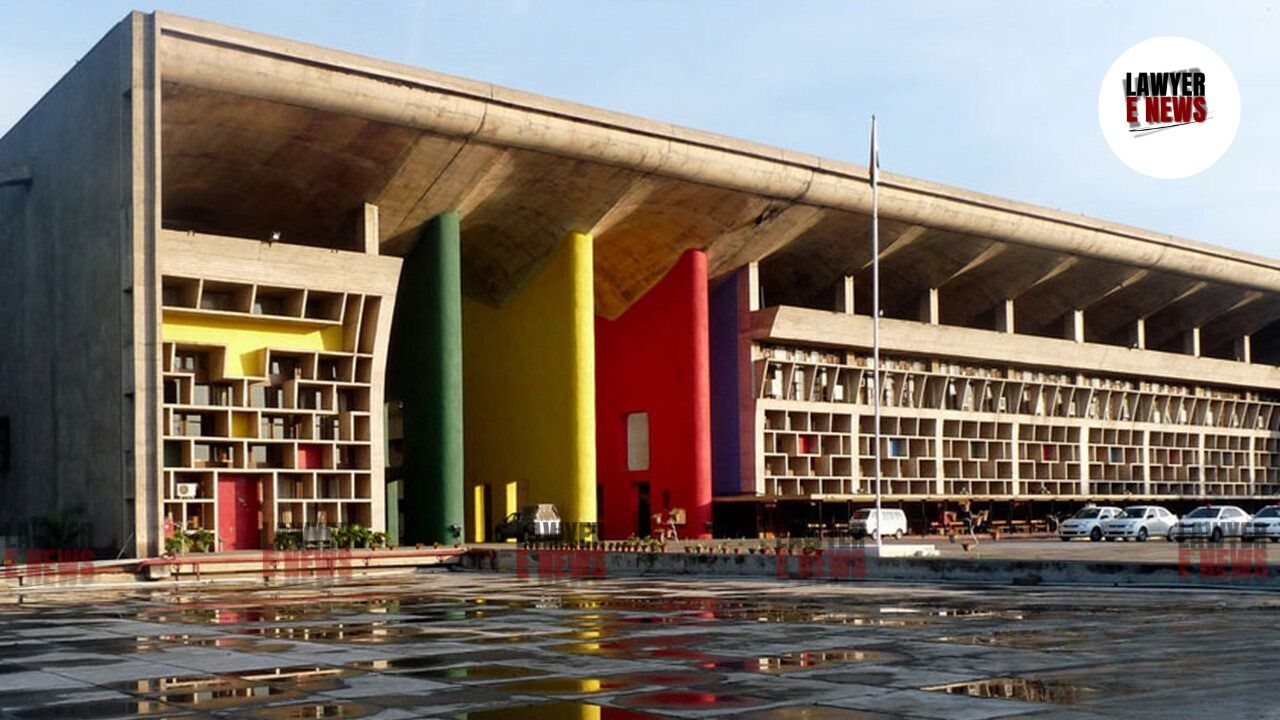
"When registration of document itself is suspicious, then it cannot be concluded that the registration of document is a strong circumstance to prove genuineness of the Will." Punjab and Haryana High Court, in a regular second appeal judgment, affirmed that a Will surrounded by multiple suspicious circumstances—including the absence of registration records and denied signatures of officials—cannot be relied upon to displace natural succession.
The bench of Justice Harsh Bunger held that once the propounder fails to dispel clouds of suspicion, the court must reject the document, particularly when the testator held no property at the time of the alleged execution and the document’s very provenance is under criminal investigation.
The case concerned a suit for declaration and permanent injunction filed by Gurmeet Kaur, the widow of the deceased, Jaspreet Singh, against her mother-in-law, Harjinder Kaur. The plaintiff challenged a Will allegedly executed by her husband in 1998, which favoured the mother, claiming the document was forged following the deceased’s death in a road accident. The defendant-appellant contended the Will was genuine, asserting that the testator had excluded his wife due to marital discord, despite the testator being unmarried at the time of the alleged execution.
The primary issue was whether the lower courts erred in declaring the Will null and void after finding it surrounded by "suspicious circumstances" under the Indian Succession Act. The court was also called upon to determine if a document that lacks entry in the official registers of the Sub-Registrar, despite carrying an alleged registration number, can be admitted as a genuine testamentary instrument.
Court’s Observations On Suspicious Circumstances
The High Court meticulously reviewed the findings of the trial court and the first appellate court, which had identified a host of irregularities. Key among these was that the testator, aged 24 at the time, owned no property, and the Will appeared to serve no purpose other than to exclude a spouse who did not even exist at the time of its alleged execution. Most critically, the Naib Tehsildar denied signing the document, and the registration number cited in the Will did not exist in the official records of the Sub-Registrar.
Probative Value Of Registration - Court Rejects Mechanical Reliance On Registration
The court emphasized that while registration is generally a robust indicator of genuineness, it loses all evidentiary value if the registration process itself is tainted. Noting the FIR registered against the appellant for forgery, the court observed that the "registration" was a façade. The absence of the document in the relevant volumes of the Sub-Registrar’s office and the presence of conflicting volume numbers on different copies of the document further solidified the conclusion of fraud.
Failure To Establish Testamentary Capacity - No Evidence To Justify Pre-emptive Will
The appellant had argued that the testator was suffering from a chronic disease, justifying the early execution of the Will. However, the court pointed out a total lack of medical evidence. "The defendant had pleaded that Jaspreet Singh was suffering from a chronic disease at the time of execution of Will; however, no medical record, particulars of the disease, treatment, hospital or attending doctor were produced to substantiate the said assertion," the bench observed. This failure to lead corroborative evidence regarding the testator's state of mind or health was deemed fatal to the appellant’s case.
Finding no substantial question of law to be adjudicated, the High Court dismissed the appeal, upholding the concurrent findings of the lower courts. The court concluded that the Will was a fabricated document, and in its absence, the widow is entitled to her legal share in the estate of the deceased as per the law of natural succession. The judgment reinforces the principle that the onus of proving a Will lies squarely on the propounder, and this onus becomes significantly heavier when the document is shrouded in unexplained irregularities.
Date of Decision: 08 September 2026