-
by kapil
27 October 2026 5:10 AM







"The narration of facts and the findings in Ext.P6 would suggest that the 4th respondent is not entitled to the grant of extension of service. However, despite recording such adverse findings, the 1st respondent proceeded to grant concurrence. This indicates non-application of mind on the part of the 1st respondent," Kerala High Court.
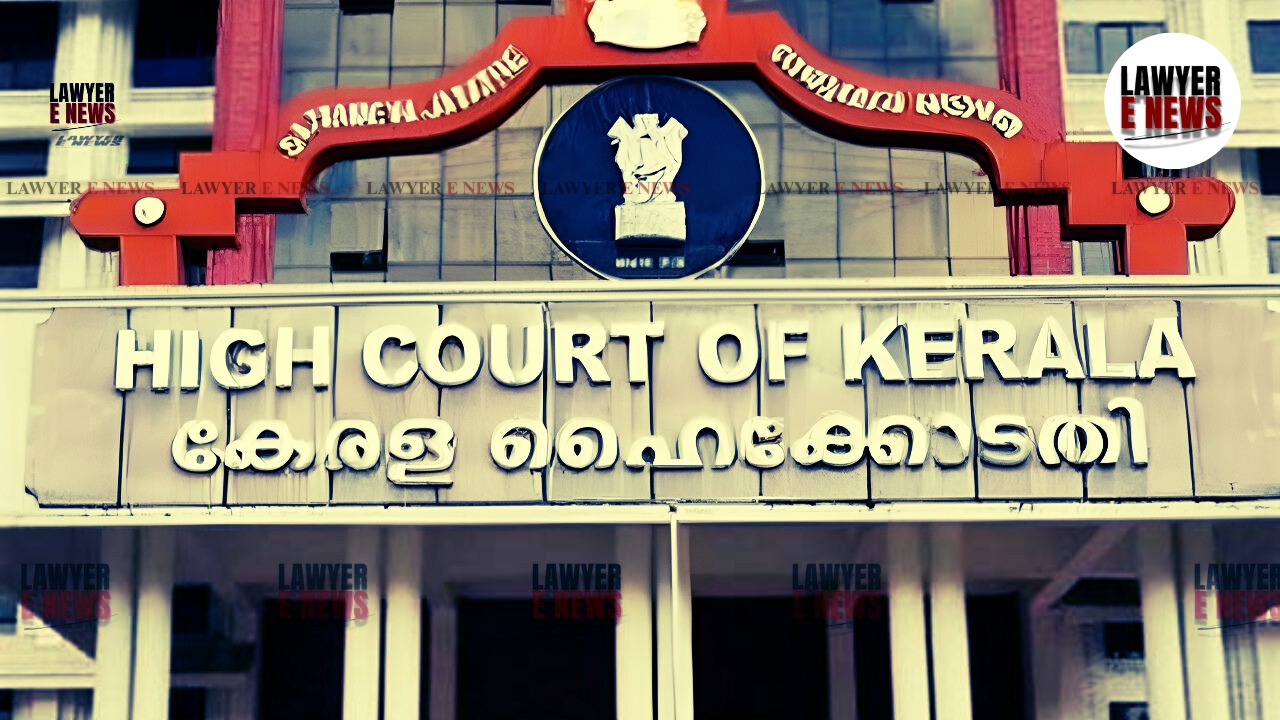
The Kerala High Court, in a significant ruling dated 22 September 2026, held that a Regional Transport Authority cannot grant concurrence for the variation of a permit under Section 80(3) of the Motor Vehicles Act, 1988, while simultaneously recording findings that the route is saturated and the variation would be detrimental to public convenience.
A bench of Justice Murali Purushothaman observed that a decision must be consistent with the findings recorded by the authority, noting that "the decision in Ext.P6 is contrary to the findings recorded therein and amounts to an improper exercise of jurisdiction and violation of the principles of natural justice."
The petitioner, a regular permit holder on the Kayamkulam – Thiruvalla route, challenged an order passed by the Regional Transport Authority (RTA), Alappuzha, granting concurrence for the extension of a route sought by the 4th respondent. The RTA, while granting the concurrence, had explicitly noted that the route was "almost saturated," that a new trip would lead to "unhealthy competition," and that the variation would not benefit regular passengers or students. Despite these adverse observations, the RTA proceeded to grant the concurrence, leading the petitioner to approach the High Court.
The primary question before the court was whether an RTA can grant concurrence for a permit variation under Section 80(3) of the Motor Vehicles Act when its own findings demonstrate that such variation contradicts the requirement of public convenience. The court also examined whether such a contradictory order constitutes non-application of mind and if the availability of an alternative remedy under Section 90 of the Act bars the maintainability of a writ petition.
The court underscored that under Section 80(3) of the Motor Vehicles Act, an application to vary the conditions of a permit by the inclusion of a new route must be treated as an application for the grant of a new permit. Consequently, the authority is legally obligated to satisfy itself that such a variation will serve the public interest and convenience.
Statutory Mandate Under Section 80(3)
The court noted that the statutory scheme requires the transport authority to apply its mind to the actual necessity and impact of the variation. By acknowledging that the route was saturated and that the extension would cause unhealthy competition, the RTA had effectively admitted that the variation failed the test of public convenience mandated by the Act.
Consistency in Quasi-Judicial Orders
The bench emphasized that an administrative or quasi-judicial order must be internally consistent. When an authority records specific findings that militate against the grant of a request, it cannot proceed to grant that request without resolving the contradiction. The RTA’s attempt to justify the order by claiming it merely "narrated facts" was rejected as an attempt to obscure the lack of reasoned decision-making.
Court Finds Non-Application Of Mind
The court held that the RTA's action demonstrated a clear non-application of mind, rendering the order legally unsustainable. The discrepancy between the recorded findings and the final conclusion constituted an improper exercise of jurisdiction, thereby justifying the invocation of the Court’s writ jurisdiction under Article 226 despite the existence of an alternative remedy.
"The decision in Ext.P6 is contrary to the findings recorded therein and amounts to an improper exercise of jurisdiction and violation of the principles of natural justice."
Concluding that the impugned order (Ext.P6) was fundamentally flawed, the court set it aside. The RTA, Alappuzha, was directed to reconsider the request for concurrence from the RTA, Pathanamthitta, afresh. The authority is required to pass a reasoned order in accordance with the law, ensuring that the decision is consistent with its findings regarding the state of the route and the requirement of public convenience, within a period of two months.
Date of Decision: 22 September 2026