-
by sayum
27 August 2026 3:32 PM







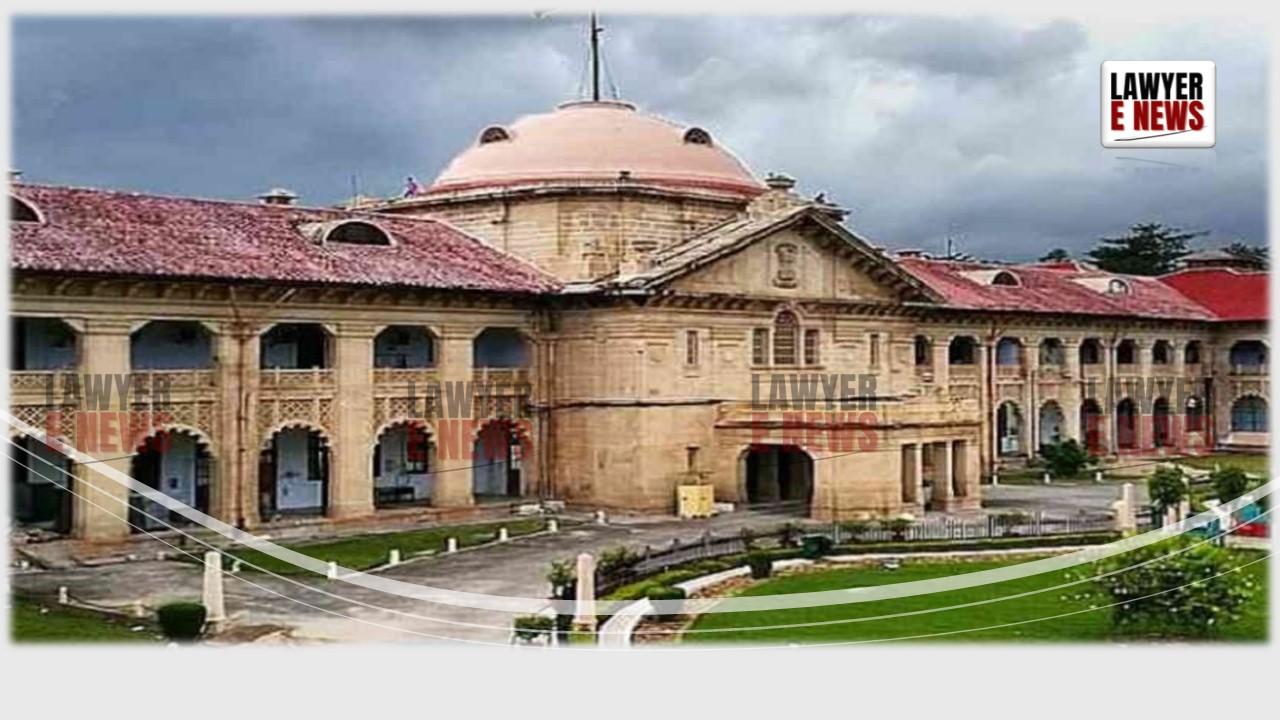
"Evidence of a chance witness requires a very cautious and close scrutiny and a chance witness must adequately explain his presence at the place of occurrence. Deposition of a chance witness whose presence at the place of incident remains doubtful should be discarded," Allahabad High Court, in a significant ruling dated April 27, 2026, held that the testimony of chance witnesses cannot be accepted blindly and requires rigorous judicial scrutiny to ensure their presence at the crime scene is adequately explained.
A bench of Justice Avnish Saxena observed that while the law does not automatically discard such witnesses, any doubt regarding their presence or inconsistencies in their narrative must result in the benefit of doubt being extended to the accused. The Court set aside the conviction of a 78-year-old man in a 1980 attempt to murder case, noting that the prosecution failed to establish a "clinching" case.
The case originated from a 1980 land dispute in Village Mahalerpur, Mainpuri, where the appellant, Keshav Singh, allegedly fired a shot intended for the informant but which struck a "chance witness," Shiv Kumar Singh. The Trial Court in 1987 convicted the appellant under Section 307 of the IPC, sentencing him to three years of rigorous imprisonment. The appeal was preferred by Keshav Singh and his father, Brijbasi Lal; however, the appeal against the father abated following his death during the pendency of the proceedings.
The primary question before the Court was whether the testimonies of chance witnesses, who resided in different districts and gave inconsistent versions of the event, could form the sole basis for conviction. The Court was also called upon to determine the impact of significant investigative lapses, including the non-recovery of the weapon and the failure to collect blood-stained evidence from the scene.
Legal Standard For Evaluating Chance Witnesses
The Court delved deep into the jurisprudence surrounding "chance witnesses"—individuals who happen to be at the scene of a crime by accident rather than necessity. Referring to Supreme Court precedents in Jarnail Singh v. State of Punjab and Sarvesh Narain Shukla v. Daroga Singh, the Bench emphasized that such evidence is not discarded per se but must be viewed with "cautious and close scrutiny."
The Bench noted that a chance witness must adequately explain their presence at the specific location at the relevant time. If the court finds the presence of such a witness doubtful or their conduct subsequent to the incident unnatural, the testimony loses its evidentiary value. The Court observed that "murders are not committed with previous notice to witnesses," yet the burden remains on the prosecution to prove that the witness's presence was logical and credible.
"The testimony of chance witness cannot be discarded but the witness required a very cautious and close scrutiny."
Inconsistencies Between Informant And Chance Witnesses
Upon marshalling the evidence, the Court found glaring contradictions between the informant (PW-1) and the injured chance witness (PW-2). While the informant claimed the accused fired at him and accidentally hit the witness, the witness (PW-2) claimed the accused was specifically exhorted to fire at him. This discrepancy regarding the target of the assault created a significant dent in the prosecution’s narrative.
Furthermore, the Court pointed out that the two chance witnesses, Shiv Kumar Singh and Sughar Singh, were residents of different districts (Etawah and Mainpuri). The prosecution failed to provide any "iota of discussion" as to why these individuals were present at the informant's house at the exact time of the dusk-time shooting.
"The prosecution has also failed to show the reason of their being at the place of incident the prosecution version... is not inspiring confidence."
Impact Of Investigative Lapses On Prosecution Case
The Court took serious note of the "far from satisfactory" investigation. It was highlighted that the police failed to recover the licensed gun allegedly used in the crime, nor did they collect blood-stained earth or clothes from the site. The Court observed that while a faulty investigation alone may not always lead to acquittal, it becomes fatal when the ocular testimony is itself unreliable.
The Bench remarked that the site plan prepared by the Investigating Officer contradicted the oral testimonies of the witnesses regarding the presence of walls and the positioning of the parties. The Court found it improbable that a single shot could have injured two persons in the manner described by the witnesses, especially when the medical evidence and site plan suggested different trajectories.
"In cases of defective investigation the court has to be circumspect in evaluating the evidence... the benefit of doubt arising out of such inefficient investigation must be bestowed upon the accused."
Jurisdictional Anomalies And Final Directions
The Court found it suspicious that although the incident occurred in District Mainpuri, the FIR was registered in District Etawah. While the injured being a resident of Etawah was a possible explanation, the lack of clarity on why the nearer police station in Karhal was bypassed added to the "cloud of doubt" over the case.
Concluding that the prosecution failed to prove the guilt beyond reasonable doubt, the Court held that the Appellate Court should not "shy away" from interfering when a plausible alternative view exists. The Court emphasized that justice must be balanced between the rights of the victim and the accused, especially in cases involving aging litigants and decades-old disputes.
The High Court allowed the appeal and set aside the judgment of the IIIrd Additional Sessions Judge, Mainpuri. It held that the inconsistent testimonies of the chance witnesses, coupled with gross investigative deficiencies, entitled the appellant to the benefit of doubt. The appellant, now 78 years old, was acquitted of all charges and discharged from his bail bonds.
Date of Decision: 27 April 2026