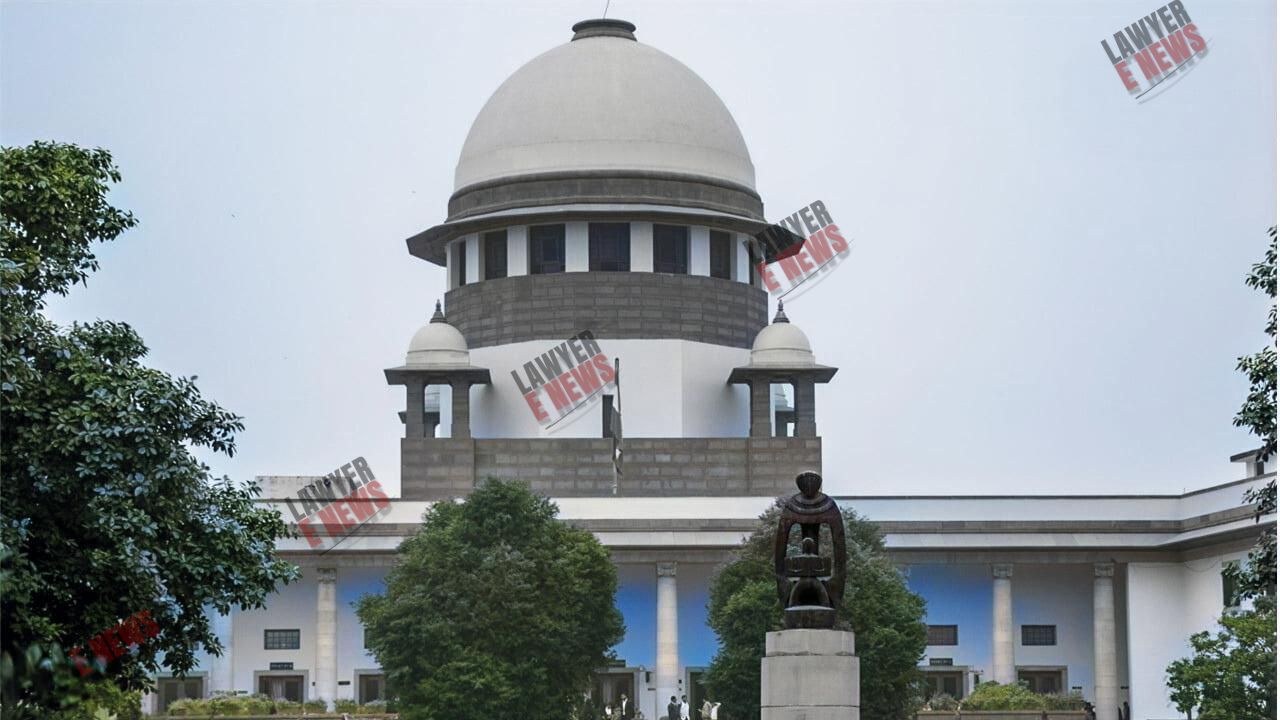
-
by sayum
02 October 2026 8:27 AM








In a significant ruling, the Supreme Court held that a developer cannot be held liable to pay interest on a deposited amount in a consumer complaint case. The judgment, delivered by a bench comprising Justices M.R. Shah and S. Ravindra Bhat, emphasized that the complainant failed to take necessary steps to protect her interests and that the developer had debited the amount from its account. The court dismissed the complainant's appeal and highlighted the need for guidelines to be framed for the proper depositing of amounts with court registries to prevent future losses.
The Supreme Court observed, "The complainant cannot claim interest from the developer, who had returned the Pay Order. The complainant did not take steps to protect her interests... no equities can be extended to her aid."
The case revolved around a consumer complaint filed against a developer for not paying interest on a deposited amount. The complainant had filed the original Pay Order along with the complaint but failed to seek appropriate orders to ensure the amount was deposited in an interest-bearing account. The developer returned the Pay Order, and the complainant subsequently claimed interest on the amount.
The court clarified that the developer cannot be held liable for interest since the amount had been debited from its account. Furthermore, the complainant's failure to take necessary steps to protect her interests weighed in favor of the developer. The court cited precedents and held that the rule embodied in Order XXI, Rule 4 of the Code of Civil Procedure, which governs the payment of deposited amounts, applied in this case.
The bench also stressed the importance of framing guidelines to govern the depositing of amounts with court registries. The guidelines should ensure that amounts are properly deposited in banks or financial institutions to avoid any future losses. The court emphasized the need for clarity and instructed each court, tribunal, commission, authority, and agency exercising adjudicatory power to establish rules or regulations to this effect.
Date of Decision: January 31, 2023
SUNEJA & ANR. vs (MRS.) MANJEET KAUR MONGA