
-
by sayum
26 August 2026 1:49 PM







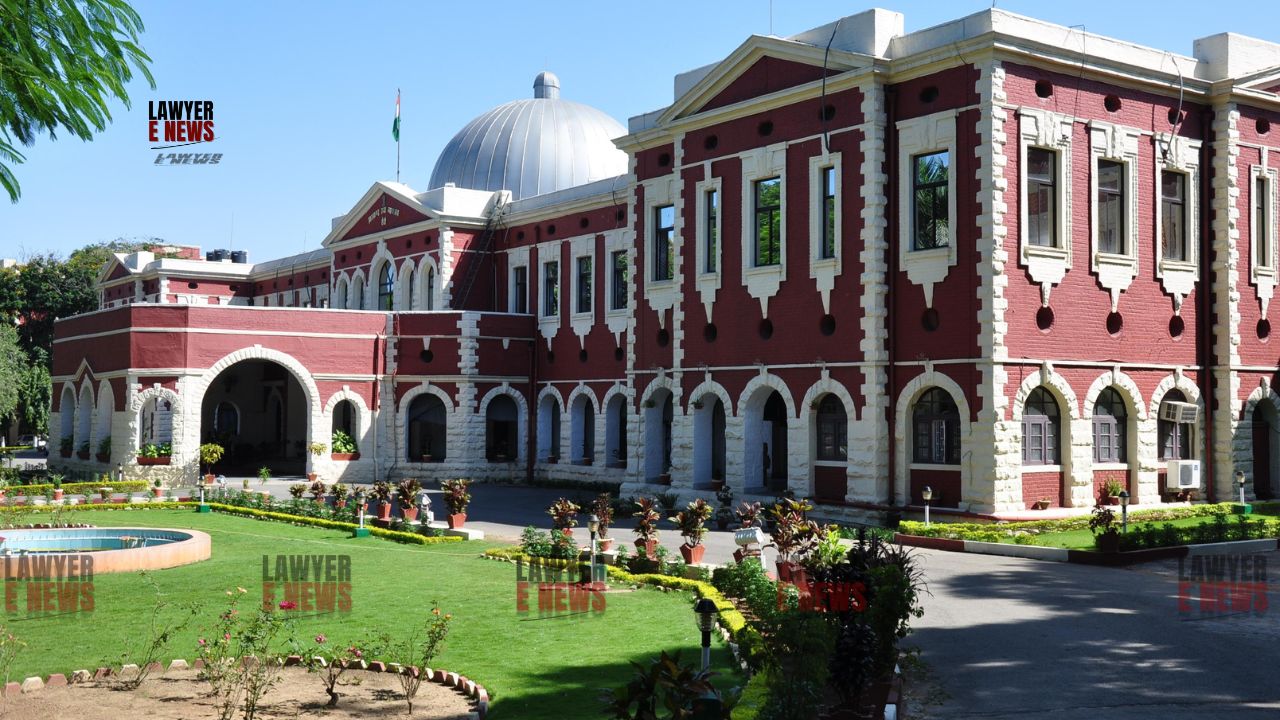
“When Allegations Are Against Officers Investigating High-Profile Corruption, Fair Investigation By Independent Agency Becomes Necessary”, Jharkhand High Court delivered a significant ruling in Pratik & Shubham Bharti v. State of Jharkhand & Others, dealing with allegations of custodial assault against officers of the Enforcement Directorate (ED) during a money laundering investigation connected with a ₹23-crore government fund misappropriation scam.
Justice Sanjay Kumar Dwivedi, exercising jurisdiction under Article 226 of the Constitution of India, refused to quash the FIR lodged against the ED officials but held that the circumstances of the case required transfer of investigation to the Central Bureau of Investigation (CBI) to ensure fairness and credibility.
The Court observed that the allegations involved a direct confrontation between a central investigative agency and the state police machinery, and therefore impartial investigation was essential.
“The investigation is required to be done fairly. The said allegation is made against the Central Government Agency. In view of that, fair investigation by an independent agency is the need of the hour.”
Background of the Case
The petitioners Pratik and Shubham Bharti, serving as Assistant Director and Assistant Enforcement Officer respectively in the Enforcement Directorate’s Ranchi Zonal Office, approached the High Court seeking quashing of Airport P.S. Case No. 5 of 2026.
The FIR was registered on 13 January 2026 under several provisions of the Bharatiya Nyaya Sanhita, 2023, including allegations of attempt to murder, wrongful confinement, criminal intimidation and destruction of evidence.
The complainant Santosh Kumar, who lodged the FIR, was himself the principal accused in the Peyjal Scam involving alleged siphoning of approximately ₹23 crore from the Drinking Water and Sanitation Department of the Government of Jharkhand.
The Enforcement Directorate had initiated investigation under the Prevention of Money Laundering Act, 2002, after the registration of scheduled offences against him.
According to the petitioners, Santosh Kumar had earlier been issued summons in the PMLA investigation but failed to appear citing medical treatment. However, on 12 January 2026 he suddenly appeared at the ED office without prior summons or appointment.
During a preliminary interaction, the petitioners alleged that Santosh Kumar became agitated while discussing the investigation and picked up a glass water jug from the table and struck it on his own head, resulting in a minor scalp injury.
The officers immediately took him to Sadar Hospital, Ranchi, where medical records noted the injury as superficial and self-inflicted.
However, the following day Santosh Kumar lodged an FIR alleging that the ED officers assaulted him during questioning, giving rise to the present litigation.
Allegation That FIR Was Filed To Obstruct ED Investigations
The petitioners contended that the FIR was a deliberate attempt to derail ongoing investigations by the Enforcement Directorate into several politically sensitive corruption cases.
They pointed out that the Ranchi ED office was handling high-profile money laundering investigations involving senior political leaders and bureaucrats, including cases connected with the Chief Minister, former Minister Alamgir Alam and senior IAS officers such as Pooja Singhal and Chhavi Ranjan.
According to the petitioners, the FIR was part of a larger strategy to intimidate investigating officers and obstruct investigations involving influential persons.
They further alleged that soon after the FIR was registered, Jharkhand Police reached the ED office early in the morning and treated it as a crime scene, thereby disrupting the functioning of the central agency.
Objection To Bench Roster And Court’s Strong Response
During the hearing, the State raised an objection that the matter was listed before a Bench which allegedly did not have the roster to hear such cases.
Justice Dwivedi examined the roster and rejected the objection, holding that the Bench was competent to hear criminal writ petitions relating to matters involving the Delhi Special Police Establishment Act (CBI).
The Court also made strong remarks against attempts to compel judicial recusal.
“Recusal cannot be forced by any litigant to choose a Bench. Succumbing to such pressure would amount to not fulfilling the oath of office.”
The Court emphasised that forum hunting or attempts to browbeat the judiciary cannot be permitted in the judicial process.
Why The Court Refused To Quash The FIR
The petitioners argued that the FIR was false and malicious, particularly because the medical report indicated that the injury was self-inflicted and superficial.
However, the High Court declined to quash the FIR at the initial stage.
Justice Dwivedi held that the version of the petitioners and the version of the informant raised disputed questions of fact, which could only be determined after proper investigation.
The Court therefore ruled:
“The allegations are made that the informant hit his head with a jug, whereas the informant alleges assault by the petitioners. Such disputed questions require investigation.”
Applying the principles laid down in State of Haryana v. Bhajan Lal, the Court concluded that the FIR did not fall within the limited categories where criminal proceedings may be quashed.
“The FIR cannot be quashed as the allegations do not fall within the parameters laid down in Bhajan Lal.”
Protection Of ED Officers Under PMLA Considered
The petitioners relied upon Section 67 of the Prevention of Money Laundering Act, which provides protection to government officials for actions taken in good faith under the Act.
The Court held that such protection could not be conclusively determined at the threshold stage.
Justice Dwivedi clarified:
“Whether the act of the petitioners was done in good faith or not can only be appreciated after a fair investigation.”
Thus, the statutory protection available to ED officers could only be examined after the investigation establishes the factual circumstances.
“Fair Investigation Is The Backbone Of Rule Of Law”
The High Court emphasized that fairness in investigation is fundamental to the criminal justice system.
Referring to Supreme Court precedents including Babubhai v. State of Gujarat and Zahira Habibullah Sheikh v. State of Gujarat, the Court observed that investigation must be free from bias, influence or ulterior motives.
Justice Dwivedi noted:
“The proper and fair investigation on the part of the investigating officer is the backbone of the rule of law.”
The Court further emphasised that justice suffers where investigations are influenced or carried out to favour any party.
Court Finds Exceptional Circumstances For CBI Investigation
Although the Court refused to quash the FIR, it found exceptional circumstances warranting transfer of investigation to the CBI.
The Court noted that the informant himself was an accused in a massive corruption and money laundering case, and that the ED officers were investigating politically sensitive cases involving influential persons in the State.
The Court also took note of the apparent haste shown by the State police in treating the ED office as a crime scene soon after the FIR.
Justice Dwivedi observed that the situation had effectively resulted in a conflict between the State police and a Central investigative agency, raising concerns about impartiality.
The Court remarked:
“The two agencies — a Central Government agency and the State machinery — are virtually fighting each other on the basis of allegations made by an accused in a corruption case.”
In such circumstances, the Court held that public confidence in the criminal justice system required an independent investigation.
Final Decision Of The Court
The Jharkhand High Court ultimately partly allowed the writ petition.
The Court held that the FIR would not be quashed, since the allegations required proper investigation. However, considering the exceptional circumstances, the Court directed that the investigation be transferred to the Central Bureau of Investigation.
The Court ordered that the Director, CBI shall register the case and conduct investigation in accordance with law, and directed the Jharkhand Police to immediately hand over all records of Airport P.S. Case No. 5 of 2026 to the CBI.
Conclusion
The ruling highlights the judiciary’s role in ensuring balance between accountability of investigative agencies and protection of fair investigative processes.
While the High Court refused to prematurely terminate the criminal proceedings against the ED officers, it recognised that the sensitive nature of the case and the involvement of high-profile corruption investigations required an independent probe.
By transferring the investigation to the CBI, the Court sought to ensure that the truth behind the allegations of custodial assault emerges through a credible, impartial and unbiased investigation.
Date of Decision: 11 March 2026





