-
by sayum
26 August 2026 1:49 PM







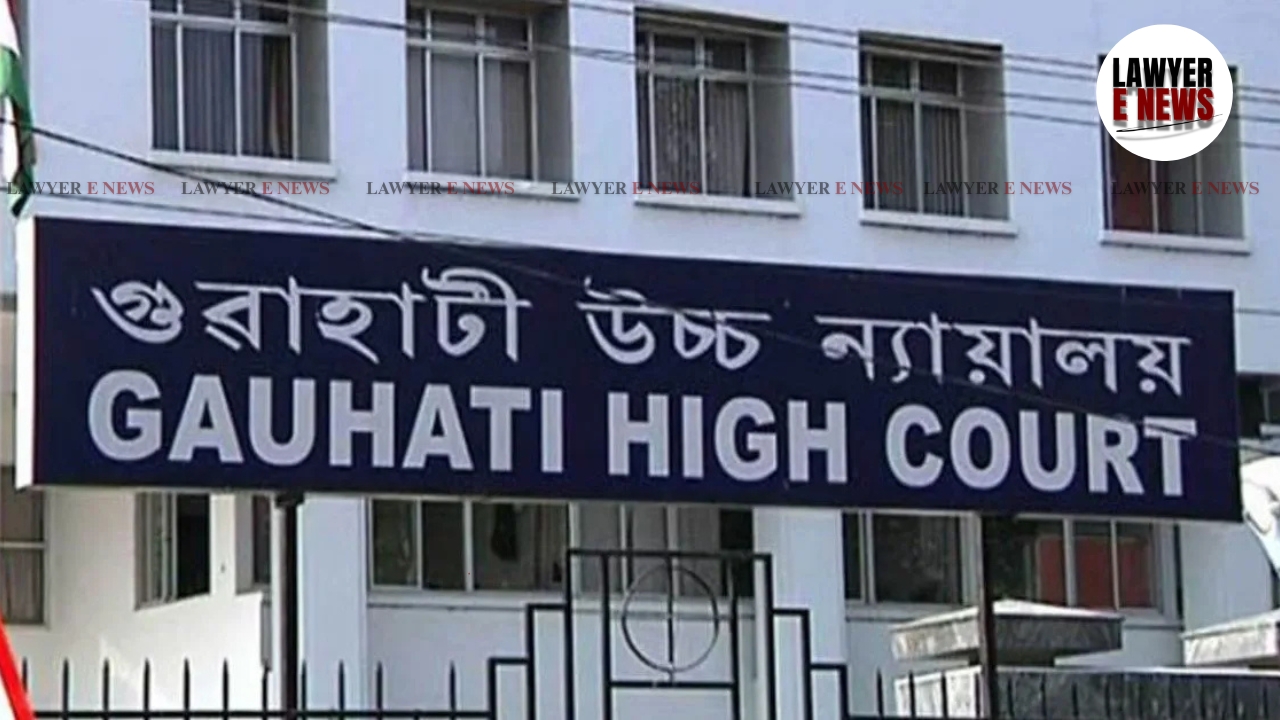
“Writ Jurisdiction Cannot Become A Tool To Circumvent Contempt Directions And Reopen Issues Already Settled By A Final Judgment”, In a stern judgment emphasizing the finality of judicial orders and the sanctity of contempt proceedings, the Gauhati High Court dismissed a writ petition filed by the Union of India and the Defence Estates Officer, Guwahati Circle, holding that the petition was a belated and frivolous attempt to avoid compliance with a binding court order directing payment of rental compensation to landowners in Mizoram.
Justice Kaushik Goswami held that the petition was filed only after the contempt court directed deposit of compensation amounting to ₹2,16,81,261/-, and was clearly intended to circumvent judicial orders that had already attained finality.
The Court dismissed the writ petition at the motion stage and imposed costs of ₹50,000, directing that the amount be recovered from the salary of the erring Defence Estates Officer.
Background Of The Dispute
The dispute originated from WP(C) No. 67/2013, filed by SILURNAM Association, a registered body representing 53 landowners in the Bawngkawn Brigade area of Aizawl District, Mizoram.
The association sought rental compensation for private lands and buildings allegedly occupied by security forces including the Army and paramilitary units during the insurgency period in Mizoram.
The claim was based on the Memorandum of Settlement executed in 1986 between the Government of India and the Mizo National Front, which formed part of the historic Mizoram Peace Accord. Clause 13(b) of the settlement contemplated payment of rent for private lands used by security forces.
On 19 March 2015, the Gauhati High Court disposed of the writ petition by directing constitution of a Joint Spot Verification Committee comprising representatives of:
“the Government of India, the Government of Mizoram, the district administration and representatives of the landowners.”
The committee was tasked with verifying whether the lands were occupied by security forces between 01.09.1986 and 09.09.2008, and to assess the rental compensation payable to the landowners.
Verification Completed And Compensation Assessed
In compliance with the court’s directions, joint spot verifications were conducted, and the verification process culminated in a final report in 2018 confirming that several landowners were entitled to compensation.
Based on this report, the Deputy Commissioner of Aizawl assessed the rental compensation, and the proposal was forwarded through the Government of Mizoram to the Ministry of Defence on 22 May 2018 for sanction and payment.
However, despite the assessment being completed and forwarded, the compensation was not paid to the landowners.
Contempt Proceedings And Court Direction To Pay Compensation
Due to non-compliance with the 2015 judgment, the landowners initiated Contempt Case (C) No. 33 of 2016 before the Gauhati High Court.
During the contempt proceedings, the Court examined the status of compliance and noted that verification and assessment had already been completed in accordance with the judicial directions.
Eventually, by order dated 2 July 2025, the contempt court directed the Defence Estates Officer to:
“deposit the assessed compensation amounting to ₹2,16,81,261/- for payment to the landowners.”
The Court granted a final opportunity to file a compliance report.
Writ Petition Filed After Contempt Direction
It was only after this contempt direction that the Union of India and the Defence Estates Officer filed the present writ petition under Article 226, seeking:
“quashing of the spot verification reports and a declaration that the contempt court’s order directing payment had become infructuous.”
The petition essentially attempted to reopen the verification process conducted pursuant to the 2015 judgment.
Court Finds Petition To Be A Collateral Challenge To Contempt Proceedings
The High Court held that the maintainability of the writ petition itself was highly questionable.
Justice Goswami noted that the chronology of events clearly showed that:
“the judgment dated 19.03.2015 had attained finality, the verification process had been completed, and the compensation had been assessed and forwarded to the Ministry of Defence.”
The Court emphasized that the petitioners had never challenged the judgment or the verification report earlier, and approached the Court only after the contempt court directed compliance.
The Court observed:
“The timing of the present writ petition unmistakably reveals that the same has been instituted solely with the object of avoiding compliance with the judicial orders and frustrating the contempt proceedings.”
Doctrine Of Finality Of Litigation
The Court strongly reiterated that litigation must attain finality, and parties cannot reopen settled issues through collateral proceedings.
Justice Goswami observed:
“Once a competent court has adjudicated the rights of the parties and the determination has attained finality, the same cannot be reopened indirectly through subsequent proceedings.”
Allowing such a challenge would:
“defeat the doctrine of finality and render judicial determinations uncertain and ineffective.”
Writ Jurisdiction Requires Clean Hands
The Court also stressed that Article 226 jurisdiction is discretionary and equitable, and a litigant must approach the court with clean hands and full disclosure of facts.
Relying on Supreme Court decisions including Dalip Singh v. State of Uttar Pradesh, Kishore Samrite v. State of U.P., and S.P. Chengalvaraya Naidu v. Jagannath, the Court held that:
“A litigant who approaches the court with tainted hands or attempts to misuse the judicial process is not entitled to any relief.”
The Court emphasized that the writ jurisdiction cannot become a device for delaying compliance with binding judicial orders.
Court Criticizes Attempt To Delay Compensation To Landowners
The Court also highlighted the serious consequences of the government’s conduct.
The compensation related to lands occupied by security forces during the insurgency period, and the entitlement of the landowners had already been judicially determined.
Yet the compensation remained unpaid even seven years after the final assessment was forwarded in 2018.
Justice Goswami observed that the conduct of the authorities: “reflects a continued disregard for the binding nature of judicial orders and undermines the rule of law.”
Exemplary Costs Imposed On Government Authorities
Considering the abuse of judicial process, the Court held that the case warranted exemplary costs.
The Court observed that the petition had caused unnecessary litigation and prolonged deprivation of compensation to landowners who had already succeeded in court.
Accordingly, the Court directed the petitioners to deposit ₹50,000 as costs with the High Court Legal Services Committee within ten days.
Importantly, the Court further ordered that: “the said cost shall be reimbursed from the salary of the erring official, namely the Defence Estates Officer, Guwahati Circle.”
The Gauhati High Court dismissed the writ petition at the motion stage, holding that it was a frivolous and misconceived attempt to frustrate compliance with judicial orders.
The Court reaffirmed that constitutional courts must guard against misuse of writ jurisdiction for delaying or defeating binding judgments, particularly when such conduct undermines the rule of law.
Date of Decision: 10 March 2026